• HOME
  • NEWS
  • EXPLORE
    • CAREER
      • Companies
      • Jobs
    • EVENTS
    • iGEM
      • News
      • Team
    • PHOTOS
    • VIDEO
    • WIKI
  • BLOG
  • COMMUNITY
    • FACEBOOK
    • INSTAGRAM
    • TWITTER
Thursday, March 26, 2026
BIOENGINEER.ORG
No Result
View All Result
  • Login
  • HOME
  • NEWS
  • EXPLORE
    • CAREER
      • Companies
      • Jobs
        • Lecturer
        • PhD Studentship
        • Postdoc
        • Research Assistant
    • EVENTS
    • iGEM
      • News
      • Team
    • PHOTOS
    • VIDEO
    • WIKI
  • BLOG
  • COMMUNITY
    • FACEBOOK
    • INSTAGRAM
    • TWITTER
  • HOME
  • NEWS
  • EXPLORE
    • CAREER
      • Companies
      • Jobs
        • Lecturer
        • PhD Studentship
        • Postdoc
        • Research Assistant
    • EVENTS
    • iGEM
      • News
      • Team
    • PHOTOS
    • VIDEO
    • WIKI
  • BLOG
  • COMMUNITY
    • FACEBOOK
    • INSTAGRAM
    • TWITTER
No Result
View All Result
Bioengineer.org
No Result
View All Result
Home NEWS Science News Chemistry

TRIUMF’s CANREB facility marks first beam

Bioengineer by Bioengineer
December 21, 2020
in Chemistry
Reading Time: 2 mins read
0
IMAGE
Share on FacebookShare on TwitterShare on LinkedinShare on RedditShare on Telegram

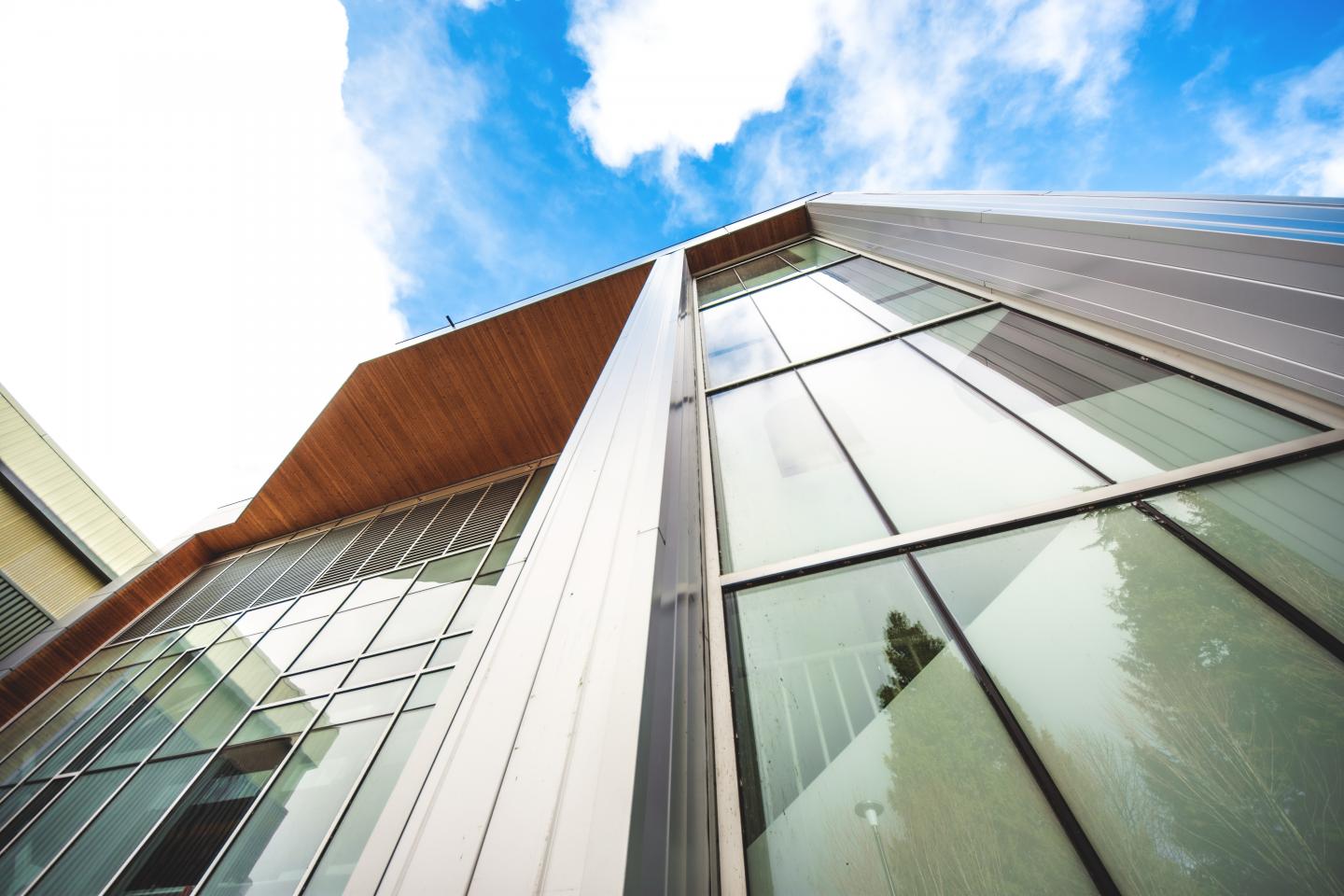
IMAGE

Credit: Stu Shepherd

Scientists and engineers at TRIUMF, Canada’s particle accelerator centre, announced a major milestone for TRIUMF’s Advanced Rare Isotope Laboratory (ARIEL), maneuvering for the first time an isotope beam through the ARIEL-based CANREB facility and on to an experiment.

The achievement marks a watershed moment for the laboratory’s future-facing science program, which leverages TRIUMF’s unique accelerator infrastructure to drive impact from research on short-lived rare isotopes.

“With this delivery of beam through CANREB, we have entered the first phase of ARIEL’s science output,” said Reiner Kruecken, TRIUMF Deputy Director, Research. “As a globally unique multi-user isotope research facility, ARIEL will bring critical advances in our understanding of rare isotopes, which we can use to investigate the nature of matter, the origins of the universe, the next generation of nuclear medicine, and beyond.”

“With CANREB, we are augmenting our existing TRIUMF infrastructure by improving the capacity to accelerate ‘high-mass’ isotopes with high purity,” said Rituparna Kanungo, Principal Investigator for the CANREB project and Professor of Physics at Saint Mary’s University. “CANREB greatly strengthens TRIUMF’s nuclear physics program, unlocking new opportunities for research and the training of students and postdocs from across Canada and around the world.”

Delivery of beam through CANREB marks the first in a series of phased rollouts for ARIEL science, which will continue with the installation of two additional isotope-producing targets and the start of operations for ARIEL’s powerful superconducting electron linear accelerator, purpose-built for producing rare isotopes.

Fully realized, ARIEL and the CANREB facility will establish TRIUMF as a global leader in the production of high-intensity isotope beams, strengthening the laboratory’s role as a multidisciplinary hub for international science.

“This achievement ushers in a new era for TRIUMF,” said Jonathan Bagger, TRIUMF Director. “With ARIEL, our researchers will be empowered to advance the frontiers of science while simultaneously translating discoveries and innovations into real impact for Canadians and people around the world.”

The CANREB project was led by Saint Mary’s University in partnership with the University of Manitoba. It received funding from the Canada Foundation for Innovation, the Nova Scotia Research and Innovation Trust, and the Manitoba Research and Innovation Fund. It was also supported by TRIUMF’s commercialization arm, TRIUMF Innovations.

###

Media Contact
Stuart Shepherd
[email protected]

Original Source

http://www.triumf.ca/research-highlights/initial-beam-through-canreb-brings-first-glimpse-new-era-triumf-science

Tags: AstrophysicsAtomic PhysicsAtomic/Molecular/Particle PhysicsChemistry/Physics/Materials SciencesMaterialsNuclear PhysicsSuperconductors/Semiconductors
Share12Tweet8Share2ShareShareShare2

Related Posts

Isolated H2-Reduced Clusters Boost CO2-to-Methanol Catalysis

Isolated H2-Reduced Clusters Boost CO2-to-Methanol Catalysis

March 25, 2026
blank

Physicists Identify Electronic Drivers Behind Flat Band Quantum Materials

March 21, 2026

Würzburg Chemistry Professor Claudia Höbartner Receives Prestigious Honor

March 20, 2026

Scientists Reveal How Magnets Control Metamaterial Behavior

March 20, 2026
Please login to join discussion

POPULAR NEWS

  • blank

    Revolutionary AI Model Enhances Precision in Detecting Food Contamination

    96 shares
    Share 38 Tweet 24
  • Imagine a Social Media Feed That Challenges Your Views Instead of Reinforcing Them

    1003 shares
    Share 397 Tweet 248
  • Uncovering Functions of Cavernous Malformation Proteins in Organoids

    54 shares
    Share 22 Tweet 14
  • Promising Outcomes from First Clinical Trials of Gene Regulation in Epilepsy

    51 shares
    Share 20 Tweet 13

About

We bring you the latest biotechnology news from best research centers and universities around the world. Check our website.

Follow us

Recent News

In-Sensor Cryptography Links Physical Process to Digital Identity

Can Psychosocial Factors Influence Cancer Risk?

Depression Factors in Elderly: Pre vs. Post-COVID Analysis

Subscribe to Blog via Email

Success! An email was just sent to confirm your subscription. Please find the email now and click 'Confirm' to start subscribing.

Join 78 other subscribers
  • Contact Us

Bioengineer.org © Copyright 2023 All Rights Reserved.

Welcome Back!

Login to your account below

Forgotten Password?

Retrieve your password

Please enter your username or email address to reset your password.

Log In
No Result
View All Result
  • Homepages
    • Home Page 1
    • Home Page 2
  • News
  • National
  • Business
  • Health
  • Lifestyle
  • Science

Bioengineer.org © Copyright 2023 All Rights Reserved.