Credit: Athersys
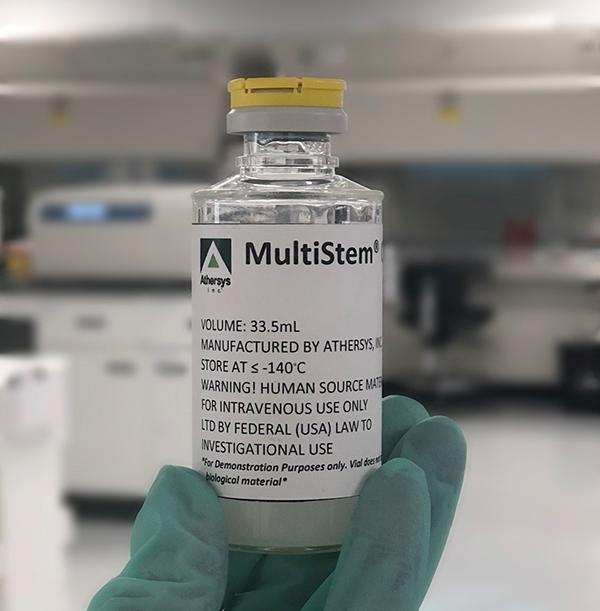
The first patient has enrolled in a Phase II clinical trial evaluating a stem cell therapy for the potential early treatment of traumatic injuries and their subsequent complications at The University of Texas Health Science Center at Houston (UTHealth).
The MATRICS-1 (MultiStem® Administration for Trauma Related Inflammation and Complications) study is being conducted at Memorial Hermann-Texas Medical Center.
According to the Centers for Disease Control (CDC), trauma is the leading cause of death for individuals under the age of 45 and the third leading cause of death in the U.S., accounting for approximately 180,000 fatalities each year. It is also a leading cause of serious disability, especially among young people and members of the military that suffer trauma.
The randomized, double-blinded, placebo-controlled study is led by Charles S. Cox Jr., MD, the George and Cynthia Mitchell Distinguished Chair in Neurosciences in the Department of Pediatric Surgery at McGovern Medical School at UTHealth and co-director of the Red Duke Trauma Institute at Memorial Hermann-TMC.
The clinical study will evaluate the safety and efficacy of MultiStem in the treatment of injured patients with severe hemorrhage for the prevention and mitigation of complications that can result following severe traumatic injury. The single-center trial will enroll up to 156 subjects. Patients will be randomized and administered either placebo or MultiStem cellular therapy following admission to the intensive care unit and after initial resuscitation has concluded and stabilizing procedures have been performed to stop bleeding. All study subjects will also receive all standard of care treatments for their injuries.
Evidence suggests the hyperinflammatory response following traumatic injuries is similar to other causes of acute tissue injury, such as acute ischemic stroke, acute respiratory distress syndrome, traumatic brain injury, and spinal cord injury. Activation and mobilization of the peripheral immune system after an injury contributes to local secondary tissue damage. This immune activation may also result in systemic inflammatory response syndrome, which can leave the patient susceptible to a range of complications, including secondary infections and organ failure conditions, that prevent or complicate recovery.
“The use of this treatment strategy leverages a long legacy of investigation into the common mechanism of action of down-regulation of the inflammatory response to injury and how it mitigates complications of trauma,” said Cox, who is also a faculty member at MD Anderson Cancer Center UTHealth Graduate School of Biomedical Sciences.
Results of preclinical injury models and clinical data from human trials in other indications suggest early administration of MultiStem cells may reduce the inflammatory cascade that ensues after severe acute injury by reducing the number of inflammatory systemic immune cells in and around sites of injury, and by decreasing immune cell activation and the release of inflammatory cytokines in response to circulating products of tissue injury. The study will evaluate whether MultiStem’s modulation of these immune responses to traumatic injury can mitigate secondary tissue injury, organ failure states, and other complications that impede patient recovery following severe traumatic injury.
The trial is funded by a grant from the Medical Technology Enterprise Consortium (MTEC) awarded to McGovern Medical School. MTEC is a 501(c)(3) biomedical technology consortium collaborating under an agreement with the U.S. Army Medical Research and Development Command. The Memorial Hermann Foundation is providing additional funding. Athersys is the trial sponsor and is supplying the investigational clinical product for the conduct of the trial, as well as providing regulatory and operational support.
Co-investigators from McGovern Medical School include Charles Wade, PhD; Laura Moore, MD; Kevin Finkel, MD; Claudia Pedroza, PhD; and Erin Fox, PhD.
###
Media Contact
Amy Laukka
[email protected]
Original Source
https:/