• HOME
  • NEWS
  • EXPLORE
    • CAREER
      • Companies
      • Jobs
    • EVENTS
    • iGEM
      • News
      • Team
    • PHOTOS
    • VIDEO
    • WIKI
  • BLOG
  • COMMUNITY
    • FACEBOOK
    • INSTAGRAM
    • TWITTER
Saturday, May 16, 2026
BIOENGINEER.ORG
No Result
View All Result
  • Login
  • HOME
  • NEWS
  • EXPLORE
    • CAREER
      • Companies
      • Jobs
        • Lecturer
        • PhD Studentship
        • Postdoc
        • Research Assistant
    • EVENTS
    • iGEM
      • News
      • Team
    • PHOTOS
    • VIDEO
    • WIKI
  • BLOG
  • COMMUNITY
    • FACEBOOK
    • INSTAGRAM
    • TWITTER
  • HOME
  • NEWS
  • EXPLORE
    • CAREER
      • Companies
      • Jobs
        • Lecturer
        • PhD Studentship
        • Postdoc
        • Research Assistant
    • EVENTS
    • iGEM
      • News
      • Team
    • PHOTOS
    • VIDEO
    • WIKI
  • BLOG
  • COMMUNITY
    • FACEBOOK
    • INSTAGRAM
    • TWITTER
No Result
View All Result
Bioengineer.org
No Result
View All Result
Home NEWS Science News Health

This is your brain on code: JHU deciphers neural mechanics of computer programming

Bioengineer by Bioengineer
December 15, 2020
in Health
Reading Time: 2 mins read
0
IMAGE
Share on FacebookShare on TwitterShare on LinkedinShare on RedditShare on Telegram

IMAGE

Credit: Johns Hopkins University

By mapping the brain activity of expert computer programmers while they puzzled over code, Johns Hopkins University scientists have found the neural mechanics behind this increasingly vital skill.

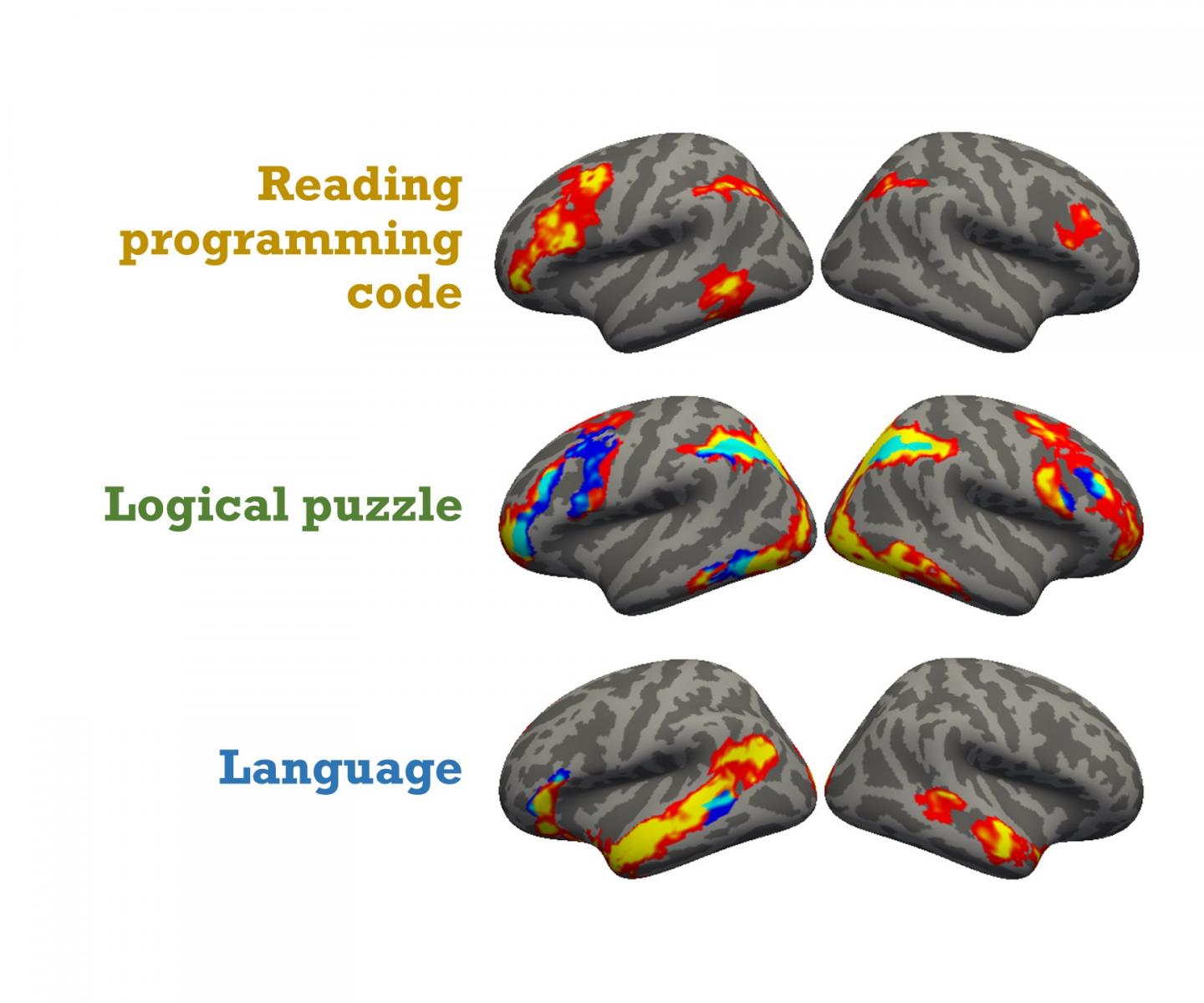
Though researchers have long suspected the brain mechanism for computer programming would be similar to that for math or even language, this study revealed that when seasoned coders work, most brain activity happens in the network responsible for logical reasoning, though in the left brain region, which is favored by language.

“Because there are so many ways people learn programming, everything from do-it-yourself tutorials to formal courses, it’s surprising that we find such a consistent brain activation pattern across people who code,” said lead author Yun-Fei Liu, a PhD student in the university’s Neuroplasticity and Development Lab. “It’s especially surprising because we know there seems to be a crucial period that usually terminates in early adolescence for language acquisition, but many people learn to code as adults.”

The findings are published today in the journal eLife.

Researchers have long known what happens in the brain when someone reads, plays music or does math. But despite our increasing reliance on technology, almost nothing is known about the neural mechanisms of computer programming.

“People want to know what makes someone a good programmer,” Liu said. “If we know what kind of neuro mechanisms are activated when someone is programming, we might be able to find a better training program for programmers.”

Many people assume techies have math-centric minds, and think the brain region for programing would be the same as the one used when solving math problems, Liu said. Others believe that programming languages are called languages for a reason and the neural mechanism underlying programming would be shared with language processing. Or it could be parts of the brain used for logical reasoning or the type of problem-solving known as “executive control.”

To get to the bottom of it, Liu had 15 experienced programmers, each highly proficient in the programming language Python, lie in an fMRI scanner so he could measure their brain activity while they worked on coding questions.

In each case, the same part of the brain lit up: the area responsible for logical reasoning. And though the act of logical reasoning has no brain hemisphere preference, coding strongly favored the left hemisphere, the area that correlates with language.

Next, the lab hopes to determine if learning to code, like learning a language, is easier for the young.

“It’s true that adults can learn to code but are kids even better at it? Or maybe coding doesn’t have a critical learning period and that’s what makes it special,” said senior author Marina Bedny, an associate professor of Psychological and Brain Sciences. “It could be that our education system is wrong, and we should be teaching kids to code in middle school or else they’re missing an opportunity to be the best they can.”

###

Media Contact
Jill Rosen
[email protected]

Tags: neurobiologyTechnology/Engineering/Computer Science
Share12Tweet8Share2ShareShareShare2

Related Posts

LTBP4 Deficiency Reduces Heart Failure in Male Mice

May 16, 2026

Nurse Care Reduces Hospital Use in Multimorbid Patients

May 15, 2026

Hepatitis C Elimination via Risk-Based Screening, Decentralized Care

May 15, 2026

Testing Reverse Osmosis Systems for Microbial Safety

May 15, 2026
Please login to join discussion

POPULAR NEWS

  • Research Indicates Potential Connection Between Prenatal Medication Exposure and Elevated Autism Risk

    843 shares
    Share 337 Tweet 211
  • New Study Reveals Plants Can Detect the Sound of Rain

    730 shares
    Share 291 Tweet 182
  • Salmonella Haem Blocks Macrophages, Boosts Infection

    62 shares
    Share 25 Tweet 16
  • Breastmilk Balances E. coli and Beneficial Bacteria in Infant Gut Microbiomes

    58 shares
    Share 23 Tweet 15

About

We bring you the latest biotechnology news from best research centers and universities around the world. Check our website.

Follow us

Recent News

LTBP4 Deficiency Reduces Heart Failure in Male Mice

Lifespan Brain Development in Congenital Heart Disease

Nurse Care Reduces Hospital Use in Multimorbid Patients

Subscribe to Blog via Email

Enter your email address to subscribe to this blog and receive notifications of new posts by email.

Join 82 other subscribers
  • Contact Us

Bioengineer.org © Copyright 2023 All Rights Reserved.

Welcome Back!

Login to your account below

Forgotten Password?

Retrieve your password

Please enter your username or email address to reset your password.

Log In
No Result
View All Result
  • Homepages
    • Home Page 1
    • Home Page 2
  • News
  • National
  • Business
  • Health
  • Lifestyle
  • Science

Bioengineer.org © Copyright 2023 All Rights Reserved.