• HOME
  • NEWS
  • EXPLORE
    • CAREER
      • Companies
      • Jobs
    • EVENTS
    • iGEM
      • News
      • Team
    • PHOTOS
    • VIDEO
    • WIKI
  • BLOG
  • COMMUNITY
    • FACEBOOK
    • INSTAGRAM
    • TWITTER
Friday, December 26, 2025
BIOENGINEER.ORG
No Result
View All Result
  • Login
  • HOME
  • NEWS
  • EXPLORE
    • CAREER
      • Companies
      • Jobs
        • Lecturer
        • PhD Studentship
        • Postdoc
        • Research Assistant
    • EVENTS
    • iGEM
      • News
      • Team
    • PHOTOS
    • VIDEO
    • WIKI
  • BLOG
  • COMMUNITY
    • FACEBOOK
    • INSTAGRAM
    • TWITTER
  • HOME
  • NEWS
  • EXPLORE
    • CAREER
      • Companies
      • Jobs
        • Lecturer
        • PhD Studentship
        • Postdoc
        • Research Assistant
    • EVENTS
    • iGEM
      • News
      • Team
    • PHOTOS
    • VIDEO
    • WIKI
  • BLOG
  • COMMUNITY
    • FACEBOOK
    • INSTAGRAM
    • TWITTER
No Result
View All Result
Bioengineer.org
No Result
View All Result
Home NEWS Science News Chemistry

Study confirms dark coating can reduce satellite reflectivity

Bioengineer by Bioengineer
December 8, 2020
in Chemistry
Reading Time: 2 mins read
0
IMAGE
Share on FacebookShare on TwitterShare on LinkedinShare on RedditShare on Telegram

IMAGE

Credit: NAOJ

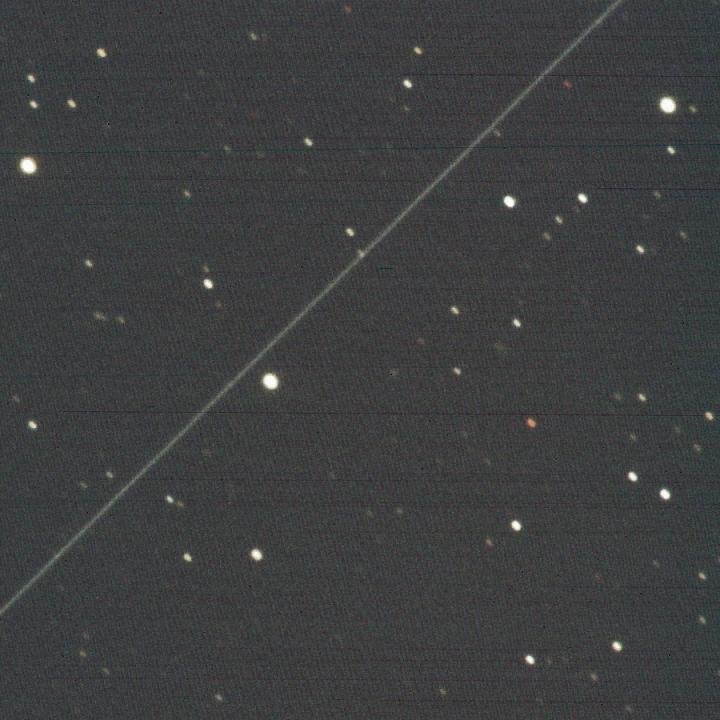
Observations conducted by the Murikabushi Telescope of Ishigakijima Astronomical Observatory confirmed that dark coating can reduce satellite reflectivity by half. There are concerns that numerous artificial satellites in orbit could impair astronomical observations, but these findings may help alleviate such conditions.

Today’s growing demand for space-based services has spawned a wave of satellite constellation projects which operate numerous artificial satellites in orbit. Since these satellites can shine by reflecting sunlight, the astronomy community has raised concerns about their potential impact on astronomical observations. In January 2020, SpaceX launched “DarkSat,” an experimental satellite with an anti-reflective coating, and asked astronomers to assess how much this coating can reduce the satellite reflectivity. Brightness measurements of artificial satellites have already been conducted, but until now, there was no verification that a dark coating actually achieves the expected reflectivity reduction.

The Murikabushi Telescope of Ishigakijima Astronomical Observatory can observe celestial objects simultaneously in three different wavelengths (colors). Comparing multicolor data obtained under the same conditions provides more accurate insight into how much the coating can reduce the satellite brightness. Observations conducted from April to June 2020 revealed for the first time in the world that artificial satellites, whether coated or not, are more visible at longer wavelengths, and that the black coating can halve the level of surface reflectivity of satellites. Such surface treatment is expected to reduce the negative impacts on astronomical observations. Further measures will continue to be implemented to pave the way for peaceful coexistence between space industries and astronomy.

###

Media Contact
Dr. Hitoshi Yamaoka
[email protected]

Original Source

https://www.nao.ac.jp/en/news/science/2020/20201208-ishigakijima.html

Related Journal Article

http://dx.doi.org/10.3847/1538-4357/abc695

Tags: AstronomyAstrophysicsSatellite Missions/ShuttlesSpace/Planetary Science
Share12Tweet8Share2ShareShareShare2

Related Posts

Cutting Electrolyte Reduction Boosts High-Energy Battery Performance

Cutting Electrolyte Reduction Boosts High-Energy Battery Performance

December 19, 2025
Microenvironment Shapes Gold-Catalysed CO2 Electroreduction

Microenvironment Shapes Gold-Catalysed CO2 Electroreduction

December 11, 2025

Photoswitchable Olefins Enable Controlled Polymerization

December 11, 2025

Cation Hydration Entropy Controls Chloride Ion Diffusion

December 10, 2025
Please login to join discussion

POPULAR NEWS

  • Nurses’ Views on Online Learning: Effects on Performance

    Nurses’ Views on Online Learning: Effects on Performance

    70 shares
    Share 28 Tweet 18
  • NSF funds machine-learning research at UNO and UNL to study energy requirements of walking in older adults

    71 shares
    Share 28 Tweet 18
  • Unraveling Levofloxacin’s Impact on Brain Function

    54 shares
    Share 22 Tweet 14
  • Exploring Audiology Accessibility in Johannesburg, South Africa

    51 shares
    Share 20 Tweet 13

About

We bring you the latest biotechnology news from best research centers and universities around the world. Check our website.

Follow us

Recent News

Deep Learning Enhances Academic Performance Predictions for Students

Ultrasound Microbubbles Enhance Tumor Blood Flow

Obacunone Reduces Polycystic Ovary Syndrome via STAT3 Inhibition

Subscribe to Blog via Email

Enter your email address to subscribe to this blog and receive notifications of new posts by email.

Join 71 other subscribers
  • Contact Us

Bioengineer.org © Copyright 2023 All Rights Reserved.

Welcome Back!

Login to your account below

Forgotten Password?

Retrieve your password

Please enter your username or email address to reset your password.

Log In
No Result
View All Result
  • Homepages
    • Home Page 1
    • Home Page 2
  • News
  • National
  • Business
  • Health
  • Lifestyle
  • Science

Bioengineer.org © Copyright 2023 All Rights Reserved.