• HOME
  • NEWS
  • EXPLORE
    • CAREER
      • Companies
      • Jobs
    • EVENTS
    • iGEM
      • News
      • Team
    • PHOTOS
    • VIDEO
    • WIKI
  • BLOG
  • COMMUNITY
    • FACEBOOK
    • INSTAGRAM
    • TWITTER
Sunday, March 29, 2026
BIOENGINEER.ORG
No Result
View All Result
  • Login
  • HOME
  • NEWS
  • EXPLORE
    • CAREER
      • Companies
      • Jobs
        • Lecturer
        • PhD Studentship
        • Postdoc
        • Research Assistant
    • EVENTS
    • iGEM
      • News
      • Team
    • PHOTOS
    • VIDEO
    • WIKI
  • BLOG
  • COMMUNITY
    • FACEBOOK
    • INSTAGRAM
    • TWITTER
  • HOME
  • NEWS
  • EXPLORE
    • CAREER
      • Companies
      • Jobs
        • Lecturer
        • PhD Studentship
        • Postdoc
        • Research Assistant
    • EVENTS
    • iGEM
      • News
      • Team
    • PHOTOS
    • VIDEO
    • WIKI
  • BLOG
  • COMMUNITY
    • FACEBOOK
    • INSTAGRAM
    • TWITTER
No Result
View All Result
Bioengineer.org
No Result
View All Result
Home NEWS Science News Chemistry

NSF awards ou faculty member $2 million research and innovation grant

Bioengineer by Bioengineer
November 24, 2020
in Chemistry
Reading Time: 3 mins read
0
IMAGE
Share on FacebookShare on TwitterShare on LinkedinShare on RedditShare on Telegram

Young researcher to explore advancement of polymer recycling technologies in hopes of sending less multi-layer plastics to landfills
IMAGE

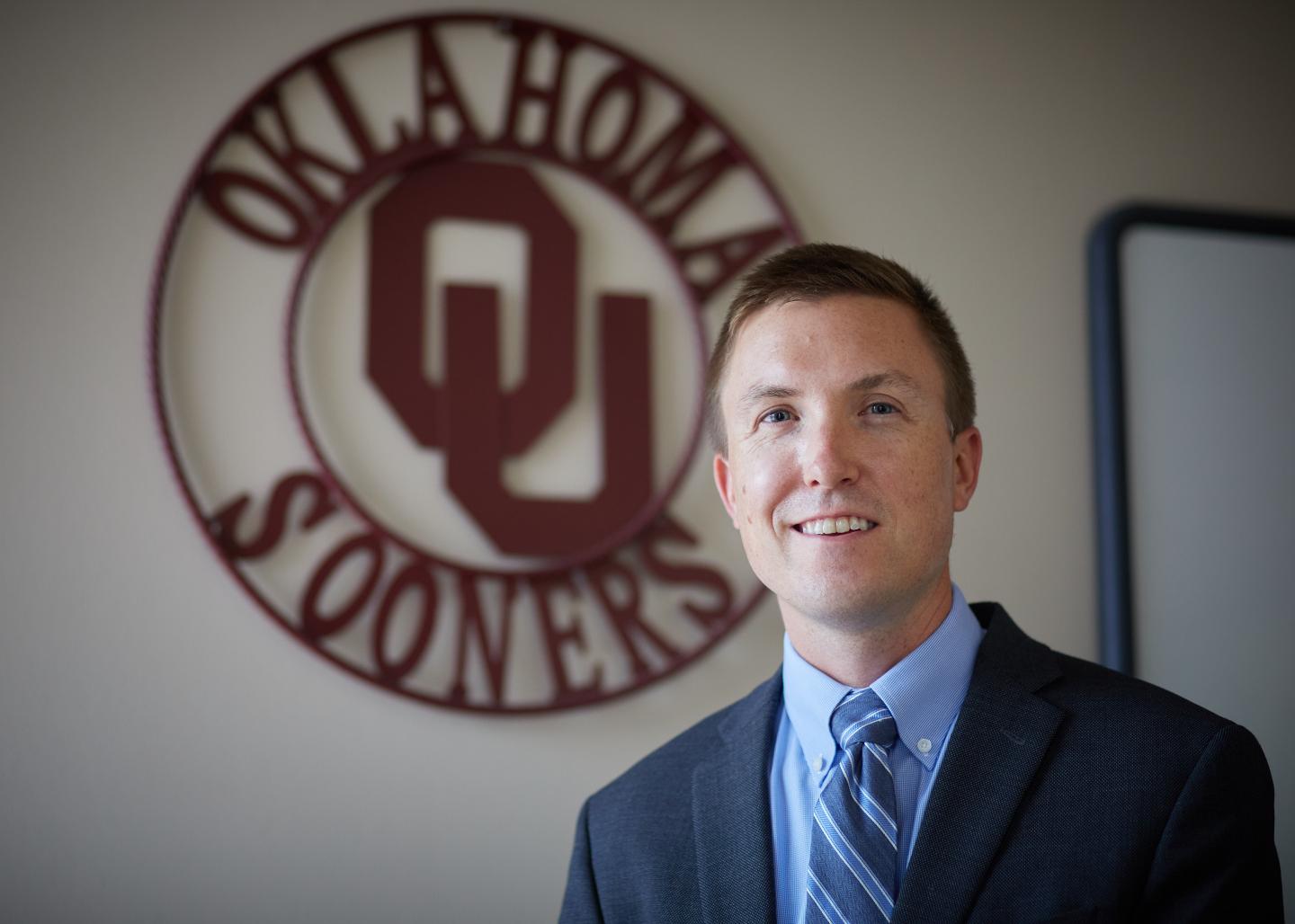
Credit: OU Photographer Travis Caperton

NORMAN, OKLA. – Steven Crossley, associate professor at the University of Oklahoma School of Chemical, Biological and Materials Engineering, has been awarded a four-year, $2 million collaborative grant by the Emerging Frontiers in Research and Innovation program of the National Science Foundation to advance polymer recycling technologies in hopes of sending less multi-layer plastics to landfills.

Not all plastics are created equally – from milk jugs and soda bottles, which are readily recyclable, to multi-layered packaging that increases shelf life and requires less material but is less recyclable – the challenge is for researchers to design a process that allows more of the plastics we use in our everyday lives to end up in our recycle bins rather than the local landfill. But not only does this require scientists to design innovative ways to break down these various types of plastic, it also must be economical for the plastic producers and recyclers.

Impurities, such as food and drink in the bottom of a plastic container, is another challenge scientists face in the recycling process. These contaminents are difficult to eliminate, and once melted down, degrade the quality of the recycled material.

“But, what if,” Crossley asks, “we could design catalysts that target and convert those impurities to either make them more compatable with the rest of the plastic – or convert them selectively to carbon dioxide or light gases that could easily be removed, producing a pure stream of higher value.”

Crossley’s research group’s efforts will be complemented by computational simulations led by Bin Wang, associate professor, and experimental efforts in a scaled-up continuous system led by Lance Lobban, professor, both in the School of Chemical, Biological and Materials Engineering at the University of Oklahoma.

In addition to the upgrading of mixed plastic waste streams using catalysts, Adam Feltz, associate professor of psychology at OU, will incorporate public perception surveys to determine

how best to motivate appropriate public participation in plastic waste collection systems.

The project includes an outreach component for underrepresented and middle and high school students to attend a summer camp, led by Lobban.

Crossley, a registered Native American and faculty advisor to OU’s American Indian Science and Engineering Society chapter, will also involve underrepresented undergraduate students in the research during the course of the project.

Christos Maravelias, professor of chemical and biological engineering at Princeton University, and his team will focus on modeling of economic scenarios. These cost estimates will be invaluable as the project evaluates fiscal efficiencies of these potential new processes.

###

View NSF video (https://www.youtube.com/watch?v=Am8R8DBGEWU&feature=youtu.be) highlighting Crossley’s research.

About NSF EFRI Program

According to their website, the Emerging Frontiers in Research and Innovation program of the NSF Directorate for Engineering (ENG) serves a critical role in helping ENG focus on important emerging areas in a timely manner.

EFRI seeks proposals with transformative ideas that represent an opportunity for a significant shift in fundamental engineering knowledge with a strong potential for long-term impact on national needs or a grand challenge.

Media Contact
Karen Kelly
[email protected]

Tags: Chemistry/Physics/Materials SciencesEcology/EnvironmentPollution/Remediation
Share12Tweet8Share2ShareShareShare2

Related Posts

Biochar Boosts Forest Resilience Against Acid Rain by Restoring Essential Soil Nitrogen

Biochar Boosts Forest Resilience Against Acid Rain by Restoring Essential Soil Nitrogen

March 27, 2026
Isolated H2-Reduced Clusters Boost CO2-to-Methanol Catalysis

Isolated H2-Reduced Clusters Boost CO2-to-Methanol Catalysis

March 25, 2026

Physicists Identify Electronic Drivers Behind Flat Band Quantum Materials

March 21, 2026

Würzburg Chemistry Professor Claudia Höbartner Receives Prestigious Honor

March 20, 2026
Please login to join discussion

POPULAR NEWS

  • blank

    Revolutionary AI Model Enhances Precision in Detecting Food Contamination

    96 shares
    Share 38 Tweet 24
  • Imagine a Social Media Feed That Challenges Your Views Instead of Reinforcing Them

    1004 shares
    Share 397 Tweet 248
  • Uncovering Functions of Cavernous Malformation Proteins in Organoids

    54 shares
    Share 22 Tweet 14
  • Promising Outcomes from First Clinical Trials of Gene Regulation in Epilepsy

    51 shares
    Share 20 Tweet 13

About

We bring you the latest biotechnology news from best research centers and universities around the world. Check our website.

Follow us

Recent News

In-Sensor Cryptography Links Physical Process to Digital Identity

Can Psychosocial Factors Influence Cancer Risk?

Depression Factors in Elderly: Pre vs. Post-COVID Analysis

Subscribe to Blog via Email

Enter your email address to subscribe to this blog and receive notifications of new posts by email.

Join 78 other subscribers
  • Contact Us

Bioengineer.org © Copyright 2023 All Rights Reserved.

Welcome Back!

Login to your account below

Forgotten Password?

Retrieve your password

Please enter your username or email address to reset your password.

Log In
No Result
View All Result
  • Homepages
    • Home Page 1
    • Home Page 2
  • News
  • National
  • Business
  • Health
  • Lifestyle
  • Science

Bioengineer.org © Copyright 2023 All Rights Reserved.