• HOME
  • NEWS
  • EXPLORE
    • CAREER
      • Companies
      • Jobs
    • EVENTS
    • iGEM
      • News
      • Team
    • PHOTOS
    • VIDEO
    • WIKI
  • BLOG
  • COMMUNITY
    • FACEBOOK
    • INSTAGRAM
    • TWITTER
Sunday, December 28, 2025
BIOENGINEER.ORG
No Result
View All Result
  • Login
  • HOME
  • NEWS
  • EXPLORE
    • CAREER
      • Companies
      • Jobs
        • Lecturer
        • PhD Studentship
        • Postdoc
        • Research Assistant
    • EVENTS
    • iGEM
      • News
      • Team
    • PHOTOS
    • VIDEO
    • WIKI
  • BLOG
  • COMMUNITY
    • FACEBOOK
    • INSTAGRAM
    • TWITTER
  • HOME
  • NEWS
  • EXPLORE
    • CAREER
      • Companies
      • Jobs
        • Lecturer
        • PhD Studentship
        • Postdoc
        • Research Assistant
    • EVENTS
    • iGEM
      • News
      • Team
    • PHOTOS
    • VIDEO
    • WIKI
  • BLOG
  • COMMUNITY
    • FACEBOOK
    • INSTAGRAM
    • TWITTER
No Result
View All Result
Bioengineer.org
No Result
View All Result
Home NEWS Science News Chemistry

Team preparing for SKA shortlisted for ‘Nobel Prize of supercomputing’

Bioengineer by Bioengineer
November 20, 2020
in Chemistry
Reading Time: 3 mins read
0
IMAGE
Share on FacebookShare on TwitterShare on LinkedinShare on RedditShare on Telegram

IMAGE

Credit: Credit: ICRAR/UWA

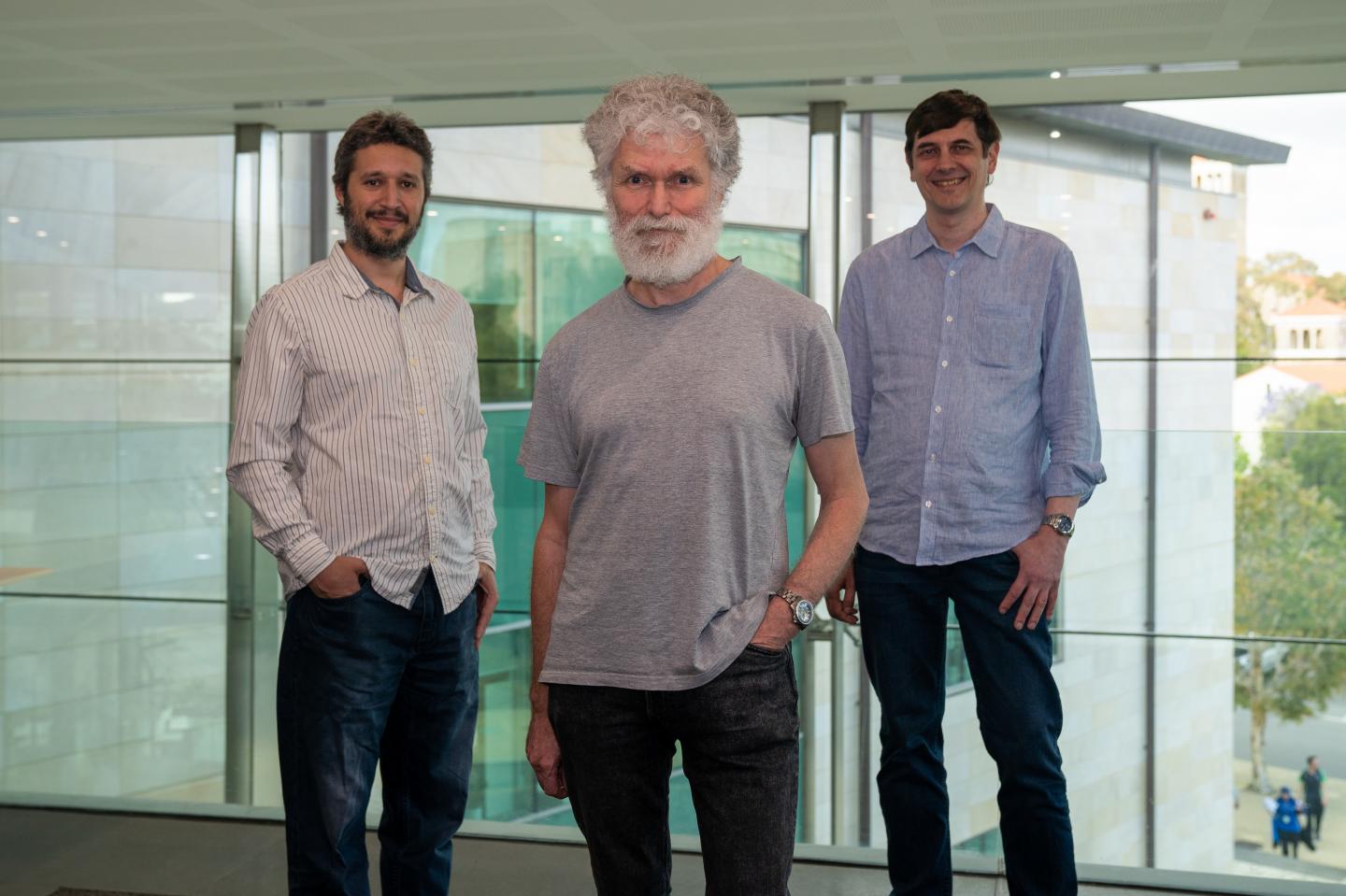
An international team led by The University of Western Australia was one of six finalists for the prestigious Gordon Bell Prize for outstanding achievement in high-performance computing.

The group was shortlisted for the award–commonly referred to as the ‘Nobel Prize of supercomputing’–for their work developing data pipelines for the future Square Kilometre Array (SKA) telescope and testing them on the Summit supercomputer.

The team used Summit–the world’s fastest supercomputer at the time–to process simulated observations of the early Universe ahead of the telescope being built in Western Australia and South Africa.

International Centre for Radio Astronomy Research (ICRAR) director of Data Intensive Astronomy Professor Andreas Wicenec, who is based at UWA, said construction of the billion-dollar SKA project was expected to begin next year.

“When complete, the SKA will be the world’s largest radio telescope and one of the world’s largest data generators,” he said.

“The low frequency part of the telescope alone is set to have more than 130,000 antennas in its initial phase, generating around 550 gigabytes of data every second.”

To process data on this scale, Professor Wicenec said the team used a cluster of 4560 computers, featuring 27,360 high-end GPUs and 191,520 CPU cores.

“The whole simulation ran for about three hours at an average of 64.9 PFLOPs, or 64,900,000,000,000,000 mathematical operations, per second,” he said.

“The highest writing data rate we achieved was 925GB a second, and the effective throughput of the complete simulation was about a factor of two better than what is required by the SKA.”

Professor Wicenec said the team was surprised but thrilled to be a finalist in the Gordon Bell Prize.

“I didn’t expect it at all given the calibre of previous winners and the highly-sophisticated nature of their projects,” he said.

“We didn’t have the Gordon Bell Prize in mind when we set out to do this work, so it’s fantastic to be recognised for the remarkable performance the multinational team achieved.”

The project was a collaboration between ICRAR, Oak Ridge National Laboratory (ORNL) and Shanghai Astronomical Observatory (SHAO).

The group’s nomination for the award was supported by SKA director general Professor Philip Diamond and US National Radio Astronomy Observatory director Dr Tony Beasley.

The ACM Gordon Bell Prize was established in the 1980s with a nominal $100 prize for anyone who could overcome Amdahl’s Law and demonstrate that parallel computing made sense.

Today, the prize continues to track the progress of parallel computing, while rewarding innovation in applying high-performance computing to science, engineering, and large-scale data analytics.

In previous years, finalists have presented their work in person ahead of an award ceremony at the annual SC supercomputing conference.

In 2020, the conference and award ceremony were held virtually, with the prize ultimately awarded to a nine-member team, drawn from Chinese and American institutions, for their project, “Pushing the limit of molecular dynamics with ab initio accuracy to 100 million atoms with machine learning.”

###

See also: World’s fastest supercomputer processes huge data rates in preparation for mega-telescope project.
https://www.icrar.org/summit/

Media Contact
Pete Wheeler
[email protected]

Original Source

https://www.icrar.org/gordon-bell-prize-finalist

Tags: AstronomyAstrophysicsComputer ScienceHardwareMultimedia/Networking/Interface DesignSoftware EngineeringTechnology/Engineering/Computer Science
Share13Tweet8Share2ShareShareShare2

Related Posts

Cutting Electrolyte Reduction Boosts High-Energy Battery Performance

Cutting Electrolyte Reduction Boosts High-Energy Battery Performance

December 19, 2025
Microenvironment Shapes Gold-Catalysed CO2 Electroreduction

Microenvironment Shapes Gold-Catalysed CO2 Electroreduction

December 11, 2025

Photoswitchable Olefins Enable Controlled Polymerization

December 11, 2025

Cation Hydration Entropy Controls Chloride Ion Diffusion

December 10, 2025
Please login to join discussion

POPULAR NEWS

  • Robotic Waist Tether for Research Into Metabolic Cost of Walking

    NSF funds machine-learning research at UNO and UNL to study energy requirements of walking in older adults

    71 shares
    Share 28 Tweet 18
  • Nurses’ Views on Online Learning: Effects on Performance

    70 shares
    Share 28 Tweet 18
  • Exploring Audiology Accessibility in Johannesburg, South Africa

    51 shares
    Share 20 Tweet 13
  • SARS-CoV-2 Subvariants Affect Outcomes in Elderly Hip Fractures

    44 shares
    Share 18 Tweet 11

About

We bring you the latest biotechnology news from best research centers and universities around the world. Check our website.

Follow us

Recent News

New Insights on Angiogenesis and Cell Death in Spinal Cord Injury

Assessing Surgical Nurses’ AI Literacy and Readiness

Link Between Physical Activity and Youth Mental Health

Subscribe to Blog via Email

Enter your email address to subscribe to this blog and receive notifications of new posts by email.

Join 71 other subscribers
  • Contact Us

Bioengineer.org © Copyright 2023 All Rights Reserved.

Welcome Back!

Login to your account below

Forgotten Password?

Retrieve your password

Please enter your username or email address to reset your password.

Log In
No Result
View All Result
  • Homepages
    • Home Page 1
    • Home Page 2
  • News
  • National
  • Business
  • Health
  • Lifestyle
  • Science

Bioengineer.org © Copyright 2023 All Rights Reserved.