• HOME
  • NEWS
  • EXPLORE
    • CAREER
      • Companies
      • Jobs
    • EVENTS
    • iGEM
      • News
      • Team
    • PHOTOS
    • VIDEO
    • WIKI
  • BLOG
  • COMMUNITY
    • FACEBOOK
    • INSTAGRAM
    • TWITTER
Saturday, February 7, 2026
BIOENGINEER.ORG
No Result
View All Result
  • Login
  • HOME
  • NEWS
  • EXPLORE
    • CAREER
      • Companies
      • Jobs
        • Lecturer
        • PhD Studentship
        • Postdoc
        • Research Assistant
    • EVENTS
    • iGEM
      • News
      • Team
    • PHOTOS
    • VIDEO
    • WIKI
  • BLOG
  • COMMUNITY
    • FACEBOOK
    • INSTAGRAM
    • TWITTER
  • HOME
  • NEWS
  • EXPLORE
    • CAREER
      • Companies
      • Jobs
        • Lecturer
        • PhD Studentship
        • Postdoc
        • Research Assistant
    • EVENTS
    • iGEM
      • News
      • Team
    • PHOTOS
    • VIDEO
    • WIKI
  • BLOG
  • COMMUNITY
    • FACEBOOK
    • INSTAGRAM
    • TWITTER
No Result
View All Result
Bioengineer.org
No Result
View All Result
Home NEWS Science News Health

Short-term moisture removal can eliminate downy mildew of spinach

Bioengineer by Bioengineer
November 2, 2020
in Health
Reading Time: 2 mins read
0
IMAGE
Share on FacebookShare on TwitterShare on LinkedinShare on RedditShare on Telegram

IMAGE

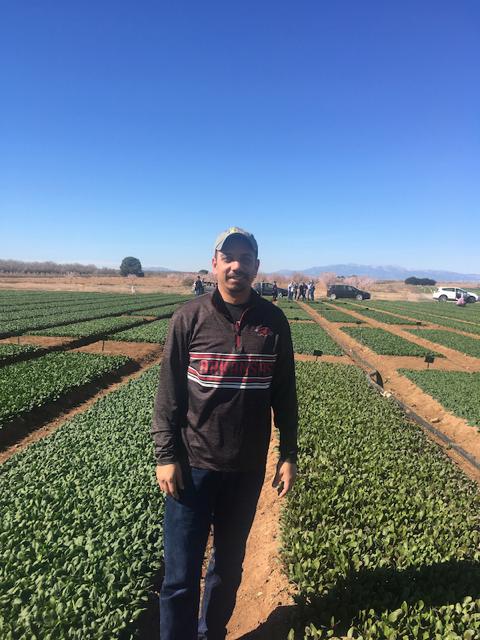
Credit: Braham Dhillon

Downy mildew is the biggest threat to spinach production around the world. While the pathogen has a short life cycle (approximately a week), it can produce millions of spores during the spinach growing season. Overhead sprinkler irrigation systems and dew formation on cool nights leads to more moisture, which enables these spores to infect the spinach.

Scientists at the University of Arkansas explored the relationship between available moisture and disease establishment and in a recent article they demonstrated that removing moisture decreased both spore survival and disease. Even a 30-minute dry period reduced spore germination to almost zero. Spores were unable to recover and cause disease on spinach.

In another experiment, they found that the micro-environment of a leaf surface can facilitate spore survival. They covered spinach plants with a spore solution and allowed the plants to dry out for different periods of time. They found that when the spores were on the plants, they were better at surviving in dry conditions but after enough time they found a reduction in disease. They also showed that standing water on leaves is essential for the spores to cause disease. These findings can be leveraged to design better disease management strategies for growers.

“We were also interested in understanding how new races of the downy mildew pathogen originate,” explained Braham Dhillon, the first author of the paper. “The pathogen produces another type of long-lived spore known as an oospore, that can become dormant and survive harsh weather and remain viable in soil for long periods of time. But very little is known about the role of oospores in the life cycle of the spinach downy mildew pathogen.”

Dhillon and colleagues were able to artificially produce oospores in the lab by mating two different strains of the downy mildew pathogen. This is a critical step in trying to determine the environmental factors that control oospore dormancy and germination.

“We demonstrated that oospores are produced abundantly in commercial spinach production areas in Arizona and California, the largest spinach growing area in the U.S.,” said Dhillon. “This was the first direct evidence that different strains of the spinach downy mildew were present, can mate, and produce hybrid progeny in the field and potentially contribute to emergence of new pathogenic races of the pathogen.” For more information about this study, read “Sporangiospore Viability and Oospore Production in the Spinach Downy Mildew Pathogen, Peronospora effusa” published in Plant Disease.

###

Media Contact
Ashley Bergman Carlin
[email protected]

Related Journal Article

http://dx.doi.org/10.1094/PDIS-02-20-0334-RE

Tags: Agricultural Production/EconomicsAgricultureBiologyEcology/EnvironmentEpidemiologyFood/Food SciencePlant Sciences
Share12Tweet8Share2ShareShareShare2

Related Posts

Evaluating Pediatric Emergency Care Quality in Ethiopia

February 7, 2026

TPMT Expression Predictions Linked to Azathioprine Side Effects

February 7, 2026

Improving Dementia Care with Enhanced Activity Kits

February 7, 2026

Decoding Prostate Cancer Origins via snFLARE-seq, mxFRIZNGRND

February 7, 2026
Please login to join discussion

POPULAR NEWS

  • Robotic Ureteral Reconstruction: A Novel Approach

    Robotic Ureteral Reconstruction: A Novel Approach

    82 shares
    Share 33 Tweet 21
  • Digital Privacy: Health Data Control in Incarceration

    63 shares
    Share 25 Tweet 16
  • Study Reveals Lipid Accumulation in ME/CFS Cells

    57 shares
    Share 23 Tweet 14
  • Breakthrough in RNA Research Accelerates Medical Innovations Timeline

    53 shares
    Share 21 Tweet 13

About

We bring you the latest biotechnology news from best research centers and universities around the world. Check our website.

Follow us

Recent News

Evaluating Pediatric Emergency Care Quality in Ethiopia

TPMT Expression Predictions Linked to Azathioprine Side Effects

Improving Dementia Care with Enhanced Activity Kits

Subscribe to Blog via Email

Success! An email was just sent to confirm your subscription. Please find the email now and click 'Confirm' to start subscribing.

Join 73 other subscribers
  • Contact Us

Bioengineer.org © Copyright 2023 All Rights Reserved.

Welcome Back!

Login to your account below

Forgotten Password?

Retrieve your password

Please enter your username or email address to reset your password.

Log In
No Result
View All Result
  • Homepages
    • Home Page 1
    • Home Page 2
  • News
  • National
  • Business
  • Health
  • Lifestyle
  • Science

Bioengineer.org © Copyright 2023 All Rights Reserved.