• HOME
  • NEWS
  • EXPLORE
    • CAREER
      • Companies
      • Jobs
    • EVENTS
    • iGEM
      • News
      • Team
    • PHOTOS
    • VIDEO
    • WIKI
  • BLOG
  • COMMUNITY
    • FACEBOOK
    • INSTAGRAM
    • TWITTER
Monday, March 30, 2026
BIOENGINEER.ORG
No Result
View All Result
  • Login
  • HOME
  • NEWS
  • EXPLORE
    • CAREER
      • Companies
      • Jobs
        • Lecturer
        • PhD Studentship
        • Postdoc
        • Research Assistant
    • EVENTS
    • iGEM
      • News
      • Team
    • PHOTOS
    • VIDEO
    • WIKI
  • BLOG
  • COMMUNITY
    • FACEBOOK
    • INSTAGRAM
    • TWITTER
  • HOME
  • NEWS
  • EXPLORE
    • CAREER
      • Companies
      • Jobs
        • Lecturer
        • PhD Studentship
        • Postdoc
        • Research Assistant
    • EVENTS
    • iGEM
      • News
      • Team
    • PHOTOS
    • VIDEO
    • WIKI
  • BLOG
  • COMMUNITY
    • FACEBOOK
    • INSTAGRAM
    • TWITTER
No Result
View All Result
Bioengineer.org
No Result
View All Result
Home NEWS Science News Biology

Researchers uncover crucial gene for growth of Ewing sarcoma

Bioengineer by Bioengineer
October 23, 2020
in Biology
Reading Time: 2 mins read
0
IMAGE
Share on FacebookShare on TwitterShare on LinkedinShare on RedditShare on Telegram

An epigenetic vulnerability opens the door for new therapies

IMAGE

Credit: Institut de Recerca Sant Joan de Déu

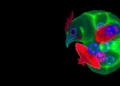
Researchers at the Institut de Recerca Sant Joan de Déu (IRSJD) in collaboration with those at Centre for Genomic Regulation (CRG) have discovered that RING1B is a critical gene for the development of Ewing sarcoma, a rare type of developmental cancer that presents in bones and soft tissues. This newly uncovered epigenetic vulnerability in Ewing sarcoma cancer cells opens the door for new therapeutic strategies.

Ewing sarcoma is caused by a chromosomal translocation, where the EWSR1 gene in chromosome 22 fuses with most commonly the FLI1 gene in chromosome 11. The resulting EWSR1-FLI1 fusion protein, which contains the transcriptional activation machinery of EWSR1 and the DNA-binding domain of FLI1, is the main driver of tumorigenesis.

A new study published today in Science Advances describes how the oncogenic EWSR1-FLI1 fusion protein is directed to the different parts of the genome by RING1B, allowing EWSR1-FLI1 to hijack the transcriptional program of the cells, turning them into cancerous cells.

Researchers found that RING1B and EWSR1-FLI1 localize at the same regions in the genome, where RING1B is responsible for EWSR1-FLI1 recruitment. EWSR1-FLI1 cannot activate its target genes and transform a cell from healthy to cancerous state without RING1B, as shown by impaired tumour growth when RING1B is reduced.

Epigenetic inhibitors have been previously proposed to treat Ewing sarcoma and other types of paediatric cancers such as neuroblastoma, rhabdomyosarcoma or synovial sarcoma. Further research could explore the pharmacological inhibition of RING1B as a clinical therapy to treat Ewing sarcoma.

“Our findings offer striking insights into the mechanism of Ewing sarcoma, helping us get closer to uncovering the elusive cell-of-origin for this rare type of cancer,” says Luciano Di Croce, researcher at the Centre for Genomic Regulation and one of the authors of the study. “All we have to do is look for high levels of RING1B.”

“EWSR1-FLI1 remains a challenging druggable target, therefore understanding its dependencies may offer alternative strategies to switch off its aberrant transcriptional program,” says Sara Sánchez-Molina, first author of the study and postdoctoral researcher at the Institut de Recerca Sant Joan de Déu.

“Ewing tumors are paradigmatic examples of developmental cancers, where the first hit (genetic or epigenetic) occurs during embryonic development (gestation) and, in the majority of Ewing sarcomas, develops postnatally during specific stages of growth like puberty. The study supports the model by which embryonic stem cells characterized by high levels of RING1B are capable to sustain the aberrant transcriptional program caused by the oncogenic fusion protein. Ewing sarcoma will develop if the individual is born with precursor cells bearing the fusion oncoprotein”, says Jaume Mora, Scientific Director of the Pediatric Cancer Center Barcelona-Institut de Recerca Sant Joan de Déu, and director of the study.

###

Media Contact
Omar Jamshed
[email protected]

Related Journal Article

http://dx.doi.org/10.1126/sciadv.aba3058

Tags: cancerCell BiologyGeneticsMedicine/Health
Share13Tweet8Share2ShareShareShare2

Related Posts

Squirrels Scale Greater Heights to Access Superior Snacks

Squirrels Scale Greater Heights to Access Superior Snacks

March 30, 2026
New Zebrafish Study Sheds Light on Why Haploid Fish Embryos Often Fail to Fully Develop

New Zebrafish Study Sheds Light on Why Haploid Fish Embryos Often Fail to Fully Develop

March 30, 2026

Boron Neutron Capture Therapy: A Breakthrough in Cancer Treatment

March 29, 2026

Bacteria Integrate Polyfluoroalkyl Carboxylates into Membranes

March 29, 2026
Please login to join discussion

POPULAR NEWS

  • blank

    Revolutionary AI Model Enhances Precision in Detecting Food Contamination

    96 shares
    Share 38 Tweet 24
  • Imagine a Social Media Feed That Challenges Your Views Instead of Reinforcing Them

    1005 shares
    Share 397 Tweet 248
  • Promising Outcomes from First Clinical Trials of Gene Regulation in Epilepsy

    51 shares
    Share 20 Tweet 13
  • Advancements in EV Battery Technology to Surpass Climate Change-Induced Degradation

    45 shares
    Share 18 Tweet 11

About

We bring you the latest biotechnology news from best research centers and universities around the world. Check our website.

Follow us

Recent News

Life Satisfaction and Cognitive Reserve Shape Aging Brains

Gut Microbiome Drives Metabolic Response to Raspberries

Prioritize Intensity Over Duration: How Harder Exercise Lowers Disease and Mortality Risks

Subscribe to Blog via Email

Enter your email address to subscribe to this blog and receive notifications of new posts by email.

Join 78 other subscribers
  • Contact Us

Bioengineer.org © Copyright 2023 All Rights Reserved.

Welcome Back!

Login to your account below

Forgotten Password?

Retrieve your password

Please enter your username or email address to reset your password.

Log In
No Result
View All Result
  • Homepages
    • Home Page 1
    • Home Page 2
  • News
  • National
  • Business
  • Health
  • Lifestyle
  • Science

Bioengineer.org © Copyright 2023 All Rights Reserved.