• HOME
  • NEWS
  • EXPLORE
    • CAREER
      • Companies
      • Jobs
    • EVENTS
    • iGEM
      • News
      • Team
    • PHOTOS
    • VIDEO
    • WIKI
  • BLOG
  • COMMUNITY
    • FACEBOOK
    • INSTAGRAM
    • TWITTER
Wednesday, August 19, 2026
BIOENGINEER.ORG
No Result
View All Result
  • Login
  • HOME
  • NEWS
  • EXPLORE
    • CAREER
      • Companies
      • Jobs
        • Lecturer
        • PhD Studentship
        • Postdoc
        • Research Assistant
    • EVENTS
    • iGEM
      • News
      • Team
    • PHOTOS
    • VIDEO
    • WIKI
  • BLOG
  • COMMUNITY
    • FACEBOOK
    • INSTAGRAM
    • TWITTER
  • HOME
  • NEWS
  • EXPLORE
    • CAREER
      • Companies
      • Jobs
        • Lecturer
        • PhD Studentship
        • Postdoc
        • Research Assistant
    • EVENTS
    • iGEM
      • News
      • Team
    • PHOTOS
    • VIDEO
    • WIKI
  • BLOG
  • COMMUNITY
    • FACEBOOK
    • INSTAGRAM
    • TWITTER
No Result
View All Result
Bioengineer.org
No Result
View All Result
Home NEWS Science News Chemistry

Hubble sees swirls of forming stars

Bioengineer by Bioengineer
October 9, 2020
in Chemistry
Reading Time: 1 min read
0
IMAGE
Share on FacebookShare on TwitterShare on LinkedinShare on RedditShare on Telegram

IMAGE

Credit: European Space Agency

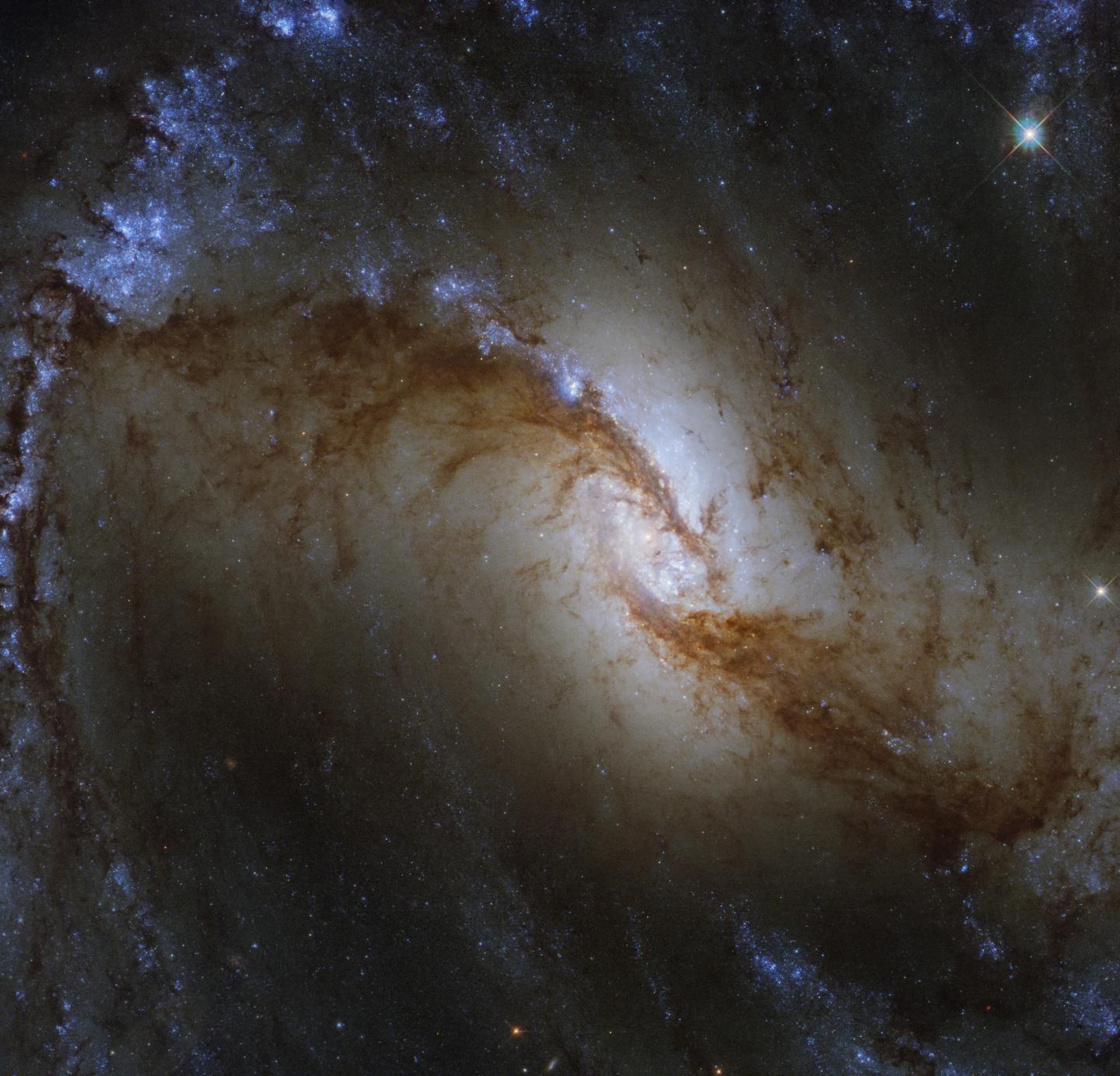
At around 60 million light-years from Earth, the Great Barred Spiral Galaxy, NGC 1365, is captured beautifully in this image by the NASA/ESA Hubble Space Telescope. Located in the constellation of Fornax (the Furnace), the blue and fiery orange swirls show us where stars have just formed and the dusty sites of future stellar nurseries.

At the outer edges of the image, enormous star-forming regions within NGC 1365 can be seen. The bright, light-blue regions indicate the presence of hundreds of baby stars that formed from coalescing gas and dust within the galaxy’s outer arms.

This Hubble image was captured as part of a joint survey with the Atacama Large Millimeter/submillimeter Array (ALMA) in Chile. The survey will help scientists understand how the diversity of galaxy environments observed in the nearby universe, including NGC 1365 and other galaxies such as NGC 2835 and NGC 2775, influence the formation of stars and star clusters. Expected to image over 100,000 gas clouds and star-forming regions beyond our Milky Way, the PHANGS survey is expected to uncover and clarify many of the links between cold gas clouds, star formation, and the overall shape and morphology of galaxies.

###

Media Contact
Rob Gutro
[email protected]

Original Source

https://www.nasa.gov/image-feature/goddard/2020/hubble-sees-swirls-of-forming-stars

Tags: AstronomyAstrophysicsEarth ScienceSpace/Planetary ScienceStars/The Sun
Share13Tweet8Share2ShareShareShare2

Related Posts

Tuning Endergonic Triplet Photosensitization Enables Bicyclo[1.1.0]butane–Alkene Cycloadditions

Tuning Endergonic Triplet Photosensitization Enables Bicyclo[1.1.0]butane–Alkene Cycloadditions

August 19, 2026
New plastic vaporizes when heated, then reforms upon cooling

New plastic vaporizes when heated, then reforms upon cooling

August 19, 2026

SUNY Chancellor King Announces Simons Empire Faculty Fellowship Recipients

August 18, 2026

KTU chemists create dual-action compounds targeting cancer and infections

August 18, 2026
Please login to join discussion

POPULAR NEWS

  • Defense Department Awards SUNY Polytechnic Institute $61.9 Million for AI, Defense Innovation

    29 shares
    Share 12 Tweet 7
  • T Cells Shed Exhaustion Marker, Escape Tumors, and Prevent Cancer Relapse

    29 shares
    Share 12 Tweet 7
  • Multiple chronic conditions increase pregnancy risks for women

    29 shares
    Share 12 Tweet 7
  • Harvard’s George Church to Present at 13th ARDD Meeting in Boston

    29 shares
    Share 12 Tweet 7

About

We bring you the latest biotechnology news from best research centers and universities around the world. Check our website.

Follow us

Recent News

Defense Department Awards SUNY Polytechnic Institute $61.9 Million for AI, Defense Innovation

T Cells Shed Exhaustion Marker, Escape Tumors, and Prevent Cancer Relapse

Multiple chronic conditions increase pregnancy risks for women

Subscribe to Blog via Email

Enter your email address to subscribe to this blog and receive notifications of new posts by email.

Join 85 other subscribers
  • Contact Us

Bioengineer.org © Copyright 2023 All Rights Reserved.

Welcome Back!

Login to your account below

Forgotten Password?

Retrieve your password

Please enter your username or email address to reset your password.

Log In
No Result
View All Result
  • Homepages
    • Home Page 1
    • Home Page 2
  • News
  • National
  • Business
  • Health
  • Lifestyle
  • Science

Bioengineer.org © Copyright 2023 All Rights Reserved.