Scientists have found an ingredient that makes a vaccine more effective through an approach more often seen in materials science – testing molecules that self-assemble into larger structures
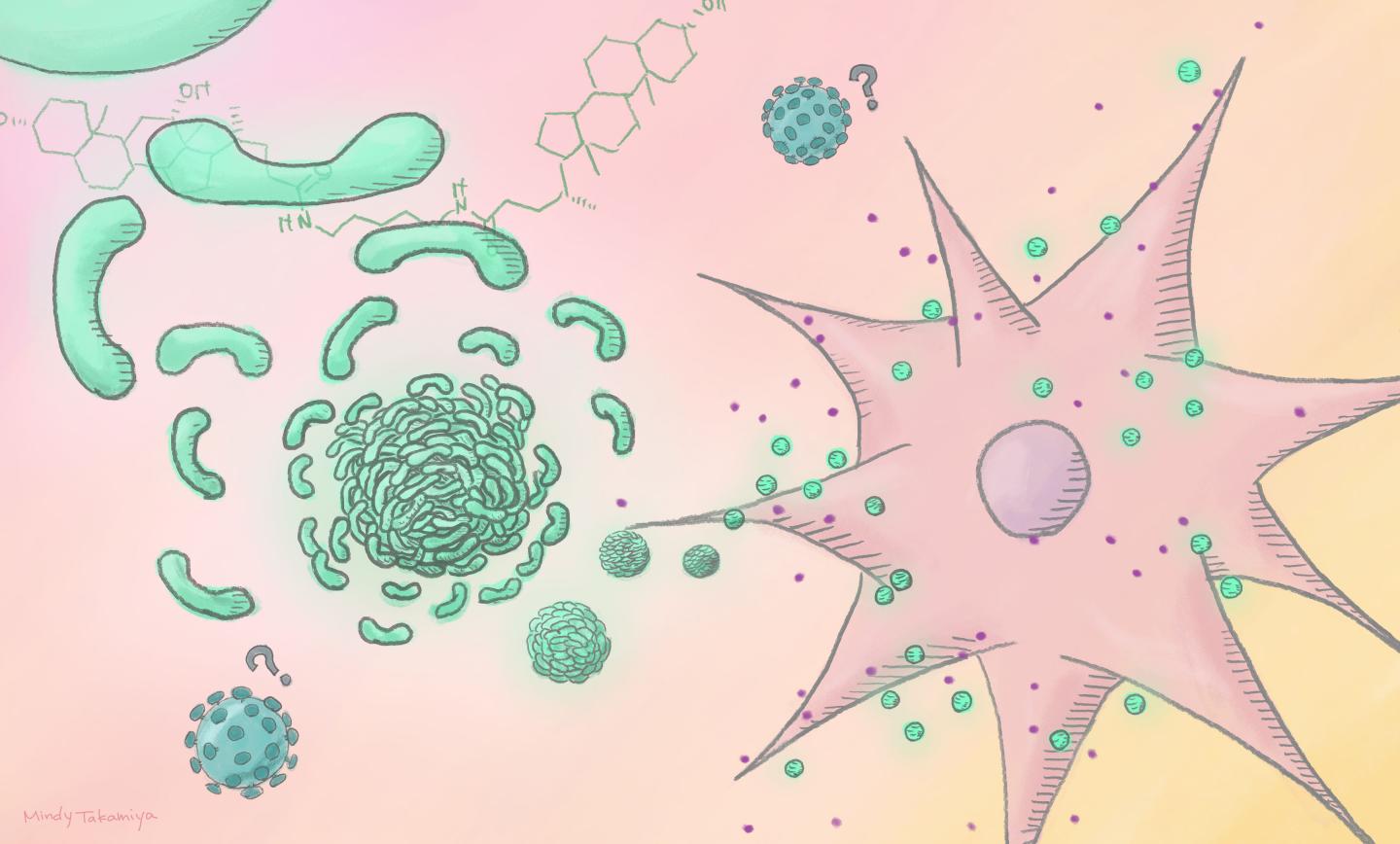
Credit: Mindy Takamiya/Kyoto University iCeMS
Many vaccines include ingredients called adjuvants that help make them more effective by eliciting a stronger immune response. Identifying potential adjuvants just got easier, thanks to an approach described by scientists at Kyoto University’s Institute for Integrated Cell-Material Sciences (iCeMS) and colleagues in the journal Angewandte Chemie.
The team of chemists and biologists in Japan report they found a molecule that, when added to a vaccine, strengthens the immune response just as well as a commonly used adjuvant. Vaccine adjuvants are an essential part of clinically used antigen vaccines, such as influenza, hepatitis and cervical cancer vaccines.
“Adjuvants generate a robust and long-lasting immune response, but the ones currently in use, like aluminium salts and oil-in-water emulsions, were developed in the 1920s and we don’t precisely understand how they work, which is why they are often called ‘immunologists’ dirty little secret,'” says iCeMS chemical biologist Motonari Uesugi, who led the study.
The new adjuvant was discovered by screening a library of 8,000 small molecules for their ability to self-assemble. Molecular self-assembly is the spontaneous self-organization of molecules through non-electron-sharing bonds. This is a well-known concept in materials science that is also employed by living organisms to perform complex biological functions.
“We hypothesized that structures that come together through molecular self-assembly might mimic structures in pathogens, like viruses, stimulating a similar immune response,” says Uesugi.
The team found 116 molecules that can self-assemble and then screened them for the ability to increase interleukin-6 expression by macrophages. Macrophages are immune cells that detect and ‘eat up’ pathogens circulating in the body. They also release proteins, such as interleukin-6, that activate other immune cells.
The research led to the discovery of a molecule called cholicamide. This molecule self-assembled to form a virus-mimicking structure that is engulfed by macrophages and similar immune cells. The structures are transported into specialized vacuoles to combine with a specific receptor called toll-like receptor 7, which sparks a heightened immune response. Specifically, it leads to the release of immune-stimulating cues like interleukin-6.
Further investigations and comparisons demonstrated that cholicamide was just as potent in inducing an immune response as the adjuvant Alum when added to an influenza vaccine given to mice.
“Our study, to the best of our knowledge, is the first report of using a small molecule library for vaccine adjuvant discovery,” says Uesugi. “We hope the new approach paves the way for discovering and designing self-assembling small molecule adjuvants against pathogens, including emerging viruses.”
Further studies are needed to determine how cholicamide mimics the single RNA strands of viruses to activate toll-like receptor 7. The researchers also want to understand how cholicamide binds to the receptor to elucidate the effects of this interaction.
###
About Kyoto University’s Institute for Integrated Cell-Material Sciences (iCeMS):
At iCeMS, our mission is to explore the secrets of life by creating compounds to control cells, and further down the road to create life-inspired materials.
Media Contact
I. Mindy Takamiya/Mari Toyama
[email protected]
Related Journal Article
http://dx.