• HOME
  • NEWS
  • EXPLORE
    • CAREER
      • Companies
      • Jobs
    • EVENTS
    • iGEM
      • News
      • Team
    • PHOTOS
    • VIDEO
    • WIKI
  • BLOG
  • COMMUNITY
    • FACEBOOK
    • INSTAGRAM
    • TWITTER
Friday, December 26, 2025
BIOENGINEER.ORG
No Result
View All Result
  • Login
  • HOME
  • NEWS
  • EXPLORE
    • CAREER
      • Companies
      • Jobs
        • Lecturer
        • PhD Studentship
        • Postdoc
        • Research Assistant
    • EVENTS
    • iGEM
      • News
      • Team
    • PHOTOS
    • VIDEO
    • WIKI
  • BLOG
  • COMMUNITY
    • FACEBOOK
    • INSTAGRAM
    • TWITTER
  • HOME
  • NEWS
  • EXPLORE
    • CAREER
      • Companies
      • Jobs
        • Lecturer
        • PhD Studentship
        • Postdoc
        • Research Assistant
    • EVENTS
    • iGEM
      • News
      • Team
    • PHOTOS
    • VIDEO
    • WIKI
  • BLOG
  • COMMUNITY
    • FACEBOOK
    • INSTAGRAM
    • TWITTER
No Result
View All Result
Bioengineer.org
No Result
View All Result
Home NEWS Science News Biology

Amazonia racing toward tipping point, fueled by unregulated fires

Bioengineer by Bioengineer
September 23, 2020
in Biology
Reading Time: 2 mins read
0
IMAGE
Share on FacebookShare on TwitterShare on LinkedinShare on RedditShare on Telegram

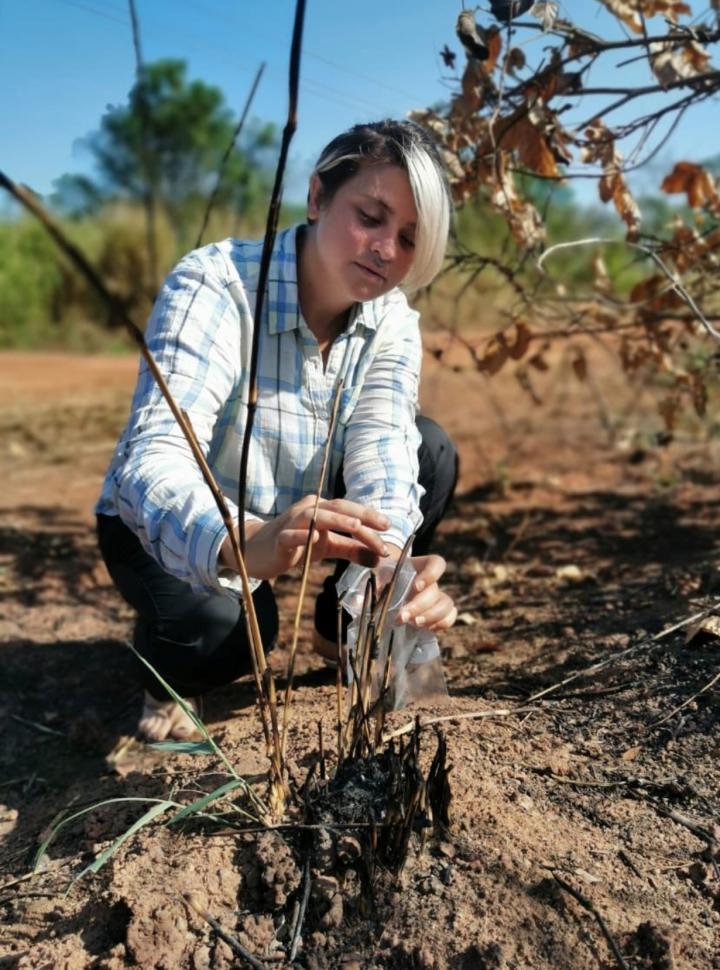
Invaluable rainforests could become become savanna
IMAGE

Credit: Florida Institute of Technology

Amazonia is closer to a catastrophic ecological tipping point than any time in the last 100,000 years, and human activity is the cause.

In a new paper published today in the Annals of the Missouri Botanical Garden, Florida Tech biology professor Mark Bush describes how the vast Amazonian rainforest could be replaced by savanna, which is a grassland with few trees, within our lifetime.

Rainforests rely on high humidity and have no adaptation to withstand fire. Bush uses fossil pollen and charcoal recovered from lake sediments dating back thousands of years to track changes in vegetation and fire frequency through time. He has found that fires were almost unknown in Amazonia before the arrival of humans.

Relatively small-scale disturbances caused by the first inhabitants of Amazonia over the last 10,000 years did not bring the system to a tipping point because it could recover from these minor events. But the modern effects of a warming climate and elevated drought risk – both the product of anthropogenic climate change – are combining with much larger-scale deforestation and burning in Amazonia to create the conditions where vast areas of rainforest could transition to savanna in a matter of decades.

“The immense biodiversity of the rainforest is at risk from fire,” Bush said.

One of the key points of the paper, “New and repeating tipping points: the interplay of fire, climate change and deforestation in Neotropical ecosystems,” is that while no individual government can control climate change, fire can be regulated through policy. Almost all fires in Amazonia are set deliberately by people and have become much more frequent in the last two years, because of altered policy, than over the previous decade.

Bush’s data show that the tipping point is likely to be reached if temperatures rise by another 2 to 3 degrees Fahrenheit. Anthropogenic warming would bring those temperatures by the end of this century, but increased burning creates hotter, drier, less shaded landscapes that could hasten that transition.

“Warming alone could induce the tipping point by mid-century, but if the present policies that turn a blind eye to forest destruction aren’t stopped, we could reach the tipping point much sooner,” Bush said.

He added, “Beyond the loss of wildlife, the cascading effects of losing Amazonian rainforest would alter rainfall across the hemisphere. This is not a remote problem, but one of global importance and critical significance to food security that should concern us all.”

###

Media Contact
Adam Lowenstein
[email protected]

Original Source

https://news.fit.edu/science/amazonia-nears-tipping-point-new-paper-reports/

Related Journal Article

http://dx.doi.org/10.3417/2020565

Tags: BiologyClimate ChangeEcology/Environment
Share12Tweet8Share2ShareShareShare2

Related Posts

Unveiling Genetic Factors Affecting Milk Fat in Holsteins

Unveiling Genetic Factors Affecting Milk Fat in Holsteins

December 26, 2025
Halophilic Bacteria: Combatting Salt Stress with EPS and IAA

Halophilic Bacteria: Combatting Salt Stress with EPS and IAA

December 26, 2025

Male-Biased Immune Changes in Late-Onset Preeclampsia

December 24, 2025

Mitochondrial Recombination Fuels Rapid Fish DNA Evolution

December 24, 2025
Please login to join discussion

POPULAR NEWS

  • Nurses’ Views on Online Learning: Effects on Performance

    Nurses’ Views on Online Learning: Effects on Performance

    70 shares
    Share 28 Tweet 18
  • NSF funds machine-learning research at UNO and UNL to study energy requirements of walking in older adults

    71 shares
    Share 28 Tweet 18
  • Unraveling Levofloxacin’s Impact on Brain Function

    54 shares
    Share 22 Tweet 14
  • Exploring Audiology Accessibility in Johannesburg, South Africa

    51 shares
    Share 20 Tweet 13

About

We bring you the latest biotechnology news from best research centers and universities around the world. Check our website.

Follow us

Recent News

Unveiling Genetic Factors Affecting Milk Fat in Holsteins

Postoperative Hungry Bone Syndrome in Hyperparathyroidism: Insights from South Africa

Halophilic Bacteria: Combatting Salt Stress with EPS and IAA

Subscribe to Blog via Email

Enter your email address to subscribe to this blog and receive notifications of new posts by email.

Join 71 other subscribers
  • Contact Us

Bioengineer.org © Copyright 2023 All Rights Reserved.

Welcome Back!

Login to your account below

Forgotten Password?

Retrieve your password

Please enter your username or email address to reset your password.

Log In
No Result
View All Result
  • Homepages
    • Home Page 1
    • Home Page 2
  • News
  • National
  • Business
  • Health
  • Lifestyle
  • Science

Bioengineer.org © Copyright 2023 All Rights Reserved.