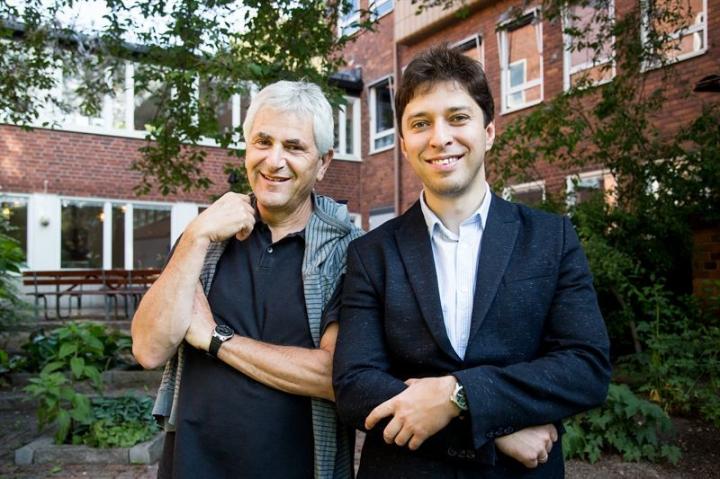
Credit: Gustav Martensson
New knowledge on the cellular makeup and growth of teeth can expedite developments in regenerative dentistry – a biological therapy for damaged teeth – as well as the treatment of tooth sensitivity. The study, which was conducted by researchers at Karolinska Institutet, is published in Nature Communications.
Teeth develop through a complex process in which soft tissue, with connective tissue, nerves and blood vessels, are bonded with three different types of hard tissue into a functional body part. As an explanatory model for this process, scientists often use the mouse incisor, which grows continuously and is renewed throughout the animal’s life.
Despite the fact that the mouse incisor has often been studied in a developmental context, many fundamental questions about the various tooth cells, stem cells and their differentiation and cellular dynamics remain to be answered.
Using a single-cell RNA sequencing method and genetic tracing, researchers at Karolinska Institutet, the Medical University of Vienna in Austria and Harvard University in the USA have now identified and characterised all cell populations in mouse teeth and in the young growing and adult human teeth.
“From stem cells to the completely differentiated adult cells we were able to decipher the differentiation pathways of odontoblasts, which give rise to dentine – the hard tissue closest to the pulp – and ameloblasts, which give rise to the enamel,” say the study’s last author Igor Adameyko at the Department of Physiology and Pharmacology, Karolinska Institutet, and co-author Kaj Fried at the Department of Neuroscience, Karolinska Institutet. “We also discovered new cell types and cell layers in teeth that can have a part to play in tooth sensitivity.”
Some of the finds can also explain certain complicated aspects of the immune system in teeth, and others shed new light on the formation of tooth enamel, the hardest tissue in our bodies.
“We hope and believe that our work can form the basis of new approaches to tomorrow’s dentistry. Specifically, it can expedite the fast expanding field of regenerative dentistry, a biological therapy for replacing damaged or lost tissue.”
The results have been made publicly accessible in the form of searchable interactive user-friendly atlases of mouse and human teeth. The researchers believe that they should prove a useful resource not only for dental biologists but also for researchers interested in development and regenerative biology in general.
###
The study was funded by a European Research Grant, EMBO, the Bertil Hallsten Research Foundation, the Swedish Research Council, the Åke Wiberg Foundation, Masaryk University, a European Research Grant, the National Institute of Health, the National Institute of Dental and Craniofacial Research and MEYS CR.
Peter V. Kharchenko is a member of Celsius Therapeutics’ research council. No other conflicts of interest have been declared.
Publication: “Dental cell type atlas reveals stem and differentiated cell types in mouse and human teeth”, Jan Krivanek, Ruslan Soldatov, Maria Kastriti, Tatiana Chontorotzea, Anna Herdina, Julian Petersen, Bara Szarowska, Marie Sulcova, Veronika Kovar Matejova, Lydie Izakovicova Holla, Ulrike Kuchler, Ivana Vidovic Zdrilic, Anushree Vijaykumar, Anamaria Balic, Pauline Marangoni, Ophir Klein, Vitor C.M. Neves, Val Yianni, Paul Sharpe, Tibor Harkany, Brian D. Metscher, Marc Bajenoff, Mina Mina, Kaj Fried, Peter Kharchenko and Igor Adameyko. Nature Communications, online September 23 2020, doi: 10.1038/s41467-020-18512-7.
Media Contact
Press Office
[email protected]
Original Source
http://dx.
Related Journal Article
http://dx.