In a recent paper published in Nature Ecology and Evolution, a group of multidisciplinary authors discuss the future of field-based sciences in a COVID-19 world
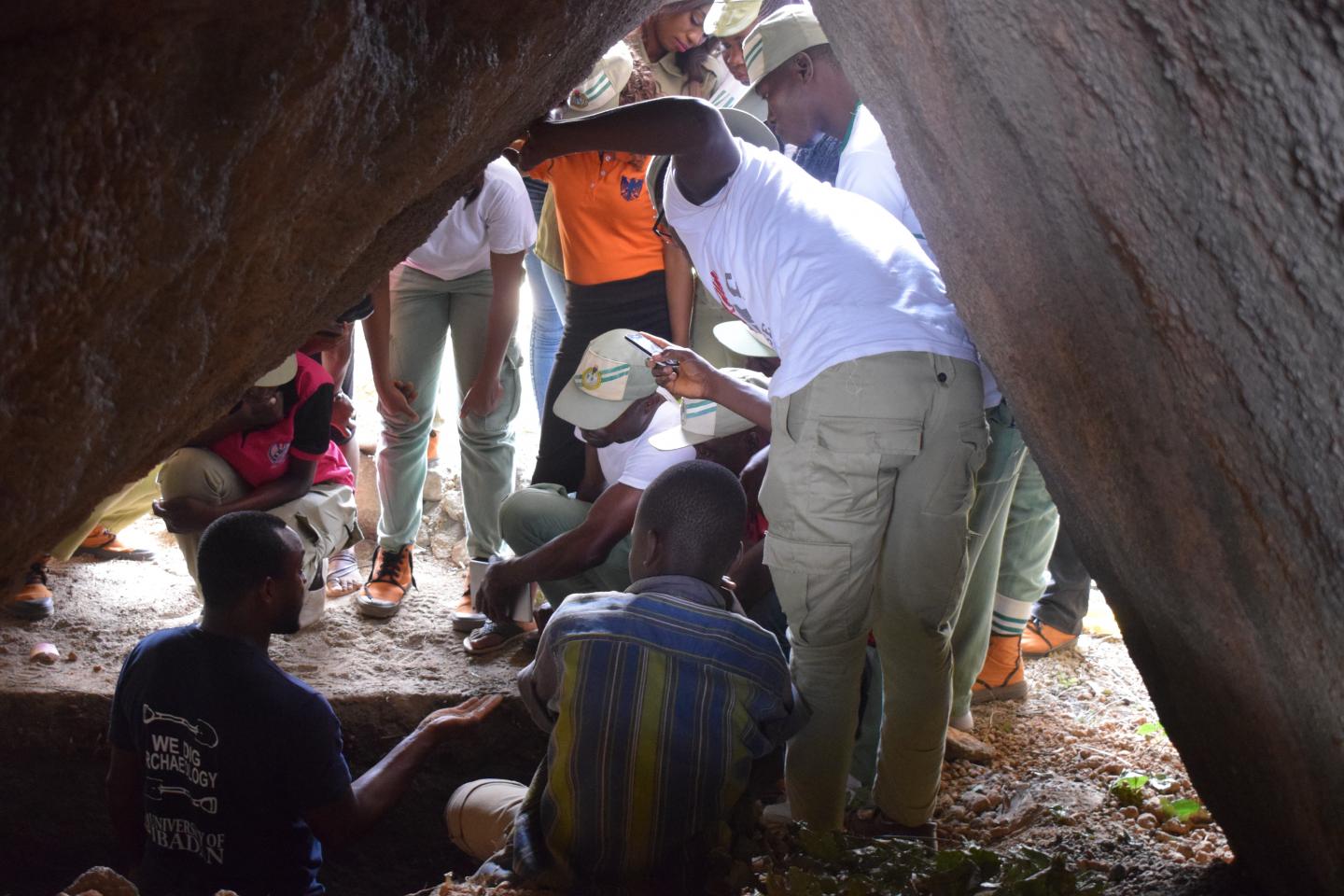
Credit: Dr. Emuobosa Akpo Orijemie
Independent group leaders Eleanor Scerri and Denise Kuehnert of the Max Planck Institute for the Science of Human History (MPI-SHH) have teamed up with other colleagues from the institute and beyond to comment in Nature Ecology & Evolution on the future of field-based sciences in a COVID-19 world. The piece outlines the epidemiological characteristics of SARS-CoV-2, the virus causing the COVID-19 pandemic, details its effects on field-based sciences and identifies how working practices can be remodelled to overcome the challenges brought on by the virus.
The authors have wide-ranging expertise in archaeology, the allied geosciences and infectious disease dynamics and represent a diversity of views ranging from the Global North to the South, from large countries to small island nations. Drawing from this broad pool of experience and expertise allowed the authors to consider a wide range of barriers and possible solutions while ensuring ethical and safeguarding standards are in place. For example, the current paper outlines protocols for remote collaboration, key adjustments that need to be made by funding agencies and curriculum changes to accommodate emerging technological problems and solutions.
“This project started as a discussion with international colleagues and collaborators to find positive solutions to the research problems we face,” says Dr. Eleanor Scerri, head of the Pan-African Evolution Research Group at the MPI-SHH.
“In the future we will likely see spatially and temporally patchy peaks and troughs in COVID-19 case numbers,” adds Dr. Denise Kuehnert, head of the Transmission, Infection, Diversification & Evolution Group. “It seems clear we can’t just pause all science fieldwork or persist with short-term mitigation strategies.”
Among the recommendations outlined are the creation and use of digital archives with community interpretation – goals that correspond well with an ‘Open Science’ framework and make scientific research accessible to all. At the same time, the authors argue for greater recognition of the value of technicians and greater investment in technician training and recruitment, as well as greater financial support for method development. To prevent the loss of foundational methods of field interpretation, the paper articulates how virtual training methods can be combined with safe, local and physically distanced training excavations.
In making these points, the authors note that the scientific decarbonization movement has long been advocating for change in fieldwork practices. The movement – which seeks to reduce the travel-related carbon footprint of scientists, among other things – has also made the case for the increased use of technologies that promote remote collaboration.
“We see the barriers we’re facing as an opportunity to remodel the way field-based sciences are taught, conducted and funded,” says Scerri. “This is an opportunity to develop better collaborations for both social and climate justice while continuing to safely engage with our disciplines to the fullest extent.”
###
Media Contact
Eleanor Scerri
[email protected]
Related Journal Article
http://dx.