Seafood shells full of nutrients and flavor — research
Credit: Flinders University
As exploitation of wild fisheries and marine environments threaten food supplies, Flinders University scientists are finding sustainable new ways to convert biowaste, algal biomass and even beached seaweed into valuable dietary proteins and other products.
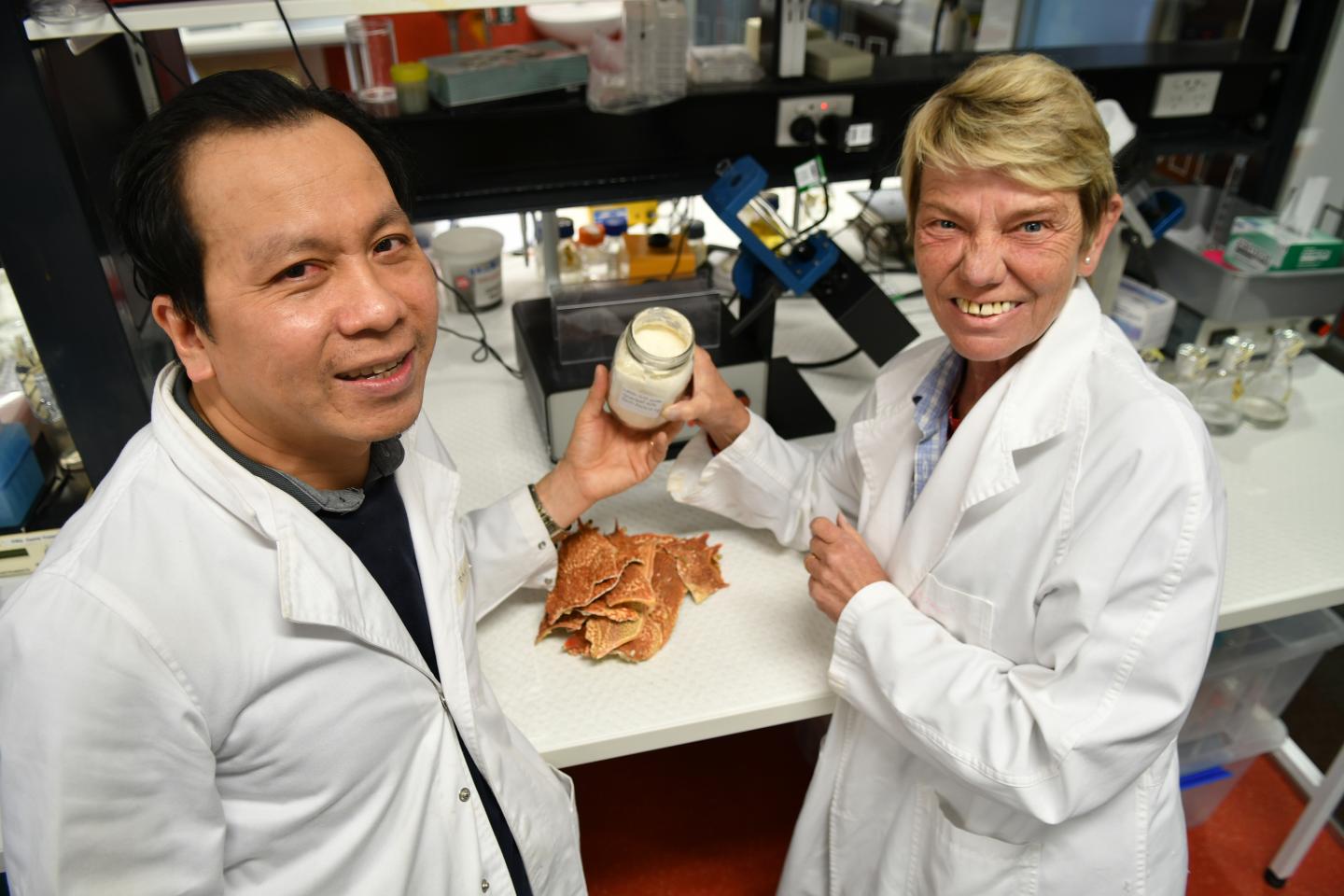
In one of several projects under way at the Flinders Centre for Marine Bioproducts Development, researchers are looking to extract value from crayfish shells and other marine waste via a ‘green’ fluidic processing machine developed at the University.
“As world populations grow, so will demand for dietary proteins and protein-derived products and this cannot be met using traditional protein sources,” says Professor Kirsten Heimann, who says millions of tonnes of sea catches produce bycatch, shells, bones, heads and other parts wasted during the processing of marine and freshwater species.
Seafood processing by-products (SPBs) and microalgae are promising resources that can fill the demand gap for proteins and protein derivatives, they say in a new publication.
“These biomaterials are a rich source of proteins with high nutritional quality while protein hydrolysates and biopeptides derived from these marine proteins possess several useful bioactivities for commercial applications in multiple industries,” adds Flinders University co-author Trung Nguyen in the paper published in Marine Drugs.
“Efficient utilisation of these marine biomaterials for protein recovery would not only supplement global demand and save natural bioresources but would also successfully address the financial and environmental burdens of biowaste, paving the way for greener production and a circular economy.”
Value-adding also looks promising with many of the bioactive protein-derived products gaining attention to promote human health including in drug discovery, nutraceutical and pharmaceutical developments. Estimates of the commercial value of these therapeutic protein-based products in 2015 was US$174.7 billion and is predicted to reach US$266.6 billion in 2021, leading to a two-fold increase in demand of protein-derived products.
Globally, 32 million tonnes of SPBs are estimated to be produced annually which represents an inexpensive resource for protein recovery while technical advantages in microalgal biomass production would yield secure protein supplies with minimal competition for arable land and freshwater resources.
This comprehensive review article analyses the potential of using SPBs and microalgae for protein recovery and production critically assessing the feasibility of current and emerging technologies used for the process development.
The nutritional quality, functionalities, and bioactivities of the extracted proteins and derived products together with their potential applications for commercial product development are also systematically summarised and discussed in the free online paper.
###
The Flinders research team aims to provide sustainable solutions and a strong business case for expanding Australia’s marine bioproducts industry to become internationally competitive and attractive to investors and export-oriented markets.
The article, ‘Protein Recovery from Underutilised Marine Bioresources for Product Development with Nutraceutical and Pharmaceutical Bioactivities’ (2020) by Trung T Nguyen, Kirsten Heimann and Wei Zhang has been published in Marine Drugs, 2020 (DOI: 10.3390/md18080391
The project used patented technology, the vortex fluidic device, that represents a new chemicals processing capability, enabling new synthesis strategies with a diversity of research and industrial applications.
Media Contact
Professor Kirsten Heimann
[email protected]
Related Journal Article
http://dx.