Study shows potential negative effects of disrupted sleep
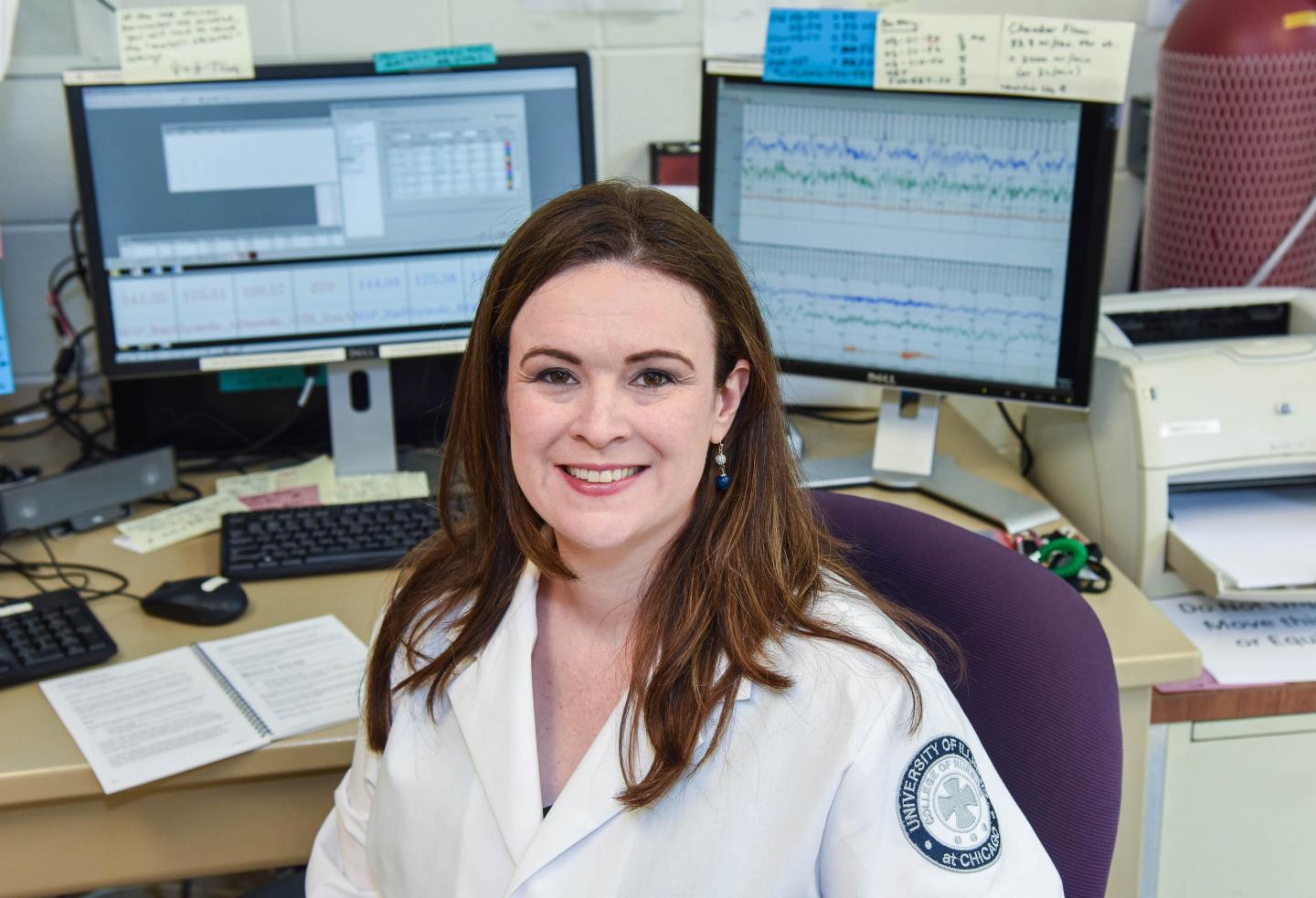
Credit: Mark Mershon/University of Illinois Chicago
In the first study of its kind, University of Illinois Chicago researchers have found associations among disrupted sleep, elevated blood pressure and changes in the gut microbiome.
The research aimed to determine whether a 28-day period of disrupted sleep changed the microbiota in rats. The gut microbiota refers to the collection of microorganisms living in the intestines. The researchers also sought to identify biological features associated with undesirable arterial blood pressure changes.
The results were published in Physiological Genomics.
Using rats, the researcher disrupted their sleep periods. Rats are nocturnal, so the experiments were designed to interfere with their daytime sleep periods.
Telemetry transmitters measured the rats’ brain activity, blood pressure and heart rate. Fecal matter also was analyzed to examine changes in the microbial content.
The research idea was generated by several of the paper’s authors who are or have been health care providers with night-shift schedules.
“When rats had an abnormal sleep schedule, an increase in blood pressure developed — the blood pressure remained elevated even when they could return to normal sleep. This suggests that dysfunctional sleep impairs the body for a sustained period,” Maki said.
Undesirable changes also were found in the gut microbiome — the genetic material of all bacteria living in the colon.
Contrary to her initial hypothesis, Maki found that the gut microbiome changes did not happen immediately, but instead took a week to show unfavorable responses such as an imbalance among different types of bacteria including an increase in microbes associated with inflammation.
“When the sleep disruption stopped, everything did not come back to normal immediately,” Maki said. “This research shows a very complex system with the presence of multiple pathological factors.”
This was initial research, and studies will continue to examine pathways involving the gut microbiome and metabolites produced by gut bacteria. The researchers will see exactly how sleep characteristics are changed and how long blood pressure and gut microbiome alterations persist. Researchers will then determine how this information translates to humans.
“We hope to find an intervention that can help people who are at risk for cardiovascular disease because of their work and sleep schedules. People will always have responsibilities that interrupt their sleep. We want to be able to reduce their risk by targeting the microbiome with new therapies or dietary changes,” Fink said.
###
The paper’s authors also include Larisa A. Burke, Michael W. Calik, Dagmar Sweeney, and Stefan J. Green, all of UIC; and, Miki Watanabe-Chailland and Lindsey E. Romick-Rosendale of Cincinnati Children’s Hospital Medical Center.
This research was supported by grants from the National Institute of Nursing Research (R00NR014369), International Society of Nurses in Genetics, Sigma Theta Tau International, Midwest Nursing Research Society, Janet Deatrick Research Award, and institutional funding from the University of Illinois Chicago, Graduate College and College of Nursing.
Media Contact
Lori Botterman
[email protected]
Original Source
https:/
Related Journal Article
http://dx.