• HOME
  • NEWS
  • EXPLORE
    • CAREER
      • Companies
      • Jobs
    • EVENTS
    • iGEM
      • News
      • Team
    • PHOTOS
    • VIDEO
    • WIKI
  • BLOG
  • COMMUNITY
    • FACEBOOK
    • INSTAGRAM
    • TWITTER
Wednesday, May 13, 2026
BIOENGINEER.ORG
No Result
View All Result
  • Login
  • HOME
  • NEWS
  • EXPLORE
    • CAREER
      • Companies
      • Jobs
        • Lecturer
        • PhD Studentship
        • Postdoc
        • Research Assistant
    • EVENTS
    • iGEM
      • News
      • Team
    • PHOTOS
    • VIDEO
    • WIKI
  • BLOG
  • COMMUNITY
    • FACEBOOK
    • INSTAGRAM
    • TWITTER
  • HOME
  • NEWS
  • EXPLORE
    • CAREER
      • Companies
      • Jobs
        • Lecturer
        • PhD Studentship
        • Postdoc
        • Research Assistant
    • EVENTS
    • iGEM
      • News
      • Team
    • PHOTOS
    • VIDEO
    • WIKI
  • BLOG
  • COMMUNITY
    • FACEBOOK
    • INSTAGRAM
    • TWITTER
No Result
View All Result
Bioengineer.org
No Result
View All Result
Home NEWS Science News Health

Finding cortisone alternatives with fewer side effects

Bioengineer by Bioengineer
September 2, 2020
in Health
Reading Time: 3 mins read
0
IMAGE
Share on FacebookShare on TwitterShare on LinkedinShare on RedditShare on Telegram

DNA binding is essential for effectiveness of steroids
IMAGE

Credit: Laura Escoter / TUM

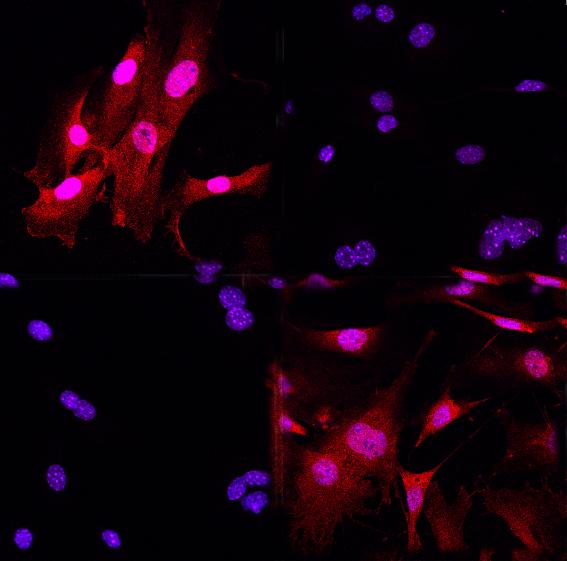
The work group around Henriette Uhlenhaut, Professor for Metabolic Programming at TUM School of Life Sciences in Freising-Weihenstephan and researcher in the field of Molecular Endocrinology at Helmholtz Zentrum München is working with so-called glucocorticoids. These are steroidal hormones such as cortisone, which are released by the adrenal glands every day before waking up or whenever a person is subjected to stress. These steroids are bound to their glucocorticoid receptor and control not only our body’s immune reaction but also our sugar and fat metabolism.

As glucocorticoid receptors are so efficient at disabling immune reactions, synthetic steroid medication is among the most prescribed drugs overall and it has been for decades.

The goal: Finding molecules with anti-inflammatory effects

“Unfortunately, this useful property leads to severe side effects as one hormone or drug causes different effects in other non-immune cells,” explained the professor. Among these effects are the reduction of muscle mass or the deposition of fat.

“We still don’t fully understand the effects of steroid compounds,” said Uhlenhaut. With her team, she wants to discover the molecular mechanisms that steroids such as cortisone utilize to stop inflammatory reactions.

As soon as researchers know how cortisone works, so how it mutes inflammation genes in immune system cells, they can begin looking for molecules that possess the same anti-inflammatory properties as cortisone, but with fewer side effects.

Common theory refuted

Until recently, scientists believed that the steroids’ anti-inflammatory effect was based on protein-to-protein interaction. It was assumed that the glucocorticoid receptor – in other words, the protein that binds these drugs or hormones – would connect to other inflammation inducing proteins without any DNA contact.

Using a new preclinical model, the team of researchers could now demonstrate that DNA binding is required for these drugs to have an effect; for years, scientists had assumed that this was not the case. Without the glucocorticoid receptor (the protein that binds these drugs or hormones) enabling DNA binding to chromosomes, chromatin or genes, there is no biological effect.

A milestone for drug development

“Now we know that DNA binding plays a major role, yet we have not found a way to separate side effects from the desired effects,” explained Prof. Uhlenhaut. Regarding COVID-19, researchers do not have a clear answer either as to why these kinds of treatments are successful. Further research in this area is required.

Until now, various approaches focused on protein-to-protein contact, which might explain why these have not been successful. As this basic approach can now be discarded, further research regarding drug development of cortisone alternatives can now focus on the DNA.

###

Media Contact
Henriette Uhlenhaut
[email protected]

Original Source

https://www.tum.de/nc/en/about-tum/news/press-releases/details/36214/

Related Journal Article

http://dx.doi.org/10.1093/nar/gkaa565

Tags: BiologyCell BiologyMedicine/HealthMetabolism/Metabolic Diseases
Share12Tweet8Share2ShareShareShare2

Related Posts

State Media Shapes Large Language Models

May 13, 2026

Personalized AI-Guided Radiation Boosts Glioblastoma Treatment

May 13, 2026

New Study Confirms Reliability of Depression Screening in Chronic Pain Patients

May 13, 2026

Particulate Matter at Low Air Concentrations Linked to Increased Kidney Disease Hospitalizations

May 13, 2026
Please login to join discussion

POPULAR NEWS

  • Research Indicates Potential Connection Between Prenatal Medication Exposure and Elevated Autism Risk

    842 shares
    Share 337 Tweet 211
  • New Study Reveals Plants Can Detect the Sound of Rain

    729 shares
    Share 291 Tweet 182
  • Salmonella Haem Blocks Macrophages, Boosts Infection

    62 shares
    Share 25 Tweet 16
  • Breastmilk Balances E. coli and Beneficial Bacteria in Infant Gut Microbiomes

    57 shares
    Share 23 Tweet 14

About

We bring you the latest biotechnology news from best research centers and universities around the world. Check our website.

Follow us

Recent News

Unlocking Pancreatic Development and Cellular Plasticity

Unraveling Raf-MEK-ERK Pathway in Prostate Cancer

State Media Shapes Large Language Models

Subscribe to Blog via Email

Enter your email address to subscribe to this blog and receive notifications of new posts by email.

Join 82 other subscribers
  • Contact Us

Bioengineer.org © Copyright 2023 All Rights Reserved.

Welcome Back!

Login to your account below

Forgotten Password?

Retrieve your password

Please enter your username or email address to reset your password.

Log In
No Result
View All Result
  • Homepages
    • Home Page 1
    • Home Page 2
  • News
  • National
  • Business
  • Health
  • Lifestyle
  • Science

Bioengineer.org © Copyright 2023 All Rights Reserved.