• HOME
  • NEWS
  • EXPLORE
    • CAREER
      • Companies
      • Jobs
    • EVENTS
    • iGEM
      • News
      • Team
    • PHOTOS
    • VIDEO
    • WIKI
  • BLOG
  • COMMUNITY
    • FACEBOOK
    • INSTAGRAM
    • TWITTER
Saturday, May 16, 2026
BIOENGINEER.ORG
No Result
View All Result
  • Login
  • HOME
  • NEWS
  • EXPLORE
    • CAREER
      • Companies
      • Jobs
        • Lecturer
        • PhD Studentship
        • Postdoc
        • Research Assistant
    • EVENTS
    • iGEM
      • News
      • Team
    • PHOTOS
    • VIDEO
    • WIKI
  • BLOG
  • COMMUNITY
    • FACEBOOK
    • INSTAGRAM
    • TWITTER
  • HOME
  • NEWS
  • EXPLORE
    • CAREER
      • Companies
      • Jobs
        • Lecturer
        • PhD Studentship
        • Postdoc
        • Research Assistant
    • EVENTS
    • iGEM
      • News
      • Team
    • PHOTOS
    • VIDEO
    • WIKI
  • BLOG
  • COMMUNITY
    • FACEBOOK
    • INSTAGRAM
    • TWITTER
No Result
View All Result
Bioengineer.org
No Result
View All Result
Home NEWS Science News Health

New genetic markers of glucosinolates in rapeseed may help improve oil composition

Bioengineer by Bioengineer
August 27, 2020
in Health
Reading Time: 2 mins read
0
IMAGE
Share on FacebookShare on TwitterShare on LinkedinShare on RedditShare on Telegram

IMAGE

Credit: Rim Gubaev et al./Genes

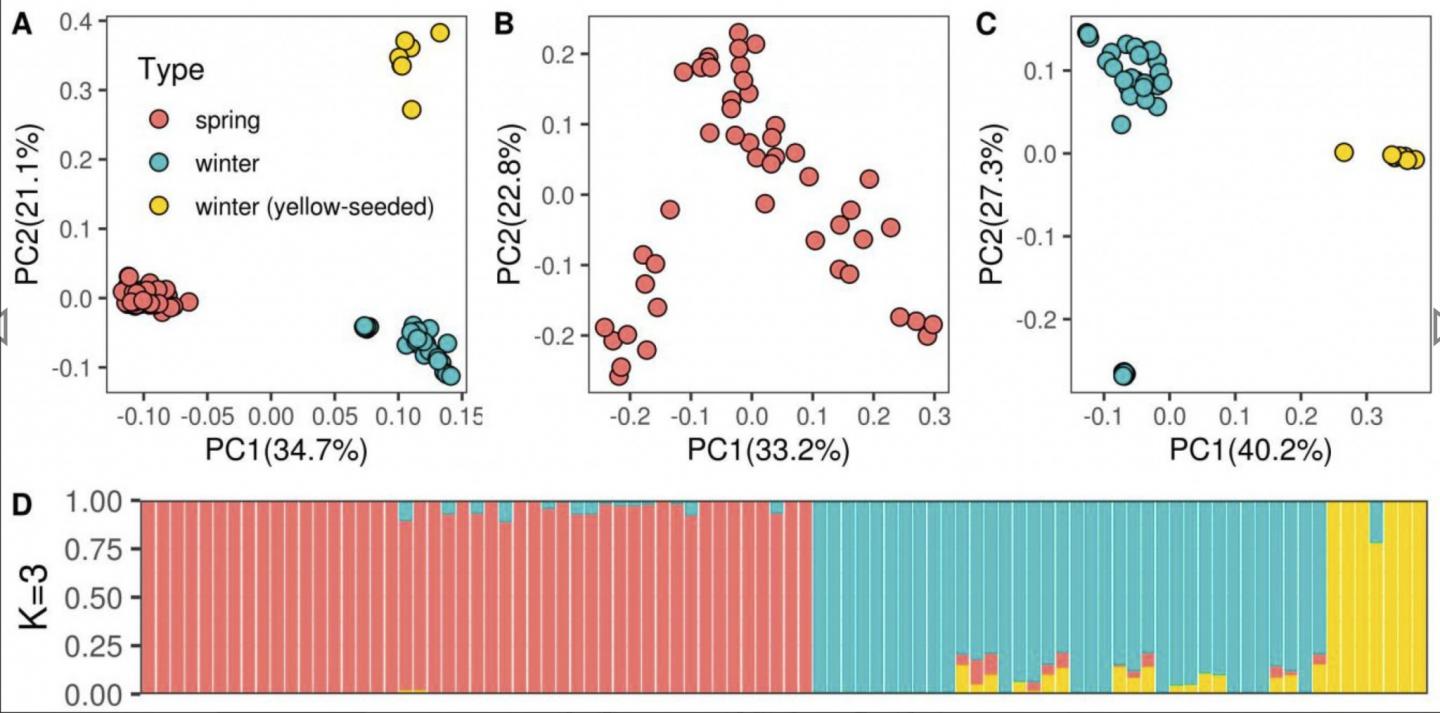
A group of scientists from Skoltech and Pustovoit All-Russian Research Institute of Oil Crops in Krasnodar performed genetic analysis of the Russian rapeseed collection. The scientists described the genetic diversity of Russian rapeseed lines and discovered new candidate genes that are potentially involved in controlling the content of glucosinolates, toxic secondary metabolites in rapeseed oil. Their findings can be used by crop breeders to improve the rapeseed oil composition. The research was published in the Genes journal.

Rapeseed is the world’s second-largest oilseed crop after soybeans. Glucosinolates are secondary metabolites of rapeseed and related cruciferous plants. The content of these glucose-derived sulfur-containing organic substances strongly influences oil quality: if present in large amounts, glucosinolates spoil the taste of rapeseed oil and affect the quality of rapeseed meal, compelling crop breeders to look for ways of reducing their content.

The scientists performed genome-wide genotyping of 90 rapeseed lines and compared the results with the glucosinolate content data for these lines collected over 3 growing seasons. This helped identify both the genetic markers of glucosinolate content in oil and the linked candidate genes potentially involved in regulating the biosynthesis of glucosinolates. Once verified on an independent set of plants, the markers can be readily used for breeding new varieties and hybrids with low glucosinolate content.

“Our research aims to foster marker-assisted crop breeding in Russia by using genetic markers to control the characteristics relevant to cross-breeding processes and progeny analysis. This approach can make the breeding of new varieties much faster. Measuring glucosinolates content is an arduous task that can be made much easier by using the markers we have identified”, says Rim Gubaev, the first author of the paper and a PhD student at Skoltech.

###

Skoltech is a private international university based at the Skolkovo Innovation Center. Established in 2011 in collaboration with the Massachusetts Institute of Technology (MIT), Skoltech cultivates a new generation of science, technology, and business leaders, engages in ground-breaking research, and fosters innovative technology to address critical issues facing Russia and the world. Skoltech focuses on six target domains: Data Science & Artificial Intelligence, Life Sciences and Biomedicine, Cutting-edge Engineering & Advanced Materials, Energy Efficiency, Photonics & Quantum Technology, and Advanced Studies. Skoltech directs its efforts at strengthening Russia’s technology excellence in the target domains.

Media Contact
Ilyana Zolotareva
[email protected]

Original Source

https://www.skoltech.ru/en/2020/08/new-genetic-markers-of-glucosinolates-in-rapeseed-may-help-improve-oil-composition/

Related Journal Article

http://dx.doi.org/10.3390/genes11080926

Tags: Agricultural Production/EconomicsAgricultureBiodiversityBiologyBiotechnologyEvolutionFood/Food ScienceGeneticsNutrition/NutrientsPlant Sciences
Share12Tweet8Share2ShareShareShare2

Related Posts

Carboplatin ± Nivolumab in Metastatic TNBC Trial

May 16, 2026

Genetic Dosage Influences Parkinson’s Cognitive Decline

May 16, 2026

Loneliness Forecasts Parkinsonism Decline: Long-Term Study

May 16, 2026

New Kitasatospora Species and Synonym Proposed

May 16, 2026
Please login to join discussion

POPULAR NEWS

  • Research Indicates Potential Connection Between Prenatal Medication Exposure and Elevated Autism Risk

    843 shares
    Share 337 Tweet 211
  • New Study Reveals Plants Can Detect the Sound of Rain

    730 shares
    Share 291 Tweet 182
  • Salmonella Haem Blocks Macrophages, Boosts Infection

    62 shares
    Share 25 Tweet 16
  • Breastmilk Balances E. coli and Beneficial Bacteria in Infant Gut Microbiomes

    58 shares
    Share 23 Tweet 15

About

We bring you the latest biotechnology news from best research centers and universities around the world. Check our website.

Follow us

Recent News

Carboplatin ± Nivolumab in Metastatic TNBC Trial

New Numeracy Screener Developed for Preschoolers

Genetic Dosage Influences Parkinson’s Cognitive Decline

Subscribe to Blog via Email

Enter your email address to subscribe to this blog and receive notifications of new posts by email.

Join 82 other subscribers
  • Contact Us

Bioengineer.org © Copyright 2023 All Rights Reserved.

Welcome Back!

Login to your account below

Forgotten Password?

Retrieve your password

Please enter your username or email address to reset your password.

Log In
No Result
View All Result
  • Homepages
    • Home Page 1
    • Home Page 2
  • News
  • National
  • Business
  • Health
  • Lifestyle
  • Science

Bioengineer.org © Copyright 2023 All Rights Reserved.