• HOME
  • NEWS
  • EXPLORE
    • CAREER
      • Companies
      • Jobs
    • EVENTS
    • iGEM
      • News
      • Team
    • PHOTOS
    • VIDEO
    • WIKI
  • BLOG
  • COMMUNITY
    • FACEBOOK
    • INSTAGRAM
    • TWITTER
Saturday, February 7, 2026
BIOENGINEER.ORG
No Result
View All Result
  • Login
  • HOME
  • NEWS
  • EXPLORE
    • CAREER
      • Companies
      • Jobs
        • Lecturer
        • PhD Studentship
        • Postdoc
        • Research Assistant
    • EVENTS
    • iGEM
      • News
      • Team
    • PHOTOS
    • VIDEO
    • WIKI
  • BLOG
  • COMMUNITY
    • FACEBOOK
    • INSTAGRAM
    • TWITTER
  • HOME
  • NEWS
  • EXPLORE
    • CAREER
      • Companies
      • Jobs
        • Lecturer
        • PhD Studentship
        • Postdoc
        • Research Assistant
    • EVENTS
    • iGEM
      • News
      • Team
    • PHOTOS
    • VIDEO
    • WIKI
  • BLOG
  • COMMUNITY
    • FACEBOOK
    • INSTAGRAM
    • TWITTER
No Result
View All Result
Bioengineer.org
No Result
View All Result
Home NEWS Science News Health

Socially isolated elderly more likely to use hospital and emergency room resources

Bioengineer by Bioengineer
August 25, 2020
in Health
Reading Time: 2 mins read
0
IMAGE
Share on FacebookShare on TwitterShare on LinkedinShare on RedditShare on Telegram

IMAGE

Credit: Mary Ann Liebert, Inc., publishers

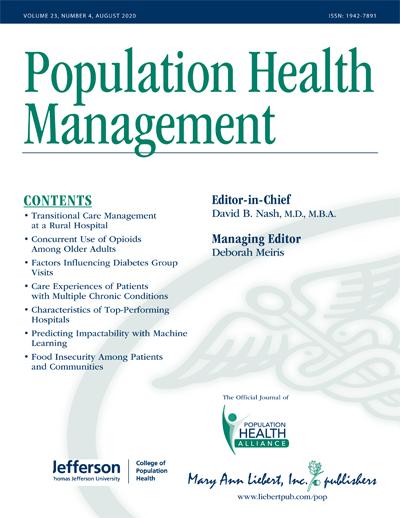
New Rochelle, NY, August 25, 2020–Those over age 65 who self-reported as socially isolated were more likely to have a future hospital admission or emergency room visit. The study is published in the peer-reviewed journal Population Health Management. Click here to read the article now.

“These results are novel for 2 reasons,” states David Mosen, PhD, MPH, Kaiser Permanente Center for Health Research, and coauthors. “It is the first study to find that social isolation was predictive of future hospital admission and ED utilization among a population of Medicare Advantage members ages 65 and older. Second, the relationship between social isolation and utilization remained significant, even after adjusting for a comprehensive set of demographic and clinical measures.”

“The work of Mosen and colleagues, from one of the most respected health plans in the nation, confirms what was always a hunch –that lonely older folks end up utilizing more health care resources, of all types, as their social situation worsens. So, let’s go upstream to shut off the faucet–provide them with support services–instead of mopping up the floor with more unnecessary emergency room visits and the like. We now have the data to prove just how important this strategy is!” says David Nash, MD, MBA, Editor-in-Chief of Population Health Management and Founding Dean Emeritus and Dr. Raymond C. and Doris N. Grandon Professor, Jefferson College of Population Health, Philadelphia, PA.

###

About the Journal

Population Health Management is an authoritative peer-reviewed journal published bimonthly in print and online that reflects the expanding scope of health care management and quality. The Journal delivers a comprehensive, integrated approach to the field of population health and provides information designed to improve the systems and policies that affect health care quality, access, and outcomes. Comprised of peer-reviewed original research papers, clinical research, and case studies, the content encompasses a broad range of chronic diseases (such as cardiovascular disease, cancer, chronic pain, diabetes, depression, and obesity) in addition to focusing on various aspects of prevention and wellness. Tables of Contents and a sample issue may be viewed on the Population Health Management website. Population Health Management is the official journal of the Population Health Alliance.

About the Publisher

Mary Ann Liebert, Inc., publishers is known for establishing authoritative peer-reviewed journals in many promising areas of science and biomedical research. A complete list of the firm’s 90 journals, books, and newsmagazines is available on the Mary Ann Liebert, Inc., publishers website.

Media Contact
Kathryn Ryan
[email protected]

Original Source

https://home.liebertpub.com/news/socially-isolated-elderly-more-likely-to-use-hospital-and-emergency-room-resources/3747

Related Journal Article

http://dx.doi.org/10.1089/pop.2020.0106

Tags: AgingCritical Care/Emergency MedicineEnvironmental HealthHealth CareHealth Care Systems/ServicesMedicine/HealthPersonalPublic HealthSocioeconomics
Share12Tweet8Share2ShareShareShare2

Related Posts

Evaluating Pediatric Emergency Care Quality in Ethiopia

February 7, 2026

TPMT Expression Predictions Linked to Azathioprine Side Effects

February 7, 2026

Improving Dementia Care with Enhanced Activity Kits

February 7, 2026

Decoding Prostate Cancer Origins via snFLARE-seq, mxFRIZNGRND

February 7, 2026
Please login to join discussion

POPULAR NEWS

  • Robotic Ureteral Reconstruction: A Novel Approach

    Robotic Ureteral Reconstruction: A Novel Approach

    82 shares
    Share 33 Tweet 21
  • Digital Privacy: Health Data Control in Incarceration

    63 shares
    Share 25 Tweet 16
  • Study Reveals Lipid Accumulation in ME/CFS Cells

    57 shares
    Share 23 Tweet 14
  • Breakthrough in RNA Research Accelerates Medical Innovations Timeline

    53 shares
    Share 21 Tweet 13

About

We bring you the latest biotechnology news from best research centers and universities around the world. Check our website.

Follow us

Recent News

Evaluating Pediatric Emergency Care Quality in Ethiopia

TPMT Expression Predictions Linked to Azathioprine Side Effects

Improving Dementia Care with Enhanced Activity Kits

Subscribe to Blog via Email

Enter your email address to subscribe to this blog and receive notifications of new posts by email.

Join 73 other subscribers
  • Contact Us

Bioengineer.org © Copyright 2023 All Rights Reserved.

Welcome Back!

Login to your account below

Forgotten Password?

Retrieve your password

Please enter your username or email address to reset your password.

Log In
No Result
View All Result
  • Homepages
    • Home Page 1
    • Home Page 2
  • News
  • National
  • Business
  • Health
  • Lifestyle
  • Science

Bioengineer.org © Copyright 2023 All Rights Reserved.