• HOME
  • NEWS
  • EXPLORE
    • CAREER
      • Companies
      • Jobs
    • EVENTS
    • iGEM
      • News
      • Team
    • PHOTOS
    • VIDEO
    • WIKI
  • BLOG
  • COMMUNITY
    • FACEBOOK
    • INSTAGRAM
    • TWITTER
Thursday, September 24, 2026
BIOENGINEER.ORG
No Result
View All Result
  • Login
  • HOME
  • NEWS
  • EXPLORE
    • CAREER
      • Companies
      • Jobs
        • Lecturer
        • PhD Studentship
        • Postdoc
        • Research Assistant
    • EVENTS
    • iGEM
      • News
      • Team
    • PHOTOS
    • VIDEO
    • WIKI
  • BLOG
  • COMMUNITY
    • FACEBOOK
    • INSTAGRAM
    • TWITTER
  • HOME
  • NEWS
  • EXPLORE
    • CAREER
      • Companies
      • Jobs
        • Lecturer
        • PhD Studentship
        • Postdoc
        • Research Assistant
    • EVENTS
    • iGEM
      • News
      • Team
    • PHOTOS
    • VIDEO
    • WIKI
  • BLOG
  • COMMUNITY
    • FACEBOOK
    • INSTAGRAM
    • TWITTER
No Result
View All Result
Bioengineer.org
No Result
View All Result
Home NEWS Science News Health

A new neurofeedback strategy to treat pain

Bioengineer by Bioengineer
August 13, 2020
in Health
Reading Time: 2 mins read
0
IMAGE
Share on FacebookShare on TwitterShare on LinkedinShare on RedditShare on Telegram

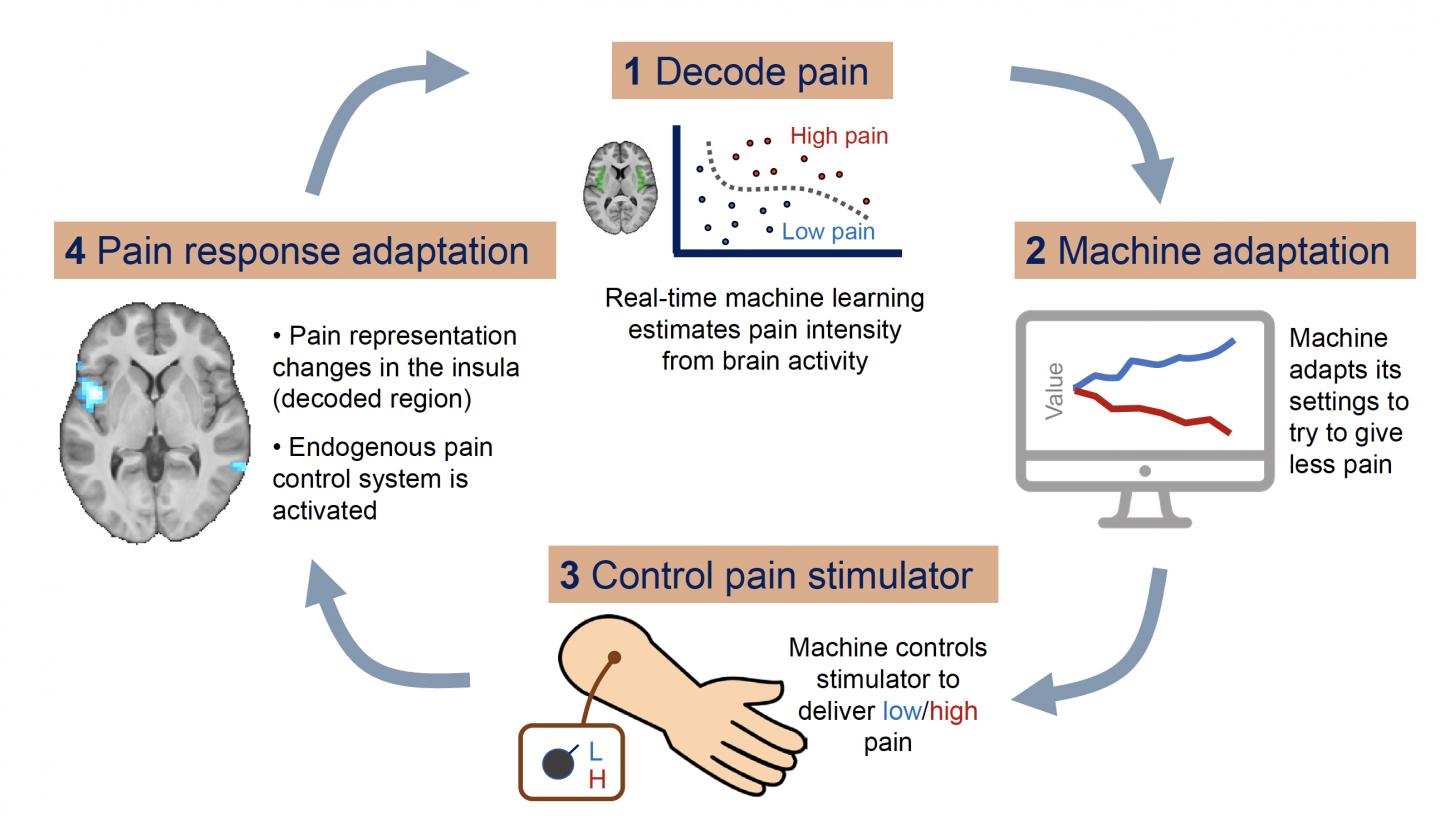
A novel neurofeedback treatment may help to treat chronic pain in the future
IMAGE

Credit: (c) Current Biology

Chronic pain is one of the most important health priorities of the 21st century, with a socioeconomic cost that may far exceed other most other medical problems. It is the leading reason why people stop working prematurely, and a leading cause of loss of independence in the elderly leading to requirements for care. And the magnitude of the problem continues to increase as society ages. The lack of effective drugs for pain has led to an urgency to develop new treatments, with technology-based approaches being an potentially important avenue for innovation.

A new approach to treating a range of neurological and psychiatric treatments is Decoded Neurofeedback (DecNef), in which patients aim to control how information is encoded in their brain using neurofeedback of their brain activity measured using functional neuroimaging. The AMED Nou-Pro project has been exploring applications of DecNef to several conditions, and here we report a preliminary study into the feasibility of using DecNef to control pain.

The study, published in the forthcoming issue of Current Biology, is a preclinical study that aimed to see if pain is potentially controllable by DecNef. We designed a new type of DecNef paradigm, in which volunteers had to try and make the pain ‘clearer’ in their mind, to help a computer read how much pain they were in by studying their brain activity. If the computer could read their pain well, it could work out how to give them less pain later in the experiment.

We found subjects were not easily able to directly control their pain activity in the brain, suggesting that conventional DecNef for pain might be difficult. But instead we found that DecNef had a different effect: it seemed to be boosting the brains’ natural ability to control pain – by enhancing a system caused the ‘endogenous pain control system’. This system is the system that normally tunes how much pain is felt, and allows us to naturally reduce our pain in a wide variety of everyday situations. Importantly, this system seems to be dysfunctional in chronic pain, and so DecNef might provide a way to boost this system to treat pain.

###

Media Contact
Mieko Namba
[email protected]

Tags: Medicine/HealthPain
Share12Tweet8Share2ShareShareShare2

Related Posts

Swedish Birth Cohort Turns Its Lens on Mothers to Trace Breast Cancer’s Environmental Roots

September 24, 2026

New Risk Model Predicts Kidney Disease Years Before It Strikes People With Prediabetes

September 24, 2026

Hand-Sewn Suture Technique Achieves Coupler-Level Vessel Results in Head and Neck Rebuilds

September 24, 2026

Stigma in the Clinic Strongly Predicts HIV Treatment Interruption in Kenya

September 24, 2026
Please login to join discussion

POPULAR NEWS

  • Noisy Gates Put Gate Teleportation to the Test

    29 shares
    Share 12 Tweet 7
  • Prenatal BPA Exposure Rewires the Cerebellum Differently in Male and Female Rat Offspring

    29 shares
    Share 12 Tweet 7
  • Locked and Loaded: Structural Studies Reveal How the SCREW Peptide Engages Its NUT Receptor

    29 shares
    Share 12 Tweet 7
  • Slanted Groove Welding Tames Distortion in Thick Steel Plates

    29 shares
    Share 12 Tweet 7

About

We bring you the latest biotechnology news from best research centers and universities around the world. Check our website.

Follow us

Recent News

Noisy Gates Put Gate Teleportation to the Test

Prenatal BPA Exposure Rewires the Cerebellum Differently in Male and Female Rat Offspring

Locked and Loaded: Structural Studies Reveal How the SCREW Peptide Engages Its NUT Receptor

Subscribe to Blog via Email

Enter your email address to subscribe to this blog and receive notifications of new posts by email.

Join 85 other subscribers
  • Contact Us

Bioengineer.org © Copyright 2023 All Rights Reserved.

Welcome Back!

Login to your account below

Forgotten Password?

Retrieve your password

Please enter your username or email address to reset your password.

Log In
No Result
View All Result
  • Homepages
    • Home Page 1
    • Home Page 2
  • News
  • National
  • Business
  • Health
  • Lifestyle
  • Science

Bioengineer.org © Copyright 2023 All Rights Reserved.