• HOME
  • NEWS
  • EXPLORE
    • CAREER
      • Companies
      • Jobs
    • EVENTS
    • iGEM
      • News
      • Team
    • PHOTOS
    • VIDEO
    • WIKI
  • BLOG
  • COMMUNITY
    • FACEBOOK
    • INSTAGRAM
    • TWITTER
Friday, January 2, 2026
BIOENGINEER.ORG
No Result
View All Result
  • Login
  • HOME
  • NEWS
  • EXPLORE
    • CAREER
      • Companies
      • Jobs
        • Lecturer
        • PhD Studentship
        • Postdoc
        • Research Assistant
    • EVENTS
    • iGEM
      • News
      • Team
    • PHOTOS
    • VIDEO
    • WIKI
  • BLOG
  • COMMUNITY
    • FACEBOOK
    • INSTAGRAM
    • TWITTER
  • HOME
  • NEWS
  • EXPLORE
    • CAREER
      • Companies
      • Jobs
        • Lecturer
        • PhD Studentship
        • Postdoc
        • Research Assistant
    • EVENTS
    • iGEM
      • News
      • Team
    • PHOTOS
    • VIDEO
    • WIKI
  • BLOG
  • COMMUNITY
    • FACEBOOK
    • INSTAGRAM
    • TWITTER
No Result
View All Result
Bioengineer.org
No Result
View All Result
Home NEWS Science News Biology

Seafood study finds plastic in all samples

Bioengineer by Bioengineer
August 12, 2020
in Biology
Reading Time: 2 mins read
0
IMAGE
Share on FacebookShare on TwitterShare on LinkedinShare on RedditShare on Telegram

IMAGE

Credit: University of Queensland

A study of five different seafoods has found traces of plastic in every sample tested.

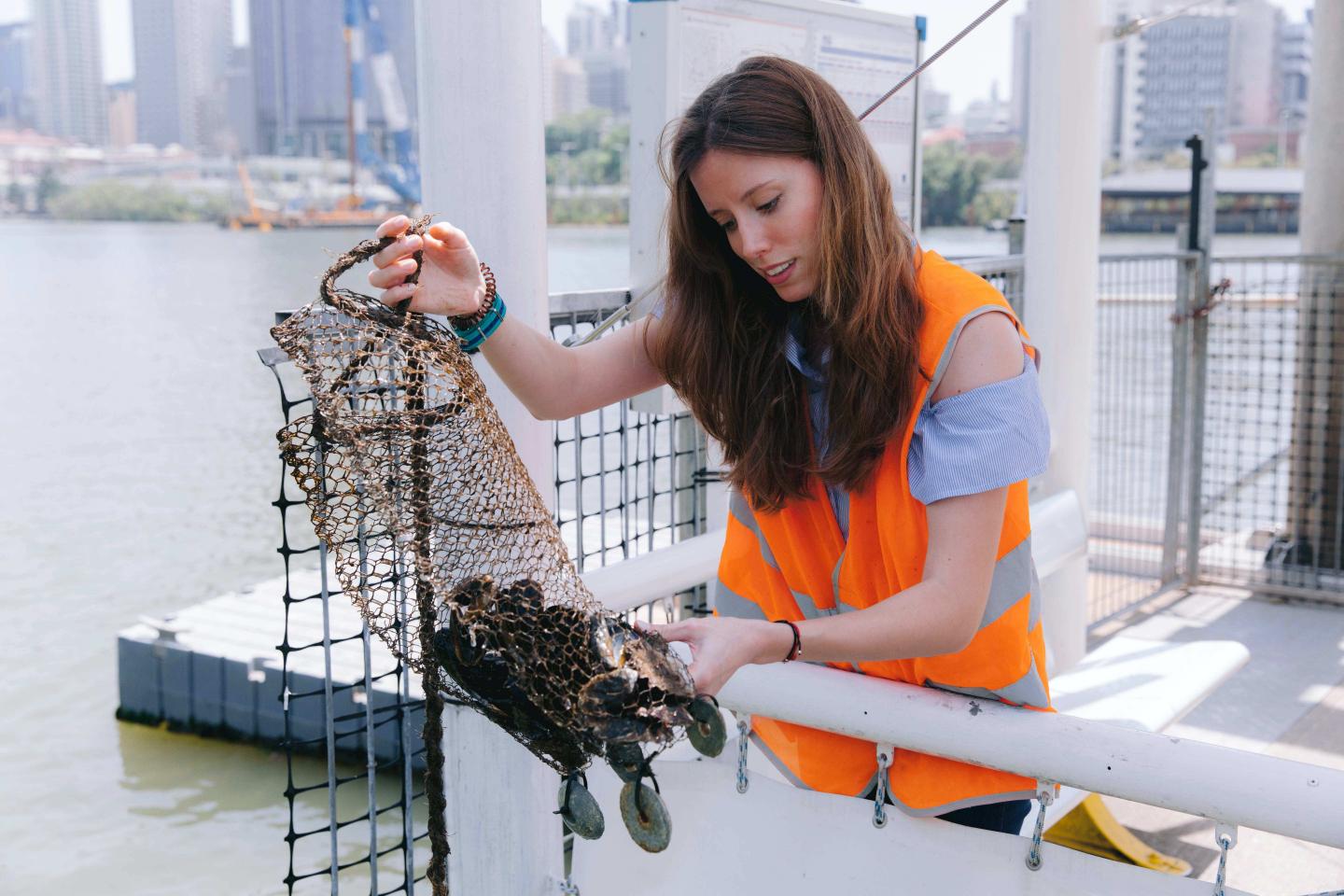
Researchers bought oysters, prawns, squid, crabs and sardines from a market in Australia and analysed them using a newly developed method that identifies and measures five different plastic types simultaneously.

The study – by the University of Exeter and the University of Queensland – found plastic levels of 0.04 milligrams (mg) per gram of tissue in squid, 0.07mg in prawns, 0.1mg in oysters, 0.3mg in crabs and 2.9mg in sardines.

“Considering an average serving, a seafood eater could be exposed to approximately 0.7mg of plastic when ingesting an average serving of oysters or squid, and up to 30mg of plastic when eating sardines, respectively,” said lead author Francisca Ribeiro, a QUEX Institute PhD student.

“For comparison, 30mg is the average weight of a grain of rice.

“Our findings show that the amount of plastics present varies greatly among species, and differs between individuals of the same species.

“From the seafood species tested, sardines had the highest plastic content, which was a surprising result.”

Co-author Professor Tamara Galloway, of Exeter’s Global Systems Institute, said: “We do not fully understand the risks to human health of ingesting plastic, but this new method will make it easier for us to find out.”

The researchers bought raw seafood – five wild blue crabs, ten oysters, ten farmed tiger prawns, ten wild squid and ten wild sardines.

They then analysed them for the five different kinds of plastics that can be identified by the new method.

All of the plastics are commonly used in plastic packaging and synthetic textiles and are frequently found in marine litter: polystyrene, polyethylene, polyvinyl chloride, polypropylene and poly(methyl methacrylate).

In the new method, edible tissues are treated with chemicals to dissolve the plastics present in the samples. The resulting solution is analysed using a highly sensitive technique called Pyrolysis Gas Chromatography Mass Spectrometry which can identify the different kinds of plastic in the sample at the same time.

Polyvinyl chloride was found in all samples, while the plastic found in highest concentrations was polyethylene.

Microplastics are very small pieces of plastic that pollute much of the planet, including the sea where they are eaten by marine creatures of all types, from small larvae and planktonic organisms to large mammals.

Studies to date show that microplastics not only enter our diet from seafood, but also from bottled water, sea salt, beer and honey, as well the dust that settles on our meals.

The new testing method is a step towards defining what microplastic levels can be considered harmful and assessing the possible risks of ingesting microplastics in food.

###

The paper, published in the journal Environmental Science & Technology, is entitled: “Quantitative Analysis of Selected Plastics in High-Commercial-Value Australian Seafood by Pyrolysis Gas Chromatography Mass Spectrometry.”

Media Contact
Alex Morrison
[email protected]

Related Journal Article

http://dx.doi.org/10.1021/acs.est.0c02337

Tags: AgricultureBiologyChemistry/Physics/Materials SciencesFisheries/AquacultureMarine/Freshwater BiologyPollution/RemediationPublic Health
Share12Tweet8Share2ShareShareShare2

Related Posts

Foreign Bodies in Sheep and Goats: Prevalence and Risks

Foreign Bodies in Sheep and Goats: Prevalence and Risks

December 31, 2025
Rethinking Gender Inference from Health Record Algorithms

Rethinking Gender Inference from Health Record Algorithms

December 31, 2025

Mapping RNA Editome Development in Ningxiang Pig Fat

December 31, 2025

Revealing Chloroplast Genomes: Insights on Plant Evolution

December 31, 2025
Please login to join discussion

POPULAR NEWS

  • blank

    PTSD, Depression, Anxiety in Childhood Cancer Survivors, Parents

    113 shares
    Share 45 Tweet 28
  • NSF funds machine-learning research at UNO and UNL to study energy requirements of walking in older adults

    71 shares
    Share 28 Tweet 18
  • Exploring Audiology Accessibility in Johannesburg, South Africa

    52 shares
    Share 21 Tweet 13
  • SARS-CoV-2 Subvariants Affect Outcomes in Elderly Hip Fractures

    44 shares
    Share 18 Tweet 11

About

We bring you the latest biotechnology news from best research centers and universities around the world. Check our website.

Follow us

Recent News

Advancements in Droplet Microfluidics for Biomaterials

Topological Vertical Cavity Lasers from Soft Matter

Advancements in cGAS-STING Signaling and Immune Cell Infiltration

Subscribe to Blog via Email

Enter your email address to subscribe to this blog and receive notifications of new posts by email.

Join 71 other subscribers
  • Contact Us

Bioengineer.org © Copyright 2023 All Rights Reserved.

Welcome Back!

Login to your account below

Forgotten Password?

Retrieve your password

Please enter your username or email address to reset your password.

Log In
No Result
View All Result
  • Homepages
    • Home Page 1
    • Home Page 2
  • News
  • National
  • Business
  • Health
  • Lifestyle
  • Science

Bioengineer.org © Copyright 2023 All Rights Reserved.