Certain proteins in nasal discharge can indicate the onset and progression of Alzheimer’s, providing an avenue for early detection
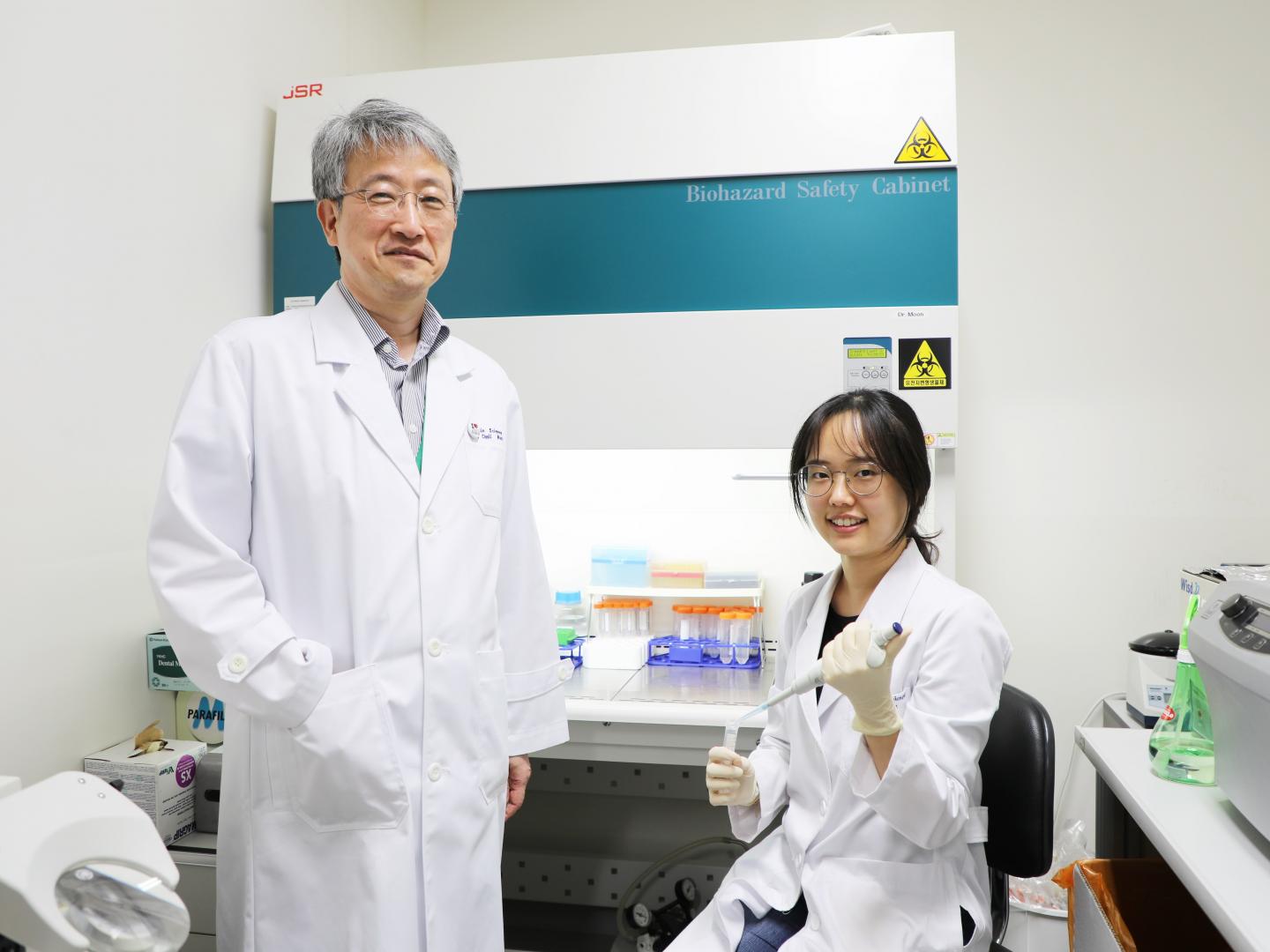
Credit: DGIST
The Republic of Korea, like other countries with a rapidly ageing population, is facing increasing numbers of patients with dementia, of which Alzheimer’s disease (AD) is the most representative type. Unfortunately, AD has no complete cure yet; but, some treatments have been proven to delay its progression. Of course, this means that timely diagnosis while the symptoms are still mild is essential to maximize a patient’s quality of life.
However, currently available technologies for diagnosing AD are limited because they involve expensive machinery and invasive or inconvenient procedures. Now, in a recent study published in Scientific Reports, scientists from Daegu Gyeongbuk Institute of Science and Technology, Korea, hint at a novel way of diagnosing AD in a much simpler way –collecting and analyzing specific proteins in nasal discharge samples.
Professor Cheil Moon, who led the study, explains how they came up with the idea: “In 2017, we found that olfactory dysfunction occurred in the early stages of AD in mice and suggested that the cause of the symptoms was induced by soluble species of amyloid-β (Aβ) oligomer accumulations in the peripheral olfactory system. We hypothesized that soluble Aβ oligomers could be detectable in nasal discharge and that they may be a useful parameter to monitor disease progression.” To test their hypothesis, they gathered and compared nasal discharge samples from 39 patients with AD and 21 people from an age-matched control group.
They found that the levels of two particular Aβ oligomers (the aggregated forms of Aβ implicated as characteristic of Alzheimer’s) were consistently higher in patients from the AD group. What’s more, the levels of the “soluble” form of this protein could be used to not only separate healthy subjects from patients with AD, but also predict the onset and progression of AD over a three-year period.
Although further research will be required to better understand the link between Aβ oligomers in nasal discharge and the cognitive impairments related to AD, the results are certainly promising. Prof Moon remarks, “Routine nasal discharge screenings would be a better option to screen for AD because of its various advantages, such as its relatively low cost and non-invasive nature. The results of our study introduce a novel and simple approach to assess AD progression.”
This new diagnostic technique will hopefully help in simpler and faster detection of Alzheimer’s and improving the disease outcome, thus bringing much needed relief to millions suffering from the Alzheimer’s worldwide.
###
Reference
Authors: Seung?Jun Yoo1,2,7, Gowoon Son1,7, Jisub Bae1, So Yeun Kim1,2, Yong KyoungYoo3,
Dongsung Park3, Seung Yeop Baek4, Keun?A Chang5, Yoo?Hun Suh5, Yeong?Bae Lee6, Kyo Seon Hwang3, YoungSoo Kim4 and Cheil Moon*1,2
Title of original paper: Longitudinal profiling of oligomeric Aβ in human nasal discharge reflecting cognitive decline in probable Alzheimer’s disease
Journal: Scientific Reports
DOI: 10.1038/s41598-020-68148-2
Affiliations: 1Department of Brain and Cognitive Sciences, Graduate School, Daegu Gyeungbuk Institute of Science and Technology
2Convergence Research Advanced Centre for Olfaction, Daegu Gyeungbuk Institute of Science and Technology
3Department of Clinical Pharmacology and Therapeutics, College of Medicine, Kyung Hee University
4Integrated Science and Engineering Division, Department of Pharmacy, Yonsei Institute of Pharmaceutical Sciences, Yonsei University
5Department of Pharmacology, School of Medicine, Gachon Medical School
6Department of Neurology, Gil Medical Center, Gachon University
*Corresponding author’s email: [email protected]
About Daegu Gyeongbuk Institute of Science and Technology (DGIST)
Daegu Gyeongbuk Institute of Science and Technology (DGIST) is a well-known and respected research institute located in Daegu, Republic of Korea. Established in 2004 by the Korean Government, the main aim of DGIST is to promote national science and technology, as well as to boost the local economy.
With a vision of “Changing the world through convergence”, DGIST has undertaken a wide range of research in various fields of science and technology. DGIST has embraced a multidisciplinary approach to research and undertaken intensive studies in some of today’s most vital fields. DGIST also has state-of-the-art-infrastructure to enable cutting-edge research in materials science, robotics, cognitive sciences, and communication engineering.
Website: https:/
About Professor Cheil Moon
Cheil Moon is a neuroscientist who studies the structure and functions of the olfactory system. He works at the Department of Brain and Cognitive Sciences in DGIST. One of his research interests is the study of the olfactory system in patients with Alzheimer’s disease, from the fundamental mechanisms of olfactory dysfunction to applications using biomarkers in the olfactory system.
Media Contact
Kwanghoon Choi
[email protected]
Original Source
https:/
Related Journal Article
http://dx.