• HOME
  • NEWS
  • EXPLORE
    • CAREER
      • Companies
      • Jobs
    • EVENTS
    • iGEM
      • News
      • Team
    • PHOTOS
    • VIDEO
    • WIKI
  • BLOG
  • COMMUNITY
    • FACEBOOK
    • INSTAGRAM
    • TWITTER
Saturday, February 7, 2026
BIOENGINEER.ORG
No Result
View All Result
  • Login
  • HOME
  • NEWS
  • EXPLORE
    • CAREER
      • Companies
      • Jobs
        • Lecturer
        • PhD Studentship
        • Postdoc
        • Research Assistant
    • EVENTS
    • iGEM
      • News
      • Team
    • PHOTOS
    • VIDEO
    • WIKI
  • BLOG
  • COMMUNITY
    • FACEBOOK
    • INSTAGRAM
    • TWITTER
  • HOME
  • NEWS
  • EXPLORE
    • CAREER
      • Companies
      • Jobs
        • Lecturer
        • PhD Studentship
        • Postdoc
        • Research Assistant
    • EVENTS
    • iGEM
      • News
      • Team
    • PHOTOS
    • VIDEO
    • WIKI
  • BLOG
  • COMMUNITY
    • FACEBOOK
    • INSTAGRAM
    • TWITTER
No Result
View All Result
Bioengineer.org
No Result
View All Result
Home NEWS Science News Biology

TLK protein inhibition activates the innate immune system

Bioengineer by Bioengineer
August 5, 2020
in Biology
Reading Time: 3 mins read
0
IMAGE
Share on FacebookShare on TwitterShare on LinkedinShare on RedditShare on Telegram

IMAGE

Credit: (IRB Barcelona)

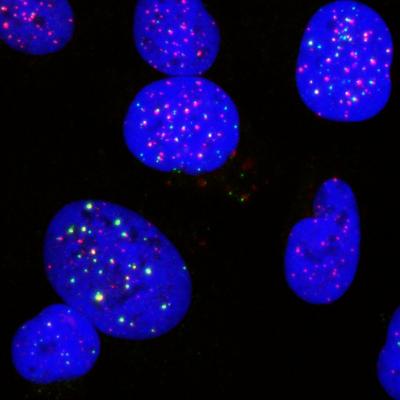
Tousled-like kinases (TLKs) are a potential therapeutic target for cancer treatment due to their central role in DNA repair and replication. The latest work by IRB Barcelona’s Genomic Instability and Cancer Laboratory, led by Travis H. Stracker, concludes that TLK inhibition activates the innate immune system, a very important factor in the response to cancer.

“We believe the TLKs are promising targets for cancer therapy and want to understand more about how they work and how cells respond to their reduction or loss,” says Stracker. Having headed the Genomic Instability and Cancer Laboratory at IRB Barcelona since 2009, in July this year Stracker took up a new position as group leader at the National Cancer Institute (NIH) in Bethesda, in the US.

Alternative lengthening of telomeres

The group of researchers had previously observed that reduced TLK activity made cancer cells more sensitive to some therapeutic agents. Now, they have found that blocking TLKs triggers an alternative telomere lengthening system (ALT), a pathway used by many cancers, including some of the most aggressive ones like glioblastoma, to maintain telomeres and allow cells to continue dividing.

The group of researchers has discovered that activation of the ALT pathway triggers the innate immune system, potentially attracting immune cells, such as macrophages and T lymphocytes. “The activation of innate immunity in cancer has recently become an active area of research as it has become clear that the innate immune response influences chemotherapy and immunotherapy,” comments Stracker.

Genome decondensation and accessibility

In DNA, not all regions have the same function. Some regions contain genes with the information necessary to make proteins, but there are other regions, called heterochromatin, that have a regulatory and structural function, but do not contain genes that give rise to proteins. Another effect of TLK inhibition, observed in this study, is that this heterochromatin, which is usually compacted, ceases to be so, thereby becoming more accessible to the RNA production machinery and leading to an altered composition in the cell.

“This could help us understand our previous observation that TLK depletion caused replication stress and help us exploit the effects of TLK depletion for cancer therapy,” says Sandra Segura-Bayona, first author of the study. Segura Bayona is currently a postdoctoral fellow in the laboratory headed by Simon Boulton at The Francis Crick Institute in London.

###

The project was a collaboration with Camille Stephan-Otto Attolini, head of the IRB Barcelona Bioinformatics Core Facility; Lars Koenig, at the University of Munich, and Simon Boulton, at The Francis Crick Institute. Sandra Segura-Bayona was a PhD student funded by a “La Caixa” International PhD fellowship. Marina Villamor-Paya is funded by an FPI fellowship (by the Spanish Ministry of Science, Innovation and Universities) and the project supported by a grant from the Spanish Ministry of Science, Innovation and Universities.

Media Contact
Nahia Barberia
[email protected]

Original Source

https://www.irbbarcelona.org/en/news/tlk-protein-inhibition-activates-the-innate-immune-system

Related Journal Article

http://dx.doi.org/10.1016/j.celrep.2020.107983

Tags: BiologycancerCell BiologyGenesGenetics
Share12Tweet8Share2ShareShareShare2

Related Posts

Florida Cane Toad: Complex Spread and Selective Evolution

Florida Cane Toad: Complex Spread and Selective Evolution

February 7, 2026
New Study Uncovers Mechanism Behind Burn Pit Particulate Matter–Induced Lung Inflammation

New Study Uncovers Mechanism Behind Burn Pit Particulate Matter–Induced Lung Inflammation

February 6, 2026

DeepBlastoid: Advancing Automated and Efficient Evaluation of Human Blastoids with Deep Learning

February 6, 2026

Navigating the Gut: The Role of Formic Acid in the Microbiome

February 6, 2026
Please login to join discussion

POPULAR NEWS

  • Robotic Ureteral Reconstruction: A Novel Approach

    Robotic Ureteral Reconstruction: A Novel Approach

    82 shares
    Share 33 Tweet 21
  • Digital Privacy: Health Data Control in Incarceration

    63 shares
    Share 25 Tweet 16
  • Study Reveals Lipid Accumulation in ME/CFS Cells

    57 shares
    Share 23 Tweet 14
  • Breakthrough in RNA Research Accelerates Medical Innovations Timeline

    53 shares
    Share 21 Tweet 13

About

We bring you the latest biotechnology news from best research centers and universities around the world. Check our website.

Follow us

Recent News

Decoding Prostate Cancer Origins via snFLARE-seq, mxFRIZNGRND

Digital Health Perspectives from Baltic Sea Experts

Florida Cane Toad: Complex Spread and Selective Evolution

Subscribe to Blog via Email

Enter your email address to subscribe to this blog and receive notifications of new posts by email.

Join 73 other subscribers
  • Contact Us

Bioengineer.org © Copyright 2023 All Rights Reserved.

Welcome Back!

Login to your account below

Forgotten Password?

Retrieve your password

Please enter your username or email address to reset your password.

Log In
No Result
View All Result
  • Homepages
    • Home Page 1
    • Home Page 2
  • News
  • National
  • Business
  • Health
  • Lifestyle
  • Science

Bioengineer.org © Copyright 2023 All Rights Reserved.