• HOME
  • NEWS
  • EXPLORE
    • CAREER
      • Companies
      • Jobs
    • EVENTS
    • iGEM
      • News
      • Team
    • PHOTOS
    • VIDEO
    • WIKI
  • BLOG
  • COMMUNITY
    • FACEBOOK
    • INSTAGRAM
    • TWITTER
Saturday, February 7, 2026
BIOENGINEER.ORG
No Result
View All Result
  • Login
  • HOME
  • NEWS
  • EXPLORE
    • CAREER
      • Companies
      • Jobs
        • Lecturer
        • PhD Studentship
        • Postdoc
        • Research Assistant
    • EVENTS
    • iGEM
      • News
      • Team
    • PHOTOS
    • VIDEO
    • WIKI
  • BLOG
  • COMMUNITY
    • FACEBOOK
    • INSTAGRAM
    • TWITTER
  • HOME
  • NEWS
  • EXPLORE
    • CAREER
      • Companies
      • Jobs
        • Lecturer
        • PhD Studentship
        • Postdoc
        • Research Assistant
    • EVENTS
    • iGEM
      • News
      • Team
    • PHOTOS
    • VIDEO
    • WIKI
  • BLOG
  • COMMUNITY
    • FACEBOOK
    • INSTAGRAM
    • TWITTER
No Result
View All Result
Bioengineer.org
No Result
View All Result
Home NEWS Science News

NIH funds Dartmouth and Tufts AI tool to help doctors cure cancer

Bioengineer by Bioengineer
August 4, 2020
in Science News
Reading Time: 2 mins read
0
IMAGE
Share on FacebookShare on TwitterShare on LinkedinShare on RedditShare on Telegram

IMAGE

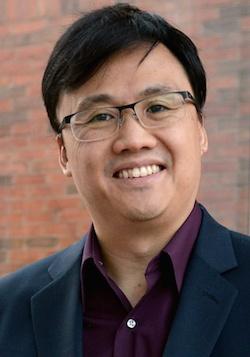
Credit: Thayer School of Engineering at Dartmouth

Using artificial intelligence (AI) to cure cancer may sound like science-fiction, but Eugene Santos Jr., a professor of engineering at Dartmouth, disagrees. Santos is the Principal Investigator of a newly-funded project from the National Institutes of Health (NIH) to develop such a tool, dubbed the Pathway Hypothesis Knowledgebase (PHK), with anticipated funding totaling $3.4 million for up to five years.

Santos is collaborating with Dartmouth Engineering colleagues along with Joseph Gormley, Director of Advanced Systems Development at Tufts Clinical and Translational Science Institute (CTSI) and his colleagues, as well as industry partner IOMICS, to develop an AI-based system that analyzes patients’ clinical and genomic data and the relationship between biochemical pathways that drive health and disease. “We’re trying to find new connections that people have not seen,” said Santos. “We believe this system will generate new insights, accelerating the work of the biomedical researcher.”

Santos imagines many uses for PHK once it is completed, for example, doctors could treat a patient using historical data of other patients with similar symptoms and genomic profiles. In addition, PHK could be used to determine additional uses for approved drugs already on the market, and could quickly determine possible drug treatments to new diseases, such as COVID-19. Santos hopes to have PHK in the hands of personal physicians in the next decade. “We will impact how we treat cancer and a multitude of complex multi-faceted diseases,” said Santos.

Earlier this year, the team received funding to develop a fully-functioning PHK prototype that draws data from clinical research and NIH’s National Center for Advancing Translational Sciences (NCATS) program. PHK forms new, sophisticated links between all data and knowledge sources in order to provide measurable and reliable recommendations for individual patients. PHK’s easy-to-use interface employs many features in order to answer a medical researcher’s query, such as the effectiveness of a certain drug combination for a given patient’s clinical and genetic profile.  

Importantly, despite receiving sometimes inconsistent or contradictory sets of data, PHK ensures that no information is lost, ensuring completeness. “There’s so many different ways of measuring and testing things, so data isn’t necessarily reported properly. There’s so much we don’t know, so what we hope to do with PHK is add to that knowledge,” said Santos, who also mentioned that the team is working hard to ensure that PHK is a transparent AI system, meaning the reasoning behind the computation is easily explainable to a healthcare worker.

The researchers presented their completed prototype in March and were notified in June that they had been selected to continue their research. In the coming years, the team hopes to employ the prototype with additional analytical, reasoning, and learning tools that are being developed by other groups to build the Biomedical Data Translator and together, fully validate the system for use by clinical and translational researchers.

Media Contact
Julie Elizabeth Bonette
[email protected]

Original Source

https://engineering.dartmouth.edu/news/dartmouth-engineers-team-up-on-nih-funded-program-for-artificial-intelligence-tool-to-help-doctors-cure-disease

Tags: BiologyBiomedical/Environmental/Chemical EngineeringcancerComputer ScienceGrants/FundingHealth Care Systems/ServicesMedicine/HealthRobotry/Artificial IntelligenceTechnology/Engineering/Computer Science
Share12Tweet8Share2ShareShareShare2

Related Posts

Phage-Antibiotic Combo Beats Resistant Peritoneal Infection

February 7, 2026

Boosting Remote Healthcare: Stepped-Wedge Trial Insights

February 7, 2026

Barriers and Boosters of Seniors’ Physical Activity in Karachi

February 7, 2026

Evaluating Pediatric Emergency Care Quality in Ethiopia

February 7, 2026
Please login to join discussion

POPULAR NEWS

  • Robotic Ureteral Reconstruction: A Novel Approach

    Robotic Ureteral Reconstruction: A Novel Approach

    82 shares
    Share 33 Tweet 21
  • Digital Privacy: Health Data Control in Incarceration

    63 shares
    Share 25 Tweet 16
  • Study Reveals Lipid Accumulation in ME/CFS Cells

    57 shares
    Share 23 Tweet 14
  • Breakthrough in RNA Research Accelerates Medical Innovations Timeline

    53 shares
    Share 21 Tweet 13

About

We bring you the latest biotechnology news from best research centers and universities around the world. Check our website.

Follow us

Recent News

Phage-Antibiotic Combo Beats Resistant Peritoneal Infection

Boosting Remote Healthcare: Stepped-Wedge Trial Insights

Barriers and Boosters of Seniors’ Physical Activity in Karachi

Subscribe to Blog via Email

Enter your email address to subscribe to this blog and receive notifications of new posts by email.

Join 73 other subscribers
  • Contact Us

Bioengineer.org © Copyright 2023 All Rights Reserved.

Welcome Back!

Login to your account below

Forgotten Password?

Retrieve your password

Please enter your username or email address to reset your password.

Log In
No Result
View All Result
  • Homepages
    • Home Page 1
    • Home Page 2
  • News
  • National
  • Business
  • Health
  • Lifestyle
  • Science

Bioengineer.org © Copyright 2023 All Rights Reserved.