• HOME
  • NEWS
  • EXPLORE
    • CAREER
      • Companies
      • Jobs
    • EVENTS
    • iGEM
      • News
      • Team
    • PHOTOS
    • VIDEO
    • WIKI
  • BLOG
  • COMMUNITY
    • FACEBOOK
    • INSTAGRAM
    • TWITTER
Thursday, March 26, 2026
BIOENGINEER.ORG
No Result
View All Result
  • Login
  • HOME
  • NEWS
  • EXPLORE
    • CAREER
      • Companies
      • Jobs
        • Lecturer
        • PhD Studentship
        • Postdoc
        • Research Assistant
    • EVENTS
    • iGEM
      • News
      • Team
    • PHOTOS
    • VIDEO
    • WIKI
  • BLOG
  • COMMUNITY
    • FACEBOOK
    • INSTAGRAM
    • TWITTER
  • HOME
  • NEWS
  • EXPLORE
    • CAREER
      • Companies
      • Jobs
        • Lecturer
        • PhD Studentship
        • Postdoc
        • Research Assistant
    • EVENTS
    • iGEM
      • News
      • Team
    • PHOTOS
    • VIDEO
    • WIKI
  • BLOG
  • COMMUNITY
    • FACEBOOK
    • INSTAGRAM
    • TWITTER
No Result
View All Result
Bioengineer.org
No Result
View All Result
Home NEWS Science News Health

Raising the bar on disability care

Bioengineer by Bioengineer
August 3, 2020
in Health
Reading Time: 3 mins read
0
IMAGE
Share on FacebookShare on TwitterShare on LinkedinShare on RedditShare on Telegram

Spotlight on two-way respect during COVID-19, and beyond
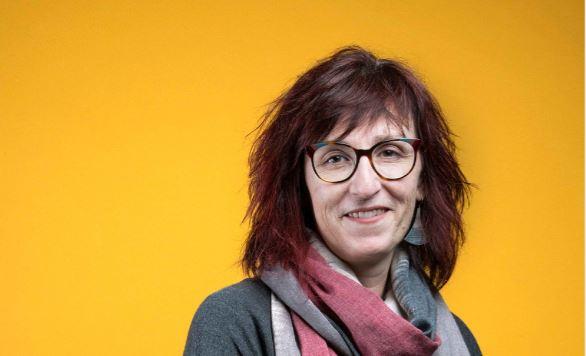
IMAGE

Credit: Flinders University

Encouraging paid workers to employ the ‘right kind’ of respectful personal relationship with young people with disability will lift standards in the sector, experts say.

With good quality relationships, children and young adults with cognitive disability feel “valued, respected and cared about” in their daily lives and, in turn, give carers more job satisfaction and self-respect, international researchers say in a new paper published in the international Disability & Society journal.

The in-depth study of 42 pairs of Australian support workers and young people with disability, led by Flinders University Professor Sally Robinson, recommends a personal care system that focuses on high-quality personalised care which builds “self-esteem, confidence and self-respect” in the young person, as well as the support worker.

The National Disability Insurance Scheme (NDIS) can provide increased flexibility by funding people with disability to choose their own care package.

Lead researcher, Flinders Professor of Disability and Community Inclusion Sally Robinson, says there is a pressing need to be able to monitor and support relationships in a strategic and concerted way as support relationships move into increasingly devolved spaces of care under individualised funding policies such as the NDIS.

“It’s a significant and responsible relationship between paid carers and people with disability. It must be a mutually beneficial situation, and one the NDIS care packages can do well with proper guidelines,” Professor Robinson says.

“Caring is only part of the job; respect and valuing the person with disability – to help them realise their capabilities and other needs – must be enhanced by training and leadership from provider organisations employing support workers in our community.

“Careful consideration needs to be given to personal care relationships and how the experience of mutual recognition shapes the identity of people with disability and the professional self-concept of support workers”, she says.

The “dire circumstances” of poor quality of care relationships has come under more scrutiny during COVID-19 social isolation, adds UNSW Sydney co-author Professor Karen Fisher.

“This research found that supporting workers to value the contributions of people with disability in the same way as they treat other people is a protective mechanism for them both.”

###

The findings, ‘Understanding paid support relationships: possibilities for mutual recognition between young people with disability and their support workers’ (2020) by S Robinson, A Graham , KR Fisher, K Neale, L Davy, K Johnson and E Hall have been published in Disability & Society DOI: 10.1080/09687599.2020.1794797

See also, Feeling safe, avoiding harm: Safety priorities of children and young people with disability and high support needs (2020) S Robinson and A Graham published in Journal of Social and Personal Relationships (Sage) DOI: 10.1177/0265407520928581

https://journals.sagepub.com/doi/10.1177/0265407520928581

Listen to Professor Robinson at a recent Flinders University BRAVE Minds lecture

https://www.flinders.edu.au/research/brave-research-series/righting-the-wrongs

Media Contact
Sally Robinson
[email protected]

Related Journal Article

http://dx.doi.org/10.1080/09687599.2020.1794797

Tags: BehaviorDemographyDisabled PersonsHealth Care Systems/ServicesHealth ProfessionalsMedicine/HealthMental HealthSocial/Behavioral ScienceSupport Networks
Share12Tweet8Share2ShareShareShare2

Related Posts

Aversive Learning Hijacks Brain Sugar Sensor

March 25, 2026

Can Psychosocial Factors Influence Cancer Risk?

March 23, 2026

Depression Factors in Elderly: Pre vs. Post-COVID Analysis

March 23, 2026

Hidden Health Crises Among US and UK Volunteers in Ukraine Uncovered in New Study

March 23, 2026
Please login to join discussion

POPULAR NEWS

  • blank

    Revolutionary AI Model Enhances Precision in Detecting Food Contamination

    96 shares
    Share 38 Tweet 24
  • Imagine a Social Media Feed That Challenges Your Views Instead of Reinforcing Them

    1003 shares
    Share 397 Tweet 248
  • Uncovering Functions of Cavernous Malformation Proteins in Organoids

    54 shares
    Share 22 Tweet 14
  • Promising Outcomes from First Clinical Trials of Gene Regulation in Epilepsy

    51 shares
    Share 20 Tweet 13

About

We bring you the latest biotechnology news from best research centers and universities around the world. Check our website.

Follow us

Recent News

In-Sensor Cryptography Links Physical Process to Digital Identity

Can Psychosocial Factors Influence Cancer Risk?

Depression Factors in Elderly: Pre vs. Post-COVID Analysis

Subscribe to Blog via Email

Success! An email was just sent to confirm your subscription. Please find the email now and click 'Confirm' to start subscribing.

Join 78 other subscribers
  • Contact Us

Bioengineer.org © Copyright 2023 All Rights Reserved.

Welcome Back!

Login to your account below

Forgotten Password?

Retrieve your password

Please enter your username or email address to reset your password.

Log In
No Result
View All Result
  • Homepages
    • Home Page 1
    • Home Page 2
  • News
  • National
  • Business
  • Health
  • Lifestyle
  • Science

Bioengineer.org © Copyright 2023 All Rights Reserved.