• HOME
  • NEWS
  • EXPLORE
    • CAREER
      • Companies
      • Jobs
    • EVENTS
    • iGEM
      • News
      • Team
    • PHOTOS
    • VIDEO
    • WIKI
  • BLOG
  • COMMUNITY
    • FACEBOOK
    • INSTAGRAM
    • TWITTER
Saturday, February 7, 2026
BIOENGINEER.ORG
No Result
View All Result
  • Login
  • HOME
  • NEWS
  • EXPLORE
    • CAREER
      • Companies
      • Jobs
        • Lecturer
        • PhD Studentship
        • Postdoc
        • Research Assistant
    • EVENTS
    • iGEM
      • News
      • Team
    • PHOTOS
    • VIDEO
    • WIKI
  • BLOG
  • COMMUNITY
    • FACEBOOK
    • INSTAGRAM
    • TWITTER
  • HOME
  • NEWS
  • EXPLORE
    • CAREER
      • Companies
      • Jobs
        • Lecturer
        • PhD Studentship
        • Postdoc
        • Research Assistant
    • EVENTS
    • iGEM
      • News
      • Team
    • PHOTOS
    • VIDEO
    • WIKI
  • BLOG
  • COMMUNITY
    • FACEBOOK
    • INSTAGRAM
    • TWITTER
No Result
View All Result
Bioengineer.org
No Result
View All Result
Home NEWS Science News Health

Pre/postnatal lead exposure affects neurodevelopment in Japanese children

Bioengineer by Bioengineer
July 30, 2020
in Health
Reading Time: 2 mins read
0
IMAGE
Share on FacebookShare on TwitterShare on LinkedinShare on RedditShare on Telegram

IMAGE

Credit: Tohoku University

A study conducted over the past 18 years has found differences between lead exposure effects in young Japanese boys versus girls.

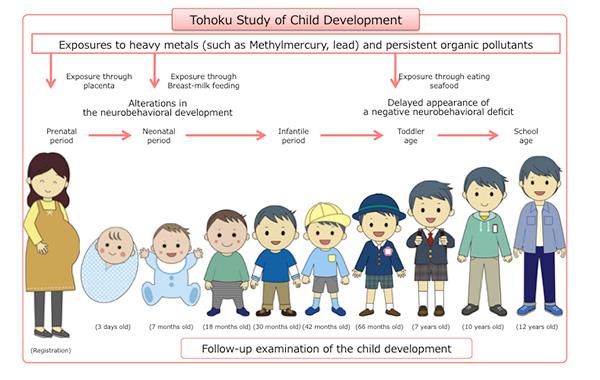
Researchers from the Tohoku University Graduate School of Medicine have been tracking 289 children in Japan since they were in the womb through age 12. They measured lead levels in blood at a prenatal stage and at the age 12, and conducted IQ and linguistic tests.

Lead is a heavy metal known to be toxic to the environment and linked with adverse effects in neurological, gastrointestinal and cardiovascular systems. Even low levels of exposure have been shown to cause neurological and behavioural issues in children. But how much exposure is too much has been unclear, especially during pregnancy.

Existing data suggests that Japanese children have relatively low lead levels (around 1 microgram per decilitre, or 1 μg/dL) compared to the US’s action level (5μg/dL), which is used to identify children with blood lead levels higher than average. Other studies showed that a lead level of 2μg/dL or lower can still cause damage to intellectuality. No universal lead threshold determined safe for children is currently available.

“To our knowledge, the health effects of lead exposure at such levels in Japanese children have not been examined,” says Associate Professor Nozomi Tatsuta at Tohoku University Graduate School of Medicine.

The researchers found a correlation between boys’ reduced cognitive abilities and lead exposure after birth, while their linguistic skills were compromised by both pre and postnatal exposure. Furthermore, they divided the boys’ blood samples into four groups by the lead concentration level and found those with higher lead levels also had lower cognitive and language skills. In contrast, there was no significant association between lead exposure and the intellectual capacity of girls. The findings suggest that boys were more susceptible to such effects than girls.

The researchers noted that genetics and the environment also contribute to the cognitive development of children.

Future studies should look further to determine the effects of low lead exposure during a prenatal phase, with a focus on how gender is affected differently by it. Researchers will also need to clarify the way to reduce lead exposure.

###

Media Contact
Nozomi Tatsuta
[email protected]

Original Source

https://www.tohoku.ac.jp/en/press/prepostnatal_lead_exposure_affects_neurodevelopment.html

Related Journal Article

http://dx.doi.org/10.1016/j.envres.2020.109844

Tags: Medicine/Health
Share12Tweet8Share2ShareShareShare2

Related Posts

Phage-Antibiotic Combo Beats Resistant Peritoneal Infection

February 7, 2026

Boosting Remote Healthcare: Stepped-Wedge Trial Insights

February 7, 2026

Barriers and Boosters of Seniors’ Physical Activity in Karachi

February 7, 2026

Evaluating Pediatric Emergency Care Quality in Ethiopia

February 7, 2026
Please login to join discussion

POPULAR NEWS

  • Robotic Ureteral Reconstruction: A Novel Approach

    Robotic Ureteral Reconstruction: A Novel Approach

    82 shares
    Share 33 Tweet 21
  • Digital Privacy: Health Data Control in Incarceration

    63 shares
    Share 25 Tweet 16
  • Study Reveals Lipid Accumulation in ME/CFS Cells

    57 shares
    Share 23 Tweet 14
  • Breakthrough in RNA Research Accelerates Medical Innovations Timeline

    53 shares
    Share 21 Tweet 13

About

We bring you the latest biotechnology news from best research centers and universities around the world. Check our website.

Follow us

Recent News

Phage-Antibiotic Combo Beats Resistant Peritoneal Infection

Boosting Remote Healthcare: Stepped-Wedge Trial Insights

Barriers and Boosters of Seniors’ Physical Activity in Karachi

Subscribe to Blog via Email

Enter your email address to subscribe to this blog and receive notifications of new posts by email.

Join 73 other subscribers
  • Contact Us

Bioengineer.org © Copyright 2023 All Rights Reserved.

Welcome Back!

Login to your account below

Forgotten Password?

Retrieve your password

Please enter your username or email address to reset your password.

Log In
No Result
View All Result
  • Homepages
    • Home Page 1
    • Home Page 2
  • News
  • National
  • Business
  • Health
  • Lifestyle
  • Science

Bioengineer.org © Copyright 2023 All Rights Reserved.