• HOME
  • NEWS
  • EXPLORE
    • CAREER
      • Companies
      • Jobs
    • EVENTS
    • iGEM
      • News
      • Team
    • PHOTOS
    • VIDEO
    • WIKI
  • BLOG
  • COMMUNITY
    • FACEBOOK
    • INSTAGRAM
    • TWITTER
Saturday, March 28, 2026
BIOENGINEER.ORG
No Result
View All Result
  • Login
  • HOME
  • NEWS
  • EXPLORE
    • CAREER
      • Companies
      • Jobs
        • Lecturer
        • PhD Studentship
        • Postdoc
        • Research Assistant
    • EVENTS
    • iGEM
      • News
      • Team
    • PHOTOS
    • VIDEO
    • WIKI
  • BLOG
  • COMMUNITY
    • FACEBOOK
    • INSTAGRAM
    • TWITTER
  • HOME
  • NEWS
  • EXPLORE
    • CAREER
      • Companies
      • Jobs
        • Lecturer
        • PhD Studentship
        • Postdoc
        • Research Assistant
    • EVENTS
    • iGEM
      • News
      • Team
    • PHOTOS
    • VIDEO
    • WIKI
  • BLOG
  • COMMUNITY
    • FACEBOOK
    • INSTAGRAM
    • TWITTER
No Result
View All Result
Bioengineer.org
No Result
View All Result
Home NEWS Science News Biology

Popular seafood species in sharp decline around the world

Bioengineer by Bioengineer
July 21, 2020
in Biology
Reading Time: 3 mins read
0
IMAGE
Share on FacebookShare on TwitterShare on LinkedinShare on RedditShare on Telegram

IMAGE

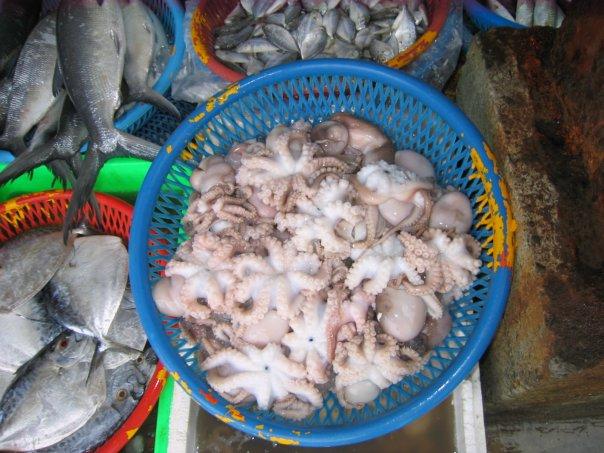
Credit: Photo by Deng Palomares, Sea Around Us.

Fish market favourites such as orange roughy, common octopus and pink conch are among the species of fish and invertebrates in rapid decline around the world, according to new research.

In the first study of its kind, researchers at the University of British Columbia, the GEOMAR Helmholtz Centre for Ocean Research Kiel and the University of Western Australia assessed the biomass–the weight of a given population in the water–of more than 1,300 fish and invertebrate populations. They discovered global declines, some severe, of many popularly consumed species.

Of the populations analyzed, 82 per cent were found to be below levels that can produce maximum sustainable yields, due to being caught at rates exceeding what can be regrown. Of these, 87 populations were found to be in the “very bad” category, with biomass levels at less than 20 per cent of what is needed to maximize sustainable fishery catches. This also means that fishers are catching less and less fish and invertebrates over time, even if they fish longer and harder.

“This is the first-ever global study of long-term trends in the population biomass of exploited marine fish and invertebrates for all coastal areas on the planet,” said Maria “Deng” Palomares, lead author of the study and manager of the Sea Around Us initiative in UBC’s Institute for the Oceans and Fisheries.”When we looked at how the populations of major species have been doing in the past 60 years, we discovered that, at present, most of their biomasses are well below the level that can produce optimal catches.”

To reach their findings, the researchers applied computer-intensive stock assessment methods known as CMSY and BSMY to the comprehensive catch data by marine ecosystem reconstructed by the Sea Around Us for the 1950-2014 period.

The greatest declines in stocks were found in the southern temperate and polar Indian Ocean and the southern polar Atlantic Ocean, where populations shrunk by well over 50 per cent since 1950.

While much of the globe showed declining trends in fish and invertebrates, the analysis found a few exceptions. One of these was the Northern Pacific Ocean where population biomass increased by 800 per cent in its polar and subpolar zones, and by about 150 per cent in its temperate zone.

Despite these pockets of improvement, the overall picture remains a cause for concern, according to co-author Daniel Pauly, principal investigator at Sea Around Us.

“Despite the exceptions, our findings support previous suggestions of systematic and widespread overfishing of the coastal and continental shelf waters in much of the world over the last 60-plus years,” said Pauly. “Thus, pathways for improvements in effective fisheries management are needed, and such measures should be driven not only by clearly set total allowable annual catch limits, but also by well-enforced and sizeable no-take marine protected areas to allow stocks to rebuild.”

###

“Fishery biomass trends of exploited fish populations in marine ecoregions, climatic zones and ocean basins” was published in Estuarine, Coastal and Shelf Science.

Media Contact
Valentina Ruiz-Leotaud
[email protected]

Original Source

https://bit.ly/fishbiomasssau

Related Journal Article

http://dx.doi.org/10.1016/j.ecss.2020.106896

Tags: BiologyEcology/EnvironmentFisheries/AquacultureMarine/Freshwater BiologyNature
Share12Tweet8Share2ShareShareShare2

Related Posts

How to sway group opinions: Encourage opponents to stay undecided

How to sway group opinions: Encourage opponents to stay undecided

March 23, 2026
Deep Learning Model Maps How Individual Cells Shape Disease Outcomes

Deep Learning Model Maps How Individual Cells Shape Disease Outcomes

March 20, 2026

Removing only 15 female sharks annually could endanger the entire population, scientists warn

March 20, 2026

Scientists Urge Fragrance Industry to Transition from Sustainability Talk to Active Funding of Plant Conservation

March 20, 2026
Please login to join discussion

POPULAR NEWS

  • blank

    Revolutionary AI Model Enhances Precision in Detecting Food Contamination

    96 shares
    Share 38 Tweet 24
  • Imagine a Social Media Feed That Challenges Your Views Instead of Reinforcing Them

    1004 shares
    Share 397 Tweet 248
  • Uncovering Functions of Cavernous Malformation Proteins in Organoids

    54 shares
    Share 22 Tweet 14
  • Promising Outcomes from First Clinical Trials of Gene Regulation in Epilepsy

    51 shares
    Share 20 Tweet 13

About

We bring you the latest biotechnology news from best research centers and universities around the world. Check our website.

Follow us

Recent News

In-Sensor Cryptography Links Physical Process to Digital Identity

Can Psychosocial Factors Influence Cancer Risk?

Depression Factors in Elderly: Pre vs. Post-COVID Analysis

Subscribe to Blog via Email

Enter your email address to subscribe to this blog and receive notifications of new posts by email.

Join 78 other subscribers
  • Contact Us

Bioengineer.org © Copyright 2023 All Rights Reserved.

Welcome Back!

Login to your account below

Forgotten Password?

Retrieve your password

Please enter your username or email address to reset your password.

Log In
No Result
View All Result
  • Homepages
    • Home Page 1
    • Home Page 2
  • News
  • National
  • Business
  • Health
  • Lifestyle
  • Science

Bioengineer.org © Copyright 2023 All Rights Reserved.