• HOME
  • NEWS
  • EXPLORE
    • CAREER
      • Companies
      • Jobs
    • EVENTS
    • iGEM
      • News
      • Team
    • PHOTOS
    • VIDEO
    • WIKI
  • BLOG
  • COMMUNITY
    • FACEBOOK
    • INSTAGRAM
    • TWITTER
Saturday, February 7, 2026
BIOENGINEER.ORG
No Result
View All Result
  • Login
  • HOME
  • NEWS
  • EXPLORE
    • CAREER
      • Companies
      • Jobs
        • Lecturer
        • PhD Studentship
        • Postdoc
        • Research Assistant
    • EVENTS
    • iGEM
      • News
      • Team
    • PHOTOS
    • VIDEO
    • WIKI
  • BLOG
  • COMMUNITY
    • FACEBOOK
    • INSTAGRAM
    • TWITTER
  • HOME
  • NEWS
  • EXPLORE
    • CAREER
      • Companies
      • Jobs
        • Lecturer
        • PhD Studentship
        • Postdoc
        • Research Assistant
    • EVENTS
    • iGEM
      • News
      • Team
    • PHOTOS
    • VIDEO
    • WIKI
  • BLOG
  • COMMUNITY
    • FACEBOOK
    • INSTAGRAM
    • TWITTER
No Result
View All Result
Bioengineer.org
No Result
View All Result
Home NEWS Science News Health

Study: Dangerous parasite controls host cell to spread around body

Bioengineer by Bioengineer
July 16, 2020
in Health
Reading Time: 2 mins read
0
IMAGE
Share on FacebookShare on TwitterShare on LinkedinShare on RedditShare on Telegram

IMAGE

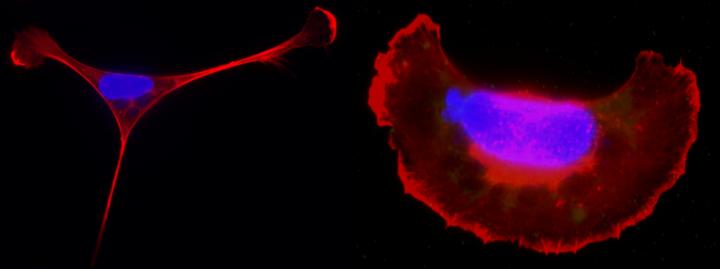
Credit: IU School of Medicine

Researchers at Indiana University School of Medicine have discovered new information about how a dangerous parasite takes control of a patient’s cells as it spreads throughout their body, an important finding that could help in the development of new drugs to treat this infection.

“The parasite essentially hijacks these cells, using them as vehicles to get to various organ systems, including the brain,” said Leonardo Augusto, PhD, a postdoctoral fellow in the Department of Pharmacology and Toxicology and lead author on the National Institutes of Health-funded study, which was recently published in mBio. “It’s like the parasite is taking the wheel of its host cell and using it to spread around the body.”

Toxoplasma gondii infects up to one-third of the world’s population. People typically become infected with it through exposure to cat feces, which is where it goes through its reproductive phases, or consumption of contaminated food and water. The parasite causes life-threatening issues in some patients because of its ability to disseminate to the brain. In the brain and other tissues, the parasite persists as a latent cyst, waiting to reactivate if immunity should wane, such as what happens in HIV/AIDS patients.

“One of the key problems in battling an infection like Toxoplasma is controlling its spread to other parts of the body,” Augusto said. “Upon ingestion of the parasite, it makes its way into immune cells and causes them to move–a behavior called hypermigratory activity. How these parasites cause their infected cells to start migrating is largely unknown.”

The team’s new research is shedding light on this important clinical question, discovering that the parasite trips an alarm system in its host cell that leads to the activation of a protein called IRE1. IRE1 helps the cell cope with stress, which can involve getting it to move to a different location. In cells infected with Toxoplasma, IRE1 connects to the cytoskeleton, a network of structural proteins that gives the cell its shape and coordinates movement. By engaging this network through IRE1, Toxoplasma takes the wheel and causes hypermigration.

“When we infected host cells that were depleted of IRE1, they could no longer move,” Augusto said. “These cells were greatly impaired at disseminating Toxoplasma to the brains of infected mice.”

These findings reveal a new mechanism underlying host-pathogen interactions, demonstrating how host cells are co-opted to spread a persistent infection. A better understanding of this pathogen dissemination is helpful in the development of new drugs to curtail the spread of a Toxoplasma gondii infection throughout the body.

###

The work is part of a longstanding collaboration between Bill Sullivan, PhD, Showalter professor in the Department of Pharmacology and Toxicology, and Ronald Wek, PhD, Showalter professor in the Department of Biochemistry and Molecular Biology.

Media Contact
Christina Griffiths
[email protected]

Original Source

https://medicine.iu.edu/news/2020/07/toxoplasma-study-published-in-mbio

Related Journal Article

http://dx.doi.org/10.1128/mBio.00915-20

Tags: Cell BiologyMedicine/HealthMicrobiologyMolecular BiologyParasitologyToxicology
Share13Tweet8Share2ShareShareShare2

Related Posts

Decoding Prostate Cancer Origins via snFLARE-seq, mxFRIZNGRND

February 7, 2026

Digital Health Perspectives from Baltic Sea Experts

February 7, 2026

Exploring Decision-Making in Dementia Caregivers’ Mobility

February 7, 2026

Succinate Receptor 1 Limits Blood Cell Formation, Leukemia

February 7, 2026
Please login to join discussion

POPULAR NEWS

  • Robotic Ureteral Reconstruction: A Novel Approach

    Robotic Ureteral Reconstruction: A Novel Approach

    82 shares
    Share 33 Tweet 21
  • Digital Privacy: Health Data Control in Incarceration

    63 shares
    Share 25 Tweet 16
  • Study Reveals Lipid Accumulation in ME/CFS Cells

    57 shares
    Share 23 Tweet 14
  • Breakthrough in RNA Research Accelerates Medical Innovations Timeline

    53 shares
    Share 21 Tweet 13

About

We bring you the latest biotechnology news from best research centers and universities around the world. Check our website.

Follow us

Recent News

Decoding Prostate Cancer Origins via snFLARE-seq, mxFRIZNGRND

Digital Health Perspectives from Baltic Sea Experts

Florida Cane Toad: Complex Spread and Selective Evolution

Subscribe to Blog via Email

Enter your email address to subscribe to this blog and receive notifications of new posts by email.

Join 73 other subscribers
  • Contact Us

Bioengineer.org © Copyright 2023 All Rights Reserved.

Welcome Back!

Login to your account below

Forgotten Password?

Retrieve your password

Please enter your username or email address to reset your password.

Log In
No Result
View All Result
  • Homepages
    • Home Page 1
    • Home Page 2
  • News
  • National
  • Business
  • Health
  • Lifestyle
  • Science

Bioengineer.org © Copyright 2023 All Rights Reserved.