• HOME
  • NEWS
  • EXPLORE
    • CAREER
      • Companies
      • Jobs
    • EVENTS
    • iGEM
      • News
      • Team
    • PHOTOS
    • VIDEO
    • WIKI
  • BLOG
  • COMMUNITY
    • FACEBOOK
    • INSTAGRAM
    • TWITTER
Thursday, September 24, 2026
BIOENGINEER.ORG
No Result
View All Result
  • Login
  • HOME
  • NEWS
  • EXPLORE
    • CAREER
      • Companies
      • Jobs
        • Lecturer
        • PhD Studentship
        • Postdoc
        • Research Assistant
    • EVENTS
    • iGEM
      • News
      • Team
    • PHOTOS
    • VIDEO
    • WIKI
  • BLOG
  • COMMUNITY
    • FACEBOOK
    • INSTAGRAM
    • TWITTER
  • HOME
  • NEWS
  • EXPLORE
    • CAREER
      • Companies
      • Jobs
        • Lecturer
        • PhD Studentship
        • Postdoc
        • Research Assistant
    • EVENTS
    • iGEM
      • News
      • Team
    • PHOTOS
    • VIDEO
    • WIKI
  • BLOG
  • COMMUNITY
    • FACEBOOK
    • INSTAGRAM
    • TWITTER
No Result
View All Result
Bioengineer.org
No Result
View All Result
Home NEWS Science News Chemistry

Study reveals secret life of lithium in sun-like stars: Created not just destroyed

Bioengineer by Bioengineer
July 6, 2020
in Chemistry
Reading Time: 2 mins read
0
IMAGE
Share on FacebookShare on TwitterShare on LinkedinShare on RedditShare on Telegram

IMAGE

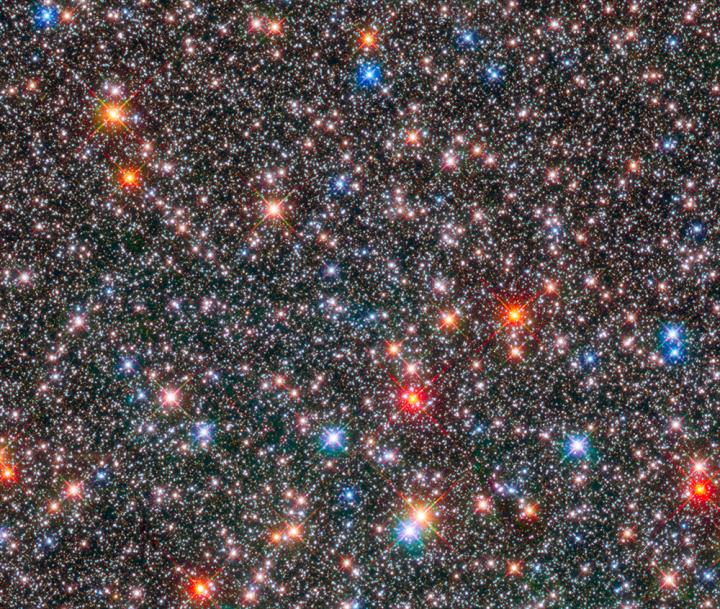
Credit: NASA, ESA, and T. Brown (STScI)

Lithium is becoming common in our everyday lives. It is the key ingredient in the batteries of our mobile phones and electric vehicles, but have you ever wondered where it comes from? 

A new study led by Prof. ZHAO Gang and Dr. Yerra Bharat Kumar from National Astronomical Observatories of Chinese Academy of Sciences (NAOC) provides a fresh understanding of both how lithium is made, and how it is destroyed.  

The study was published in Nature Astronomy on July 6. 

Researchers studied the lithium content of hundreds of thousands of Sun-like stars to understand how this element changes over time in stars. 

“Lithium is quite a special element,” said Dr. Yerra Bharat Kumar, first author of the study. “Our study challenges the idea that stars like the Sun only destroy lithium through their lives.” 

“Our observations show that they actually create it later in their lives, after they have swelled to become red giants. This means that the Sun itself will also manufacture lithium in the future,” he said. 

Lithium is one of the three elements produced in the Big Bang. It gets destroyed very easily inside stars where it is too hot for it to survive, so lithium content generally decreases as the stars age. 

Since lithium is such a sensitive element, it is very useful for understanding stars. It acts as a tracer for what is happening inside stars. 

To better understand this sensitive element, researchers used data from a huge Chinese stellar spectroscopic survey based on The Large Sky Area Multi-Object Fiber Spectroscopic Telescope (LAMOST). The survey is currently building a database of the spectra of ten million stars.  

This study also utilized data from Australian star survey known as GALAH. 

“By looking at starlight, we can determine what the stars are made of,” said Dr. Yerra Bharat Kumar. “Models show that our current theories about how stars evolve do not predict this lithium production at all. Thus, the study has created a tension between observations and theory.”

“Our findings will help us to better understand and model Sun-like stars,” said Prof. ZHAO Gang, the co-corresponding author of this study. 

“Since the newly created lithium will end up being blown off the star in stellar winds, it will also help us understand how these stars contribute to the lithium content of our Galaxy, and to planets like Earth,” said Prof. ZHAO. 

###

Media Contact
Xu Ang
[email protected]

Related Journal Article

http://dx.doi.org/10.1038/s41550-020-1139-7

Tags: AstronomyAstrophysicsSpace/Planetary ScienceStars/The Sun
Share12Tweet8Share2ShareShareShare2

Related Posts

Chemists Turn CO2, Nitrite and Aldehydes Into Valuable Amino Acids Using Only Electricity

Chemists Turn CO2, Nitrite and Aldehydes Into Valuable Amino Acids Using Only Electricity

September 24, 2026
Chemists Program Crystal Frameworks Atom by Atom with a Single Versatile Molecule

Chemists Program Crystal Frameworks Atom by Atom with a Single Versatile Molecule

September 24, 2026

Nanoparticle-Coated Fabrics Promise Antibacterial, Self-Cleaning and Conductive Clothing

September 24, 2026

Bismuth Tungstate Wrapped in Conductive Polymer Yields Supercapacitor Electrode That Barely Fades Over 1,000 Cycles

September 24, 2026
Please login to join discussion

POPULAR NEWS

  • Mapping the Next Outbreak: How Satellites and GPS Are Reshaping Veterinary Medicine

    29 shares
    Share 12 Tweet 7
  • Jumping Genes Divide the Animal Kingdom into Sea and Land Clades

    29 shares
    Share 12 Tweet 7
  • Wrist-Worn CO2 Sensor Uses Silicone Layer and Smart Statistics to Deliver Reliable Early Readings

    29 shares
    Share 12 Tweet 7
  • How Organoids Became Biology’s Most Powerful Miniature Laboratories

    29 shares
    Share 12 Tweet 7

About

We bring you the latest biotechnology news from best research centers and universities around the world. Check our website.

Follow us

Recent News

Mapping the Next Outbreak: How Satellites and GPS Are Reshaping Veterinary Medicine

Jumping Genes Divide the Animal Kingdom into Sea and Land Clades

Wrist-Worn CO2 Sensor Uses Silicone Layer and Smart Statistics to Deliver Reliable Early Readings

Subscribe to Blog via Email

Enter your email address to subscribe to this blog and receive notifications of new posts by email.

Join 85 other subscribers
  • Contact Us

Bioengineer.org © Copyright 2023 All Rights Reserved.

Welcome Back!

Login to your account below

Forgotten Password?

Retrieve your password

Please enter your username or email address to reset your password.

Log In
No Result
View All Result
  • Homepages
    • Home Page 1
    • Home Page 2
  • News
  • National
  • Business
  • Health
  • Lifestyle
  • Science

Bioengineer.org © Copyright 2023 All Rights Reserved.