• HOME
  • NEWS
  • EXPLORE
    • CAREER
      • Companies
      • Jobs
    • EVENTS
    • iGEM
      • News
      • Team
    • PHOTOS
    • VIDEO
    • WIKI
  • BLOG
  • COMMUNITY
    • FACEBOOK
    • INSTAGRAM
    • TWITTER
Tuesday, October 6, 2026
BIOENGINEER.ORG
No Result
View All Result
  • Login
  • HOME
  • NEWS
  • EXPLORE
    • CAREER
      • Companies
      • Jobs
        • Lecturer
        • PhD Studentship
        • Postdoc
        • Research Assistant
    • EVENTS
    • iGEM
      • News
      • Team
    • PHOTOS
    • VIDEO
    • WIKI
  • BLOG
  • COMMUNITY
    • FACEBOOK
    • INSTAGRAM
    • TWITTER
No Result
View All Result
Bioengineer.org
No Result
View All Result
Home NEWS Science News Chemistry

Thermophones offer new route to radically simplify array design, research shows

Bioengineer by Bioengineer
July 2, 2020
in Chemistry
Reading Time: 2 mins read
0
IMAGE
Share on FacebookShare on TwitterShare on LinkedinShare on RedditShare on Telegram

IMAGE

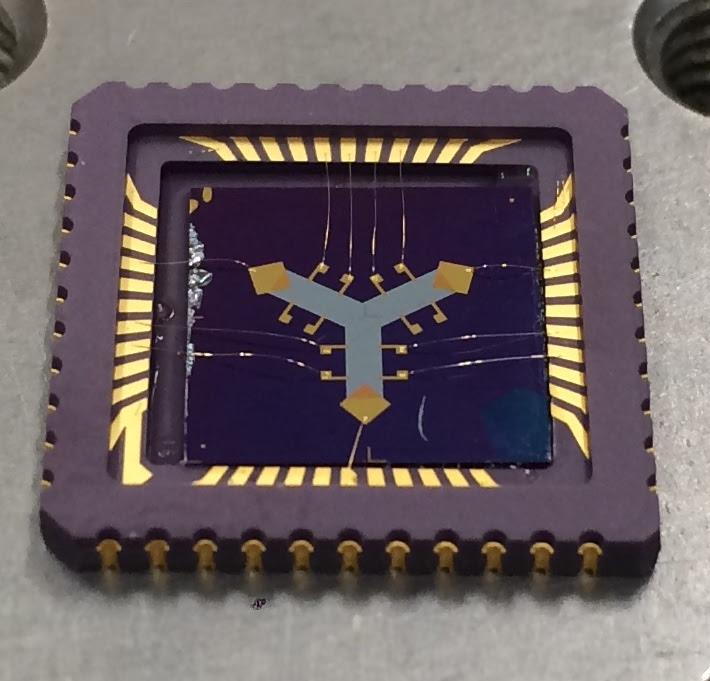
Credit: David Tatnell

Scientists have pioneered a new technique to produce arrays of sound produced entirely by heat.

The team of researchers from the Centre for Metamaterial Research and Innovation at the University of Exeter used devices, known as thermophones, to create a fully controlled array from just a thin metal film attached to some metal wires.

The results, published in Science Advances, could pave the way for a new generation of sound technology, including home cinema systems.

Traditionally, arrays have been used in a host of every day applications, including ultrasound and sound systems. Arrays allow sounds from several sources to be ‘steered’ in a certain direction, to gain greater control and clarity of the sound produced.

Conventional speaker arrays rely on the production of sound through driven movement of some object – such as a speaker cone. The new study, however, pioneers arrays of speakers that produce sound entirely by heat: thermophones.

Although thermophones have been in existence for more than 100 years, they have, until now, had limited real-world application. However, they have a host of advantages from their mechanical counterparts – including no moving parts and the ability to be mass produced from inexpensive, sustainable materials.

Crucially, they can even be made transparent and flexible, which is desirable for the new wave of flexible technologies being produced.

For the study, the researchers found that, when combined into an array, thermophones are able to reproduce the same control over sound fields as traditional arrays.

However, they do much more than this: as they are driven by electrical currents, the sound they produce mirrors the subtle movement of the current carriers as they flow through the device and, as a result, they create a much richer sound field than traditional arrays.

The researchers suggest that the study opens a route to radically simplify array design, showing that with thermophone technology, it is possible to create a fully controlled array from nothing more than a thin metal film attached to some metal wires.

David Tatnell, lead author of the study and a PhD researchers at the EPSRC Centre for Doctoral Training in Metamaterials said: “Using heat to produce sound is a game changer as it allows us to make speaker arrays smaller than ever before. This, as well as the ability to make the speakers flexible and transparent, has a lot of exciting potential applications, such as haptic feedback systems in smartphones and other wearables.”

###

Coupling and confinement of current in thermoacoustic phased arrays is published in Science Advances on July 1st 2020.

Media Contact
Duncan Sandes
[email protected]

Related Journal Article

http://dx.doi.org/10.1126/sciadv.abb2752

Tags: AcousticsChemistry/Physics/Materials SciencesElectrical Engineering/ElectronicsTechnology/Engineering/Computer Science
Share13Tweet8Share2ShareShareShare2

Related Posts

Konjac and Carrageenan Team Up to Shield Beta-Carotene in Novel Emulsion Gels

Konjac and Carrageenan Team Up to Shield Beta-Carotene in Novel Emulsion Gels

October 6, 2026
Computational Study Flags Benzimidazole Compounds That May Fight Inflammation and Allergy at Once

Computational Study Flags Benzimidazole Compounds That May Fight Inflammation and Allergy at Once

October 6, 2026

Scientists Redesign Naproxen in Silico to Beat Its Own Side Effects

October 6, 2026

Scientists Reveal the Hidden Cellular Clock That Decides Whether a Jujube Turns Crisp, Soft, or Hard

October 6, 2026
Please login to join discussion

POPULAR NEWS

  • Alloys That Shrink Their Own Grains: New PIX Mechanism Refines Metals With Heat Alone

    Alloys That Shrink Their Own Grains: New PIX Mechanism Refines Metals With Heat Alone

    29 shares
    Share 12 Tweet 7
  • Endurance Exercise Reshapes the Liver in Males and Females Through Distinct Molecular Routes

    29 shares
    Share 12 Tweet 7
  • Single Transcription Factor PU.1 Rapidly Converts Fibroblasts into Macrophage-Lineage Cells

    29 shares
    Share 12 Tweet 7
  • New Scale Measures How Ready Nurse Educators Really Are for the AI Era

    29 shares
    Share 12 Tweet 7

About

We bring you the latest biotechnology news from best research centers and universities around the world. Check our website.

Follow us

Recent News

Alloys That Shrink Their Own Grains: New PIX Mechanism Refines Metals With Heat Alone

Endurance Exercise Reshapes the Liver in Males and Females Through Distinct Molecular Routes

Single Transcription Factor PU.1 Rapidly Converts Fibroblasts into Macrophage-Lineage Cells

Subscribe to Blog via Email

Success! An email was just sent to confirm your subscription. Please find the email now and click 'Confirm' to start subscribing.

Join 85 other subscribers
  • Contact Us

Bioengineer.org © Copyright 2023 All Rights Reserved.

Welcome Back!

Login to your account below

Forgotten Password?

Retrieve your password

Please enter your username or email address to reset your password.

Log In
No Result
View All Result
  • Homepages
    • Home Page 1
    • Home Page 2
  • News
  • National
  • Business
  • Health
  • Lifestyle
  • Science

Bioengineer.org © Copyright 2023 All Rights Reserved.