• HOME
  • NEWS
  • EXPLORE
    • CAREER
      • Companies
      • Jobs
    • EVENTS
    • iGEM
      • News
      • Team
    • PHOTOS
    • VIDEO
    • WIKI
  • BLOG
  • COMMUNITY
    • FACEBOOK
    • INSTAGRAM
    • TWITTER
Tuesday, December 23, 2025
BIOENGINEER.ORG
No Result
View All Result
  • Login
  • HOME
  • NEWS
  • EXPLORE
    • CAREER
      • Companies
      • Jobs
        • Lecturer
        • PhD Studentship
        • Postdoc
        • Research Assistant
    • EVENTS
    • iGEM
      • News
      • Team
    • PHOTOS
    • VIDEO
    • WIKI
  • BLOG
  • COMMUNITY
    • FACEBOOK
    • INSTAGRAM
    • TWITTER
  • HOME
  • NEWS
  • EXPLORE
    • CAREER
      • Companies
      • Jobs
        • Lecturer
        • PhD Studentship
        • Postdoc
        • Research Assistant
    • EVENTS
    • iGEM
      • News
      • Team
    • PHOTOS
    • VIDEO
    • WIKI
  • BLOG
  • COMMUNITY
    • FACEBOOK
    • INSTAGRAM
    • TWITTER
No Result
View All Result
Bioengineer.org
No Result
View All Result
Home NEWS Science News Chemistry

A bacterial toxin turning cells into swiss cheese

Bioengineer by Bioengineer
June 23, 2020
in Chemistry
Reading Time: 3 mins read
0
IMAGE
Share on FacebookShare on TwitterShare on LinkedinShare on RedditShare on Telegram

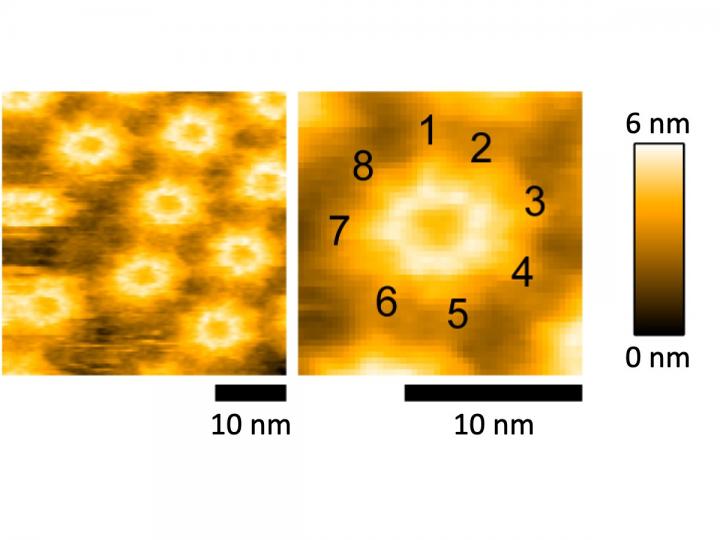
Researchers from Kanazawa University purified the pore-forming bacterial toxin Monalysin to study how the innate immune system fights off bacterial toxins
IMAGE

Credit: Kanazawa University

Kanazawa, Japan – Although the innate immune system is the front line of defense against microbial infections, the complex mechanisms of innate immunity are incompletely understood. In a new study, researchers from Kanazawa University synthesized and characterized the bacterial toxin Monalysin to enable the study of how the innate immune system and toxin-producing bacteria interact with each other.

The innate immune system detects microbial infections through sensing either microbial molecules (pathogen-associated molecular patterns, or PAMPs) or host signaling molecules that are released from damaged host cells (damage-associated molecular patterns, or DAMPs). The bacterium Pseudomonas entomophila has been utilized as a tool to study the mechanisms of DAMPs in the gut. P. entomophila infects insects and damages intestinal cells using a pore-forming toxin called Monalysin. Monalysin is secreted as an inactive pro-toxin, which is then activated by certain proteins called proteases. Although the fruit fly, Drosophila, protects itself from activation of the pro-toxin by building a physical barrier against proteases, it can still take damage upon exposure to the toxin.

“Activated Monalysin forms pores in the plasma membrane of host cells, resulting in cell death, so it is important for the host to prevent its activation,” says corresponding author of the study Takayuki Kuraishi. “We wanted to purify and functionally characterize Monalysin from P. entomophila to develop a tool that could help us understand how the host and bacteria that produce pore-forming toxins interact.”

To achieve their goal, the researchers cultured P. entomophila and purified pro-Monalysin from their lysates. By reacting the purified toxin with Drosophila cells, the researchers confirmed its toxic effect when cell viability dropped significantly as more pro-Monalysin was added to the cells. To confirm that purified Monalysin forms pores, the researchers added activated Monalysin onto a chip covered with a lipid bilayer, similar to the plasma membrane of cells. By measuring the electrical current resulting from ion passage through the formed pores, the researchers showed that Monalysin forms pores around 0.7-1nm in diameter. To analyze the structural composition of Monalysin, the researchers then turned to atomic force microscopy (AFM), which provides high-resolution images by touching the surface with a sensitive mechanical probe. Using AFM, the researchers showed that eight Monalysin molecules came together to form pores in the plasma membrane. By combining AFM with high-speed imaging, the researchers then demonstrated that activated Monalysin preferentially inserted into the edge of the plasma membrane, suggesting that highly curved parts of membranes are the sites of their action.

“These are striking results that show how Monalysin functions at the molecular level,” says Kuraishi. “Our findings could help understand how the innate immune system fights off bacteria that produce pore-forming toxins.”

###

Media Contact
Tomoya Sato
[email protected]

Original Source

https://www.frontiersin.org/articles/10.3389/fimmu.2020.00520/full

Related Journal Article

http://dx.doi.org/10.3389/fimmu.2020.00520

Tags: BacteriologyBiochemistryBiologyBiotechnologyMicrobiologyMolecular Biology
Share12Tweet8Share2ShareShareShare2

Related Posts

Cutting Electrolyte Reduction Boosts High-Energy Battery Performance

Cutting Electrolyte Reduction Boosts High-Energy Battery Performance

December 19, 2025
Microenvironment Shapes Gold-Catalysed CO2 Electroreduction

Microenvironment Shapes Gold-Catalysed CO2 Electroreduction

December 11, 2025

Photoswitchable Olefins Enable Controlled Polymerization

December 11, 2025

Cation Hydration Entropy Controls Chloride Ion Diffusion

December 10, 2025
Please login to join discussion

POPULAR NEWS

  • Nurses’ Views on Online Learning: Effects on Performance

    Nurses’ Views on Online Learning: Effects on Performance

    70 shares
    Share 28 Tweet 18
  • NSF funds machine-learning research at UNO and UNL to study energy requirements of walking in older adults

    71 shares
    Share 28 Tweet 18
  • Unraveling Levofloxacin’s Impact on Brain Function

    54 shares
    Share 22 Tweet 14
  • Exploring Audiology Accessibility in Johannesburg, South Africa

    51 shares
    Share 20 Tweet 13

About

We bring you the latest biotechnology news from best research centers and universities around the world. Check our website.

Follow us

Recent News

Sustainable Farming Solutions Amid Climate Change Challenges

Unraveling Naringin’s Toxic Effects on Liver Injury

Rapid Opioid Tapering Linked to Polydrug Overdoses

Subscribe to Blog via Email

Enter your email address to subscribe to this blog and receive notifications of new posts by email.

Join 70 other subscribers
  • Contact Us

Bioengineer.org © Copyright 2023 All Rights Reserved.

Welcome Back!

Login to your account below

Forgotten Password?

Retrieve your password

Please enter your username or email address to reset your password.

Log In
No Result
View All Result
  • Homepages
    • Home Page 1
    • Home Page 2
  • News
  • National
  • Business
  • Health
  • Lifestyle
  • Science

Bioengineer.org © Copyright 2023 All Rights Reserved.