• HOME
  • NEWS
  • EXPLORE
    • CAREER
      • Companies
      • Jobs
    • EVENTS
    • iGEM
      • News
      • Team
    • PHOTOS
    • VIDEO
    • WIKI
  • BLOG
  • COMMUNITY
    • FACEBOOK
    • INSTAGRAM
    • TWITTER
Saturday, February 7, 2026
BIOENGINEER.ORG
No Result
View All Result
  • Login
  • HOME
  • NEWS
  • EXPLORE
    • CAREER
      • Companies
      • Jobs
        • Lecturer
        • PhD Studentship
        • Postdoc
        • Research Assistant
    • EVENTS
    • iGEM
      • News
      • Team
    • PHOTOS
    • VIDEO
    • WIKI
  • BLOG
  • COMMUNITY
    • FACEBOOK
    • INSTAGRAM
    • TWITTER
  • HOME
  • NEWS
  • EXPLORE
    • CAREER
      • Companies
      • Jobs
        • Lecturer
        • PhD Studentship
        • Postdoc
        • Research Assistant
    • EVENTS
    • iGEM
      • News
      • Team
    • PHOTOS
    • VIDEO
    • WIKI
  • BLOG
  • COMMUNITY
    • FACEBOOK
    • INSTAGRAM
    • TWITTER
No Result
View All Result
Bioengineer.org
No Result
View All Result
Home NEWS Science News

Study reveals new role for Hippo pathway in suppressing cancer immunity

Bioengineer by Bioengineer
December 1, 2016
in Science News
Reading Time: 2 mins read
0
Share on FacebookShare on TwitterShare on LinkedinShare on RedditShare on Telegram
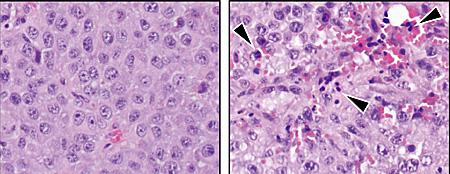
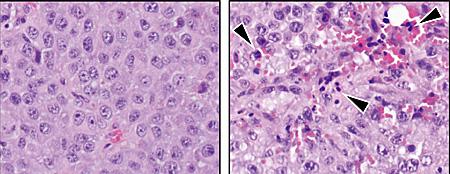
IMAGE

Credit: UC San Diego Health

Previous studies identified the Hippo pathway kinases LATS1/2 as a tumor suppressor, but new research led by University of California San Diego School of Medicine scientists reveals a surprising role for these enzymes in subduing cancer immunity. The findings, published in Cell on December 1, could have a clinical role in improving efficiency of immunotherapy drugs.

"Before our study, no one knew that the Hippo pathway was regulating immunogenicity," said first author Toshiro Moroishi, MD, PhD, postdoctoral researcher at UC San Diego Moores Cancer Center. "LATS1/2 deletion in cancer cells improves tumor immunogenicity, leading to the destruction of cancerous cells by enhancing anti-tumor immune responses."

Hippo pathway signaling regulates organ size by moderating cell growth, apoptosis and stem cell renewal, but dysregulation contributes to cancer development. In vitro studies of Hippo pathway kinases LATS1/2 showed that the loss of these enzymes promoted cell proliferation and tumor survival. In vivo research using immune-compromised mouse models also supports a tumor suppressor function of the Hippo pathway.

However, when Moroishi and team deleted LATS1/2 from mouse cancer cells and examined tumor growth in models with healthy immune systems researchers found that immunogenicity — the ability to stimulate an immune response — improved, destroying cancer cells. Researchers caution that immune systems of mouse models are different from the human immune system so the response might be different and further studies are needed.

If the outcome proves to be the same, using a LATS1/2 inhibitor alone or in combination with an immune checkpoint inhibitor may stimulate the immune system of patients that previously did not respond to immunotherapy treatments.

Currently, most immunotherapy research focuses on targeting the immune system, but the new findings reveal that tumor cells may also be vulnerable to inhibitors.

"Inhibiting LATS1/2 could be an attractive approach to treat cancer," said Kun-Liang Guan, PhD, Distinguished Professor of Pharmacology at Moores Cancer Center and senior author of the study. "LATS is an ideal target because there are many kinase inhibitors that have been successfully developed as cancer drugs."

###

This study focused on breast cancer, melanoma and squamous cell carcinoma but the same could be applied to other cancers, said Moroishi.

Study co-authors include: Tomoko Hayashi, Yu Fujita, Dennis A. Carson, UC San Diego; Wei-Wei Pan, UC San Diego and Jiaxing University; Matthew V. Holt, and Jun Qin, Baylor College of Medicine.

Disclosure: Kun-Liang Guan is co-founder of Vivace Therapeutics and holds equity interest.

Media Contact

Yadira Galindo
[email protected]
858-249-0456
@UCSanDiego

http://www.ucsd.edu

############

Story Source: Materials provided by Scienmag

Share12Tweet8Share2ShareShareShare2

Related Posts

Decoding Prostate Cancer Origins via snFLARE-seq, mxFRIZNGRND

February 7, 2026

Digital Health Perspectives from Baltic Sea Experts

February 7, 2026

Florida Cane Toad: Complex Spread and Selective Evolution

February 7, 2026

Exploring Decision-Making in Dementia Caregivers’ Mobility

February 7, 2026
Please login to join discussion

POPULAR NEWS

  • Robotic Ureteral Reconstruction: A Novel Approach

    Robotic Ureteral Reconstruction: A Novel Approach

    82 shares
    Share 33 Tweet 21
  • Digital Privacy: Health Data Control in Incarceration

    63 shares
    Share 25 Tweet 16
  • Study Reveals Lipid Accumulation in ME/CFS Cells

    57 shares
    Share 23 Tweet 14
  • Breakthrough in RNA Research Accelerates Medical Innovations Timeline

    53 shares
    Share 21 Tweet 13

About

We bring you the latest biotechnology news from best research centers and universities around the world. Check our website.

Follow us

Recent News

Decoding Prostate Cancer Origins via snFLARE-seq, mxFRIZNGRND

Digital Health Perspectives from Baltic Sea Experts

Florida Cane Toad: Complex Spread and Selective Evolution

Subscribe to Blog via Email

Enter your email address to subscribe to this blog and receive notifications of new posts by email.

Join 73 other subscribers
  • Contact Us

Bioengineer.org © Copyright 2023 All Rights Reserved.

Welcome Back!

Login to your account below

Forgotten Password?

Retrieve your password

Please enter your username or email address to reset your password.

Log In
No Result
View All Result
  • Homepages
    • Home Page 1
    • Home Page 2
  • News
  • National
  • Business
  • Health
  • Lifestyle
  • Science

Bioengineer.org © Copyright 2023 All Rights Reserved.