• HOME
  • NEWS
  • EXPLORE
    • CAREER
      • Companies
      • Jobs
    • EVENTS
    • iGEM
      • News
      • Team
    • PHOTOS
    • VIDEO
    • WIKI
  • BLOG
  • COMMUNITY
    • FACEBOOK
    • INSTAGRAM
    • TWITTER
Thursday, March 26, 2026
BIOENGINEER.ORG
No Result
View All Result
  • Login
  • HOME
  • NEWS
  • EXPLORE
    • CAREER
      • Companies
      • Jobs
        • Lecturer
        • PhD Studentship
        • Postdoc
        • Research Assistant
    • EVENTS
    • iGEM
      • News
      • Team
    • PHOTOS
    • VIDEO
    • WIKI
  • BLOG
  • COMMUNITY
    • FACEBOOK
    • INSTAGRAM
    • TWITTER
  • HOME
  • NEWS
  • EXPLORE
    • CAREER
      • Companies
      • Jobs
        • Lecturer
        • PhD Studentship
        • Postdoc
        • Research Assistant
    • EVENTS
    • iGEM
      • News
      • Team
    • PHOTOS
    • VIDEO
    • WIKI
  • BLOG
  • COMMUNITY
    • FACEBOOK
    • INSTAGRAM
    • TWITTER
No Result
View All Result
Bioengineer.org
No Result
View All Result
Home NEWS Science News Biology

A compound unlike any other

Bioengineer by Bioengineer
June 11, 2020
in Biology
Reading Time: 3 mins read
0
IMAGE
Share on FacebookShare on TwitterShare on LinkedinShare on RedditShare on Telegram

IMAGE

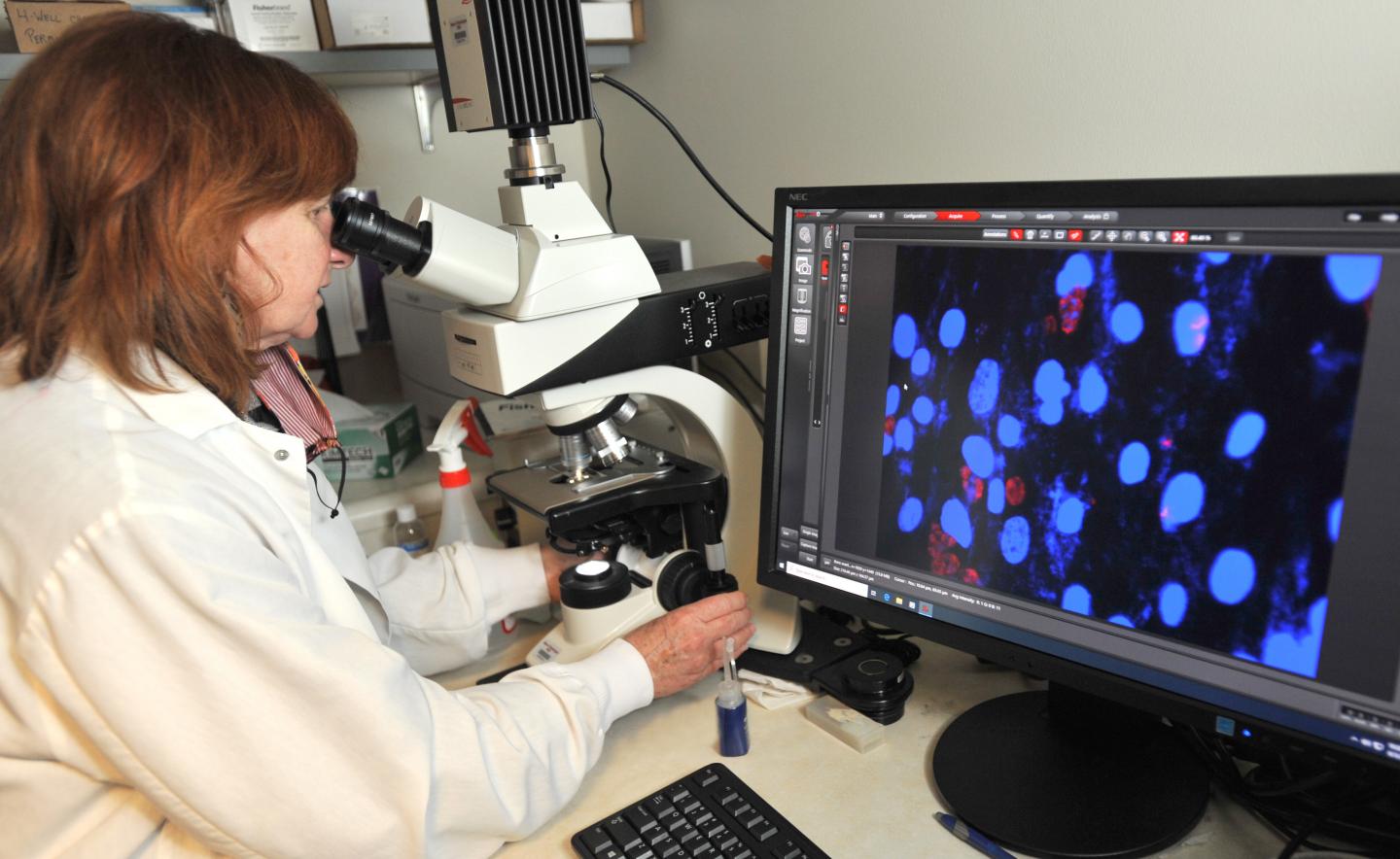
Credit: WSU

A compound discovered in the gills of wood-eating clams could be the solution to a group of parasites responsible for some of the world’s most common infections.

That compound is tartrolon E, a byproduct of bacteria that help shipworms, a group of saltwater clams, digest the wood they eat.

According to research recently published in PLOS Pathogens, the compound, unlike any other, is proven to kill causal parasites for malaria, toxoplasmosis, cryptosporidiosis, theileriosis and babesiosis.

“There are compounds that work against the individual parasites, but to find one that works against this entire group, that is what made this unique,” said Roberta O’Connor, an associate professor in Washington State University’s Veterinary Microbiology and Pathology unit, and first author on the paper.

While there are already effective drugs for many of the parasites mentioned here, O’Connor said this group of parasites, called apicomplexans, readily develops drug resistance.

“Development of new, effective drugs against apicomplexan parasites is an ongoing need for human and veterinary medicine,” she said.

One of those parasites in need of a more effective remedy is Cryptosporidium.

Cryptosporidium, a waterborne zoonotic parasite, is a major cause of diarrhea in children, immunocompromised patients, and in newborn animals worldwide. The parasite infects millions of humans and agricultural animals annually.

In addition to killing this class of parasites in vitro, tartrolon E was able to kill Cryptosporidium in newborn mice.

Beginning this summer, WSU researchers will test the compound against Cryptosporidium in lambs.

Currently, nitazoxanide is the only drug approved by the Food and Drug Administration to treat cryptosporidiosis.

“Nitazoxanide doesn’t work well for those [patients] who are immunocompromised or malnourished and those are the people most vulnerable to Cryptosporidium,” O’Connor said.

O’Connor is the principal investigator on the study which will characterize the specific effects of tartrolon E on Cryptosporidium parasites. Villarino will lead the pharmacokinetics portion of the study in immunocompromised mice to further assess tartrolon E’s effectiveness and optimal dose regimens.

The research is made possible by a recently awarded 5-year, $1.6 million grant from the National Institutes of Health.

“We will define how the drug behaves in the body and how much of the drug is needed to control Cryptosporidiuminfection,” Villarino said. “We want the maximum effect with minimal adverse effects.”

This aspect of the research on the compound is a key component for drug development.

“This could have a significant impact on human and veterinary medicine because there is no other drug that can effectively treat this condition,” Villarino said.

O’Connor and Villarino are hopeful tartrolon E will lead to a clinically developed drug but they know it is a long way to get there.

“Tartrolon E is obviously hitting some system that is common to [all] these parasites,” O’Connor said. “Even if this compound isn’t successful, if we can determine the mechanism, we will have identified a common drug target for all these parasites.”

###

Media Contact
Roberta O’Connor
[email protected]

Original Source

https://news.wsu.edu/2020/06/11/a-compound-unlike-any-other/

Related Journal Article

http://dx.doi.org/10.1371/journal.ppat.1008600

Tags: BacteriologyBiologyDisease in the Developing WorldEpidemiologyMedicine/HealthParasitology
Share12Tweet8Share2ShareShareShare2

Related Posts

How to sway group opinions: Encourage opponents to stay undecided

How to sway group opinions: Encourage opponents to stay undecided

March 23, 2026
Deep Learning Model Maps How Individual Cells Shape Disease Outcomes

Deep Learning Model Maps How Individual Cells Shape Disease Outcomes

March 20, 2026

Removing only 15 female sharks annually could endanger the entire population, scientists warn

March 20, 2026

Scientists Urge Fragrance Industry to Transition from Sustainability Talk to Active Funding of Plant Conservation

March 20, 2026
Please login to join discussion

POPULAR NEWS

  • blank

    Revolutionary AI Model Enhances Precision in Detecting Food Contamination

    96 shares
    Share 38 Tweet 24
  • Imagine a Social Media Feed That Challenges Your Views Instead of Reinforcing Them

    1003 shares
    Share 397 Tweet 248
  • Uncovering Functions of Cavernous Malformation Proteins in Organoids

    54 shares
    Share 22 Tweet 14
  • Promising Outcomes from First Clinical Trials of Gene Regulation in Epilepsy

    51 shares
    Share 20 Tweet 13

About

We bring you the latest biotechnology news from best research centers and universities around the world. Check our website.

Follow us

Recent News

In-Sensor Cryptography Links Physical Process to Digital Identity

Can Psychosocial Factors Influence Cancer Risk?

Depression Factors in Elderly: Pre vs. Post-COVID Analysis

Subscribe to Blog via Email

Success! An email was just sent to confirm your subscription. Please find the email now and click 'Confirm' to start subscribing.

Join 78 other subscribers
  • Contact Us

Bioengineer.org © Copyright 2023 All Rights Reserved.

Welcome Back!

Login to your account below

Forgotten Password?

Retrieve your password

Please enter your username or email address to reset your password.

Log In
No Result
View All Result
  • Homepages
    • Home Page 1
    • Home Page 2
  • News
  • National
  • Business
  • Health
  • Lifestyle
  • Science

Bioengineer.org © Copyright 2023 All Rights Reserved.