IOF-ASBMR-ECTS endorsed guidelines support standardization of techniques and terminology in the use of high-resolution peripheral quantitative computed tomography, while providing guidance on the interpretation and reporting of results.
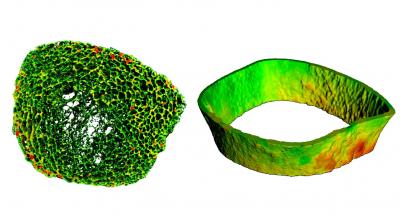
Credit: Courtesy of Danielle Whittier
The use of high-resolution peripheral quantitative computed tomography (HR-pQCT) to assess bone microarchitecture in clinical studies has continued to grow rapidly. Thus, there is an urgent need for guidance and consensus on the methods for and reporting of HR-pQCT imaging so that different studies can be compared to each other.
An important new position paper, published by a joint working group from the International Osteoporosis Foundation (IOF), the American Society for Bone and Mineral Research (ASBMR) and the European Calcified Tissue Society (ECTS), now addresses the need for standardization of techniques and terminology, provides guidance on interpretation and reporting of results, and discusses unresolved issues in the field.
Dr Nicholas Harvey, Professor of Rheumatology and Clinical Epidemiology at the University of Southampton, UK and Chair of the IOF Committee of Scientific Advisors, stated: “HR-pQCT is a powerful technology which provides novel insights into bone microarchitecture which are highly valuable to a broad range of bone-related research. These new guidelines, which are testament to the close collaboration between globally leading organizations in the bone field, provide direction on the technical aspects of HR-pQCT for use in the clinical setting, including best practices for acquisition and analysis of scans, as well as much needed guidance on the presentation and interpretation of results.”
Specifically, the guidance provides:
- standardized protocol for imaging distal radius and tibia sites using HRpQCT, with the importance of quality control and operator training discussed;
- standardized terminology and recommendations on reporting results;
- overview of factors influencing accuracy and precision error, with considerations for longitudinal and multicentre study designs;
- a comparison of original and newer HR-QCT scanners with other high-resolution CT systems.
Senior author, Dr Mary Bouxsein, Director of the Center for Advanced Orthopaedic Studies, Beth Israel Deaconess Medical Center and Professor, Department of Orthopedic Surgery, Harvard Medical School added: “The implementation of these recommendations as best practices will help to facilitate the comparison of results across studies by minimizing technical variation in scan acquisition and analysis. We expect that this will be of enormous benefit to clinical research in the bone field and will support the further advancement of HR-pQCT for a variety of clinical applications.”
###
Reference: Whittier, D., Boyd, S., Burghardt, A., Paccou J., Ghasem-Zadeh A., Chapurlat R., Engelke, K., and M.L. Bouxsein. Guidelines for the assessment of bone density and microarchitecture in vivo using high-resolution peripheral quantitative computed tomography. Osteoporos Int (2020). https:/
About Osteoporosis International
An international multi-disciplinary journal which is a joint initiative between the International Osteoporosis Foundation (IOF) and the National Osteoporosis Foundation (NOF) of the USA, ‘Osteoporosis International‘ provides an interdisciplinary platform for the communication of high quality original, experimental or clinical papers on all aspects of osteoporosis and other metabolic bone diseases. It publishes studies pertaining to the diagnosis, prevention, treatment and management of osteoporosis, and the spectrum of disorders that deficiencies in bone density can produce.
Editors in Chief: John A. Kanis, Felicia Cosman https:/
About IOF
The International Osteoporosis Foundation (IOF) is the world’s largest nongovernmental organization dedicated to the prevention, diagnosis and treatment of osteoporosis and related musculoskeletal diseases. IOF members, including committees of scientific researchers as well as 260 patient, medical and research societies, work together to make fracture prevention and healthy mobility a worldwide heath care priority. http://www.
Media Contact
L. Misteli
[email protected]
Related Journal Article
http://dx.