• HOME
  • NEWS
  • EXPLORE
    • CAREER
      • Companies
      • Jobs
    • EVENTS
    • iGEM
      • News
      • Team
    • PHOTOS
    • VIDEO
    • WIKI
  • BLOG
  • COMMUNITY
    • FACEBOOK
    • INSTAGRAM
    • TWITTER
Saturday, February 7, 2026
BIOENGINEER.ORG
No Result
View All Result
  • Login
  • HOME
  • NEWS
  • EXPLORE
    • CAREER
      • Companies
      • Jobs
        • Lecturer
        • PhD Studentship
        • Postdoc
        • Research Assistant
    • EVENTS
    • iGEM
      • News
      • Team
    • PHOTOS
    • VIDEO
    • WIKI
  • BLOG
  • COMMUNITY
    • FACEBOOK
    • INSTAGRAM
    • TWITTER
  • HOME
  • NEWS
  • EXPLORE
    • CAREER
      • Companies
      • Jobs
        • Lecturer
        • PhD Studentship
        • Postdoc
        • Research Assistant
    • EVENTS
    • iGEM
      • News
      • Team
    • PHOTOS
    • VIDEO
    • WIKI
  • BLOG
  • COMMUNITY
    • FACEBOOK
    • INSTAGRAM
    • TWITTER
No Result
View All Result
Bioengineer.org
No Result
View All Result
Home NEWS Science News Health

A new method for predicting the evolution of melanoma emerges

Bioengineer by Bioengineer
May 27, 2020
in Health
Reading Time: 3 mins read
0
IMAGE
Share on FacebookShare on TwitterShare on LinkedinShare on RedditShare on Telegram

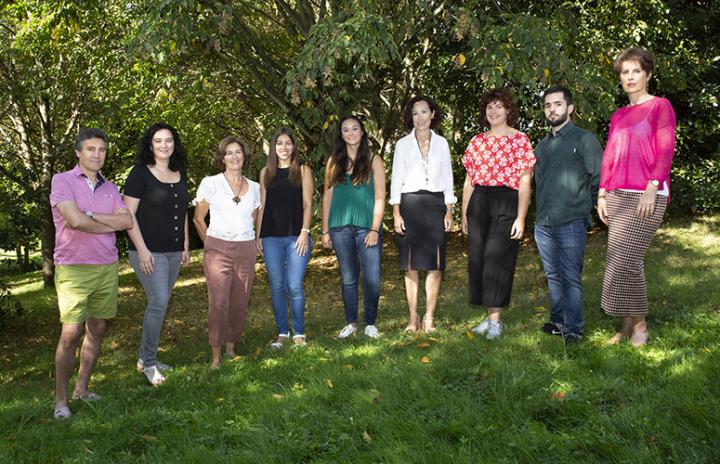
The study was conducted by the Evolutionary Human Biology Group of the UPV/EHU
IMAGE

Credit: UPV/EHU.

Melanoma is a malignant tumour resulting from the transformation of melanocytes, the cells in the skin that undertake to synthesise melanin, a complex polymer which protects us from the negative effects of solar radiation. Although melanoma is the least common among skin cancers, it is the one with the highest mortality rate, largely because of its high potential for metastasis.

Once a patient has been diagnosed with advanced-stage melanoma, an assessment is made as to whether he or she stands to benefit from adjuvant therapy with BRAF inhibitors. To do this, clinical laboratories analyse whether or not the patient has a specific mutation in the BRAF gene, specifically the BRAF-V600E mutation, which is one of the most common in melanoma and is regarded as a “driver” mutation, in other words, a mutation that provides an advantage in the onset of tumour transformation and growth.

However, it is becoming increasingly clear that tumours are highly heterogeneous and that there are subpopulations of cells with different mutations and behaviours within the same tumour. “So we believe that quantifying the mutation provides much more information that just trying to detect it (positive or negative). This quantification can be made by means of biopsies using a novel technique known as digital PCR,” explained Arrate Sevilla, a researcher in salonsoLab (Evolutionary Human Biology Group), in the UPV/EHU’s Department of Genetics, Physical Anthropology and Animal Physiology.

In the study the mutational load was analysed in biopsies of 78 patients and the load of the BRAF-V600E mutation was found to inversely correlate with the stage of the patients, which suggests that it could be useful as a prognosis marker. But in addition, the most interesting thing is that in patients in stage II it correlated inversely with the development of metastasis. That means that the patients who had developed metastasis also tended to have a lower percentage of the mutation in their primary tumours. So by means of predictive analyses based on machine learning, the mutational load of BRAF-V600E was found to be capable of categorizing stage II patients under metastatic and non-metastatic ones in a slightly more accurate way than the routinely used marker: the Breslow thickness marker.

According to the analyses made by this group, which besides the UPV/EHU has had the intervention of scientists from the Biocruces Bizkaia Institute, Onkologikoa and Ikerbasque, the mutation load appears to be linked to the prognosis. “In stage II patients, at least, it could be a predictor of progress to metastasis,” said Sevilla.

These results are preliminary ones, so this possible marker would need to be validated in a much bigger cohort of patients. “However, we believe that our discovery is on the right track, it is novel and opens up the door to additional studies on the evolutionary mechanisms of this tumour,” added the researcher.

###

Media Contact
Matxalen Sotillo
[email protected]

Original Source

https://www.ehu.eus/en/web/campusa-magazine/-/a-new-method-for-predicting-the-evolution-of-melanoma-emerges

Related Journal Article

http://dx.doi.org/10.1371/journal.pone.0230136

Tags: BiologycancerCell BiologyGenesGeneticsMedicine/Health
Share12Tweet8Share2ShareShareShare2

Related Posts

Evaluating Pediatric Emergency Care Quality in Ethiopia

February 7, 2026

TPMT Expression Predictions Linked to Azathioprine Side Effects

February 7, 2026

Improving Dementia Care with Enhanced Activity Kits

February 7, 2026

Decoding Prostate Cancer Origins via snFLARE-seq, mxFRIZNGRND

February 7, 2026
Please login to join discussion

POPULAR NEWS

  • Robotic Ureteral Reconstruction: A Novel Approach

    Robotic Ureteral Reconstruction: A Novel Approach

    82 shares
    Share 33 Tweet 21
  • Digital Privacy: Health Data Control in Incarceration

    63 shares
    Share 25 Tweet 16
  • Study Reveals Lipid Accumulation in ME/CFS Cells

    57 shares
    Share 23 Tweet 14
  • Breakthrough in RNA Research Accelerates Medical Innovations Timeline

    53 shares
    Share 21 Tweet 13

About

We bring you the latest biotechnology news from best research centers and universities around the world. Check our website.

Follow us

Recent News

Evaluating Pediatric Emergency Care Quality in Ethiopia

TPMT Expression Predictions Linked to Azathioprine Side Effects

Improving Dementia Care with Enhanced Activity Kits

Subscribe to Blog via Email

Success! An email was just sent to confirm your subscription. Please find the email now and click 'Confirm' to start subscribing.

Join 73 other subscribers
  • Contact Us

Bioengineer.org © Copyright 2023 All Rights Reserved.

Welcome Back!

Login to your account below

Forgotten Password?

Retrieve your password

Please enter your username or email address to reset your password.

Log In
No Result
View All Result
  • Homepages
    • Home Page 1
    • Home Page 2
  • News
  • National
  • Business
  • Health
  • Lifestyle
  • Science

Bioengineer.org © Copyright 2023 All Rights Reserved.