• HOME
  • NEWS
  • EXPLORE
    • CAREER
      • Companies
      • Jobs
    • EVENTS
    • iGEM
      • News
      • Team
    • PHOTOS
    • VIDEO
    • WIKI
  • BLOG
  • COMMUNITY
    • FACEBOOK
    • INSTAGRAM
    • TWITTER
Tuesday, December 23, 2025
BIOENGINEER.ORG
No Result
View All Result
  • Login
  • HOME
  • NEWS
  • EXPLORE
    • CAREER
      • Companies
      • Jobs
        • Lecturer
        • PhD Studentship
        • Postdoc
        • Research Assistant
    • EVENTS
    • iGEM
      • News
      • Team
    • PHOTOS
    • VIDEO
    • WIKI
  • BLOG
  • COMMUNITY
    • FACEBOOK
    • INSTAGRAM
    • TWITTER
  • HOME
  • NEWS
  • EXPLORE
    • CAREER
      • Companies
      • Jobs
        • Lecturer
        • PhD Studentship
        • Postdoc
        • Research Assistant
    • EVENTS
    • iGEM
      • News
      • Team
    • PHOTOS
    • VIDEO
    • WIKI
  • BLOG
  • COMMUNITY
    • FACEBOOK
    • INSTAGRAM
    • TWITTER
No Result
View All Result
Bioengineer.org
No Result
View All Result
Home NEWS Science News Biology

Fire aerosols decrease global terrestrial ecosystem productivity through changing climate

Bioengineer by Bioengineer
May 20, 2020
in Biology
Reading Time: 2 mins read
0
IMAGE
Share on FacebookShare on TwitterShare on LinkedinShare on RedditShare on Telegram

IMAGE

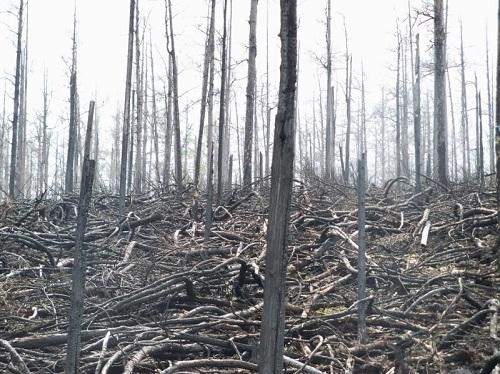
Credit: Zhihua Liu

Fire is the primary form of terrestrial ecosystem disturbance on a global scale, and a major source of aerosols from the terrestrial biosphere to the atmosphere.

Most previous studies have quantified the effect of fire aerosols on climate and atmospheric circulation, or on the regional and site-scale terrestrial ecosystem productivity. So far, only one work has quantified the global impacts of fire aerosols on terrestrial ecosystem productivity. It was based on offline simulations driven by prescribed atmospheric forcing, so did not consider the fire aerosols’ impacts through changing climate (e.g., cloud-aerosol interactions or climate feedbacks).

In a paper recently published in Atmospheric and Oceanic Science Letters, Dr. Fang Li from the Institute of Atmospheric Physics, Chinese Academy of Sciences, provided the first quantitative assessment of fire aerosols on global ecosystem productivity that takes into account the influence of aerosols’ climatic effects. The study was based on fully coupled (atmosphere-land-ocean-sea-ice) simulations of the global Earth system model CESM1.2.

According to this study, fire aerosols generally decreased terrestrial gross primary productivity (GPP, carbon input of terrestrial ecosystem, the carbon uptake through photosynthesis) in vegetated areas, with a global total of ?1.6 Pg C per year, mainly because fire aerosols cooled and dried the land surface and weakened the direct photosynthetically active radiation (PAR). Exceptions to this were the Amazon and some regions in North America, which was mainly due to a fire-aerosol-induced wetter land surface and increased diffuse PAR.

“Cooling, drying, and light attenuation are major impacts of fire aerosols on the global terrestrial ecosystem productivity,” concludes Dr. Li.

###

Media Contact
Ms. Zheng Lin
[email protected]

Original Source

http://english.iap.cas.cn/home/News/202005/t20200520_237349.html

Related Journal Article

http://dx.doi.org/10.1080/16742834.2020.1740580

Tags: Atmospheric ChemistryAtmospheric ScienceBiologyClimate ChangeEarth ScienceEcology/Environment
Share12Tweet8Share2ShareShareShare2

Related Posts

Splice Junction Mutations Disrupt Gene Function, Linked to Disease

Splice Junction Mutations Disrupt Gene Function, Linked to Disease

December 23, 2025
blank

Hydrocolloids Boost Orally Disintegrating Film Performance

December 23, 2025

Retrotransposons and Life History Shape Anuran Genome Size

December 23, 2025

Unraveling Coding vs. Non-Coding Genes in Obesity

December 22, 2025
Please login to join discussion

POPULAR NEWS

  • Nurses’ Views on Online Learning: Effects on Performance

    Nurses’ Views on Online Learning: Effects on Performance

    70 shares
    Share 28 Tweet 18
  • NSF funds machine-learning research at UNO and UNL to study energy requirements of walking in older adults

    71 shares
    Share 28 Tweet 18
  • Unraveling Levofloxacin’s Impact on Brain Function

    54 shares
    Share 22 Tweet 14
  • Exploring Audiology Accessibility in Johannesburg, South Africa

    51 shares
    Share 20 Tweet 13

About

We bring you the latest biotechnology news from best research centers and universities around the world. Check our website.

Follow us

Recent News

Innovative Peptide Vaccine Targets Ovarian Cancer Epitopes

Advancing Neonatal Care: Surfactant Use in Vietnam

Trained Immunity Reduces Lung Injury via Metabolic Shift

Subscribe to Blog via Email

Enter your email address to subscribe to this blog and receive notifications of new posts by email.

Join 70 other subscribers
  • Contact Us

Bioengineer.org © Copyright 2023 All Rights Reserved.

Welcome Back!

Login to your account below

Forgotten Password?

Retrieve your password

Please enter your username or email address to reset your password.

Log In
No Result
View All Result
  • Homepages
    • Home Page 1
    • Home Page 2
  • News
  • National
  • Business
  • Health
  • Lifestyle
  • Science

Bioengineer.org © Copyright 2023 All Rights Reserved.