• HOME
  • NEWS
  • EXPLORE
    • CAREER
      • Companies
      • Jobs
    • EVENTS
    • iGEM
      • News
      • Team
    • PHOTOS
    • VIDEO
    • WIKI
  • BLOG
  • COMMUNITY
    • FACEBOOK
    • INSTAGRAM
    • TWITTER
Saturday, February 7, 2026
BIOENGINEER.ORG
No Result
View All Result
  • Login
  • HOME
  • NEWS
  • EXPLORE
    • CAREER
      • Companies
      • Jobs
        • Lecturer
        • PhD Studentship
        • Postdoc
        • Research Assistant
    • EVENTS
    • iGEM
      • News
      • Team
    • PHOTOS
    • VIDEO
    • WIKI
  • BLOG
  • COMMUNITY
    • FACEBOOK
    • INSTAGRAM
    • TWITTER
  • HOME
  • NEWS
  • EXPLORE
    • CAREER
      • Companies
      • Jobs
        • Lecturer
        • PhD Studentship
        • Postdoc
        • Research Assistant
    • EVENTS
    • iGEM
      • News
      • Team
    • PHOTOS
    • VIDEO
    • WIKI
  • BLOG
  • COMMUNITY
    • FACEBOOK
    • INSTAGRAM
    • TWITTER
No Result
View All Result
Bioengineer.org
No Result
View All Result
Home NEWS Science News Health

New bone-graft biomaterial gives patients a nicer smile and less pain

Bioengineer by Bioengineer
May 15, 2020
in Health
Reading Time: 2 mins read
0
IMAGE
Share on FacebookShare on TwitterShare on LinkedinShare on RedditShare on Telegram

IMAGE

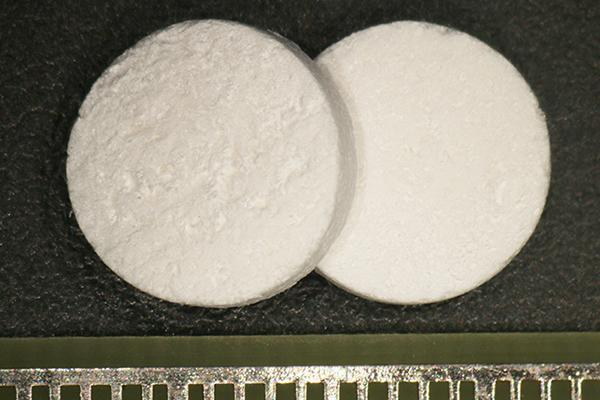
Credit: Shinji Kamakura and Hitoshi Inada, Tohoku University

A new recipe for a bone-graft biomaterial that is supercooled before application should make it easier to meet dental patients’ expectation of a good-looking smile while eliminating the pain associated with harvesting bone from elsewhere in their body.

The findings were published in the Journal of Biomedical Materials Research Part B: Applied Biomaterials on Apr 2, 2020.

Patients missing teeth don’t just want a restoration of function. Above all, they want a tooth replacement that gives them a nice smile.

“The exacting aesthetic demands of the patient make a procedure that is already difficult for clinicians–due to the tricky anatomy of these parts of the mouth–even more challenging,” says Shinji Kamakura, a professor from the Bone Regenerative Engineering Laboratory at Tohoku University.

To overcome these challenges, clinicians have tended to employ bone grafts using non-essential bits of bone taken from other parts of the same patient such as the chin or pelvis, a process called autologous grafting. Unfortunately, this requires additional surgical sites, increases pain for the patient at that site, and there is also just a very limited amount of non-essential bone!

Synthetic alternatives made of minerals that already appear in the body but with similar mechanical properties to bone are sometimes used for other types of bone grafts. But these biomaterial substitutes have low bone regenerative properties compared to the gold standard of autologous grafts.

The conventional recipe for an OCP/Col preparation still runs into problems with ‘appositional bone growth,’ or increase in width, due to compressional stress on the material from the bone itself, so OCP/Col has been supported by a Teflon ring structure in order to retain its shape while the bone is forming. But Teflon is not a material that can be absorbed by the body and ultimately needs to be removed.

To get around this, professor Kamakura and his colleagues developed a recipe for OCP/Col that increases its density, and supercooled it with liquid nitrogen down to ?196°C before application on their rodent test subjects, producing the bone shape retention dental surgeons are looking for.

The researchers now intend to test the recipe on larger animals and then engage in clinical trials in humans.

In the last fifteen years, a new alternative bone-substitute, octacalcium phosphate, which provides the basis of the mineral crystals that make up bone, has appeared combined with collagen (OCP/Col) as a likely candidate because it has bone regenerative properties superior to earlier substitutes. Following years of clinical trials, commercialization of OCP/Col for oral surgery was recently approved in Japan.

###

Media Contact
Shinji Kamakura
[email protected]

Original Source

https://www.tohoku.ac.jp/en/press/a_nicer_smile_and_less_pain.html

Related Journal Article

http://dx.doi.org/10.1002/jbm.b.34613

Tags: Medicine/Health
Share12Tweet8Share2ShareShareShare2

Related Posts

Evaluating Pediatric Emergency Care Quality in Ethiopia

February 7, 2026

TPMT Expression Predictions Linked to Azathioprine Side Effects

February 7, 2026

Improving Dementia Care with Enhanced Activity Kits

February 7, 2026

Decoding Prostate Cancer Origins via snFLARE-seq, mxFRIZNGRND

February 7, 2026
Please login to join discussion

POPULAR NEWS

  • Robotic Ureteral Reconstruction: A Novel Approach

    Robotic Ureteral Reconstruction: A Novel Approach

    82 shares
    Share 33 Tweet 21
  • Digital Privacy: Health Data Control in Incarceration

    63 shares
    Share 25 Tweet 16
  • Study Reveals Lipid Accumulation in ME/CFS Cells

    57 shares
    Share 23 Tweet 14
  • Breakthrough in RNA Research Accelerates Medical Innovations Timeline

    53 shares
    Share 21 Tweet 13

About

We bring you the latest biotechnology news from best research centers and universities around the world. Check our website.

Follow us

Recent News

Evaluating Pediatric Emergency Care Quality in Ethiopia

TPMT Expression Predictions Linked to Azathioprine Side Effects

Improving Dementia Care with Enhanced Activity Kits

Subscribe to Blog via Email

Success! An email was just sent to confirm your subscription. Please find the email now and click 'Confirm' to start subscribing.

Join 73 other subscribers
  • Contact Us

Bioengineer.org © Copyright 2023 All Rights Reserved.

Welcome Back!

Login to your account below

Forgotten Password?

Retrieve your password

Please enter your username or email address to reset your password.

Log In
No Result
View All Result
  • Homepages
    • Home Page 1
    • Home Page 2
  • News
  • National
  • Business
  • Health
  • Lifestyle
  • Science

Bioengineer.org © Copyright 2023 All Rights Reserved.