COVID-19 Disease Map: A comprehensive repository incorporating all current knowledge on the virus-host interaction mechanisms
Credit: Credits_scienceRELATIONS
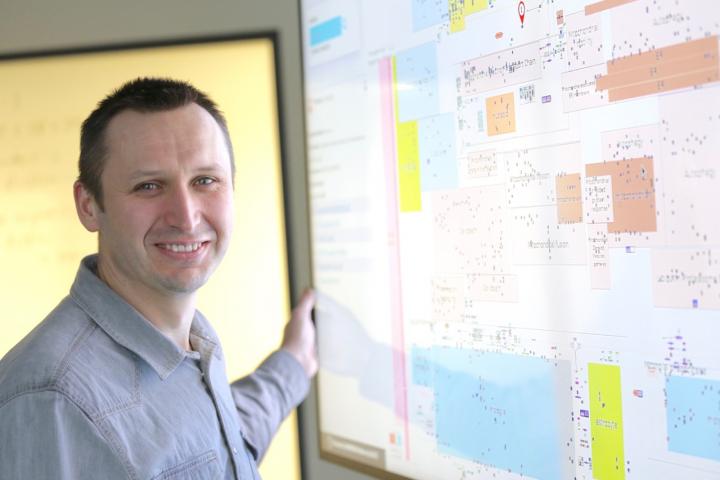
In the fight against the current pandemic, researchers of the Luxembourg Centre for Systems Biomedicine (LCSB) at the University of Luxembourg are coordinating an international collaboration to build a COVID-19 Disease Map: a comprehensive repository incorporating all current knowledge on the virus-host interaction mechanisms. This online tool will support research and improve our understanding of the disease.
In an article published this week in Nature Scientific Data, the researchers present their project and call for contributions from the R&D community worldwide.
Leveraging over a decade of expertise in disease maps and community building, the LCSB researchers are organising this project as a rapid response to the current epidemic. 162 contributors from 25 countries around the world are now participating in a collaborative effort. Extracting and assembling data from the existing literature and the fast-growing number of COVID-19 publications thanks to a rigorous and efficient organisation, they are building a reliable knowledge repository.
The disease map will provide a graphical, interactive representation of the disease mechanisms and a computational resource for analyses and disease modelling. “This platform will allow domain experts, such as clinicians, virologists, and immunologists, to collaborate with data scientists and computational biologists for a precise formulation of models and accurate data interpretation,” explains Prof. Reinhard Schneider, head of the Bioinformatics Core at the LCSB.
The way the COVID-19 Disease Map is being built is unique as the researchers have to rely on a distributed, multi-tool, multi-group approach dictated by emergency time-constraints of the ongoing pandemic. Only a collaboration between several research institutions and the combination of multiple areas of expertise can allow to tackle this challenge fast enough. “The response from the research community is already impressive, but we want to gain more visibility and attract new contributors,” underlines Dr Marek Ostaszewski, member of the Bioinformatics Core and one of the coordinators of the disease map. “We invite curators to join the project and help building the repository.” The researchers are also seeking input from practising physicians, clinicians and domain experts. They can help to review the map – its content and its scope – and to improve quality and applicability.
Such an open collaboration between clinical researchers, life scientists, pathway curators, computational biologists and data scientists makes it possible to build a trusted, reliable, and useful resource for all projects that are looking into COVID-19 disease mechanisms. The gathered knowledge will improve our understanding of gender, age, and other susceptibility features of the host, disease progression, defence mechanisms, and response to treatment. It will facilitate the development of efficient diagnostics and treatment strategies.
“This project paves the way for long-term community-based development of high-quality models and knowledge bases that will be useful both for the current and future epidemics,” concludes Prof. Schneider.
###
Media Contact
Laura Bianchi
[email protected]
Original Source
https:/
Related Journal Article
http://dx.