• HOME
  • NEWS
  • EXPLORE
    • CAREER
      • Companies
      • Jobs
    • EVENTS
    • iGEM
      • News
      • Team
    • PHOTOS
    • VIDEO
    • WIKI
  • BLOG
  • COMMUNITY
    • FACEBOOK
    • INSTAGRAM
    • TWITTER
Sunday, August 16, 2026
BIOENGINEER.ORG
No Result
View All Result
  • Login
  • HOME
  • NEWS
  • EXPLORE
    • CAREER
      • Companies
      • Jobs
        • Lecturer
        • PhD Studentship
        • Postdoc
        • Research Assistant
    • EVENTS
    • iGEM
      • News
      • Team
    • PHOTOS
    • VIDEO
    • WIKI
  • BLOG
  • COMMUNITY
    • FACEBOOK
    • INSTAGRAM
    • TWITTER
  • HOME
  • NEWS
  • EXPLORE
    • CAREER
      • Companies
      • Jobs
        • Lecturer
        • PhD Studentship
        • Postdoc
        • Research Assistant
    • EVENTS
    • iGEM
      • News
      • Team
    • PHOTOS
    • VIDEO
    • WIKI
  • BLOG
  • COMMUNITY
    • FACEBOOK
    • INSTAGRAM
    • TWITTER
No Result
View All Result
Bioengineer.org
No Result
View All Result
Home NEWS Science News Biology

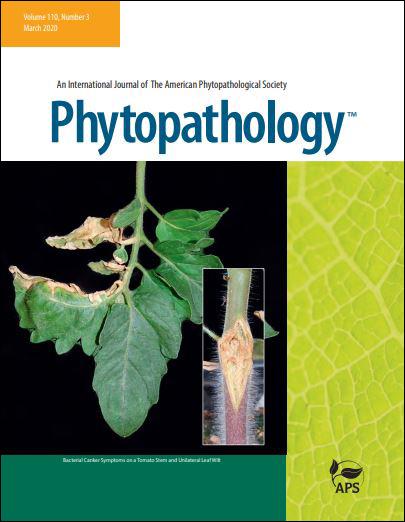
New dataset helps tomato growers reduce spread of bacterial canker

Bioengineer by Bioengineer
May 11, 2020
in Biology
Reading Time: 2 mins read
0
IMAGE
Share on FacebookShare on TwitterShare on LinkedinShare on RedditShare on Telegram

IMAGE

Credit: Shree Thapa

Bacterial canker of tomato is a disease that can lead to significant losses in greenhouse and field production systems. This disease is caused by the bacterial pathogen Clavibacter michiganensis. The best way to control bacterial canker is by securing clean tomato seed and enforcing good sanitation practices.

A group of plant pathologists, primarily based at the University of California, Davis, became interested in studying Clavibacter when extension agents brought in diseased samples. In particular, they wanted to develop a diagnostic platform that could specifically detect the tomato pathogen, as some strains of Clavibacter do not cause disease.

Taking advantage of the huge advances in DNA sequencing over the last 10 years, these plant pathologists were able to identify genetic regions that can specifically detect the pathogen causing bacterial canker of tomato without giving false positives with nonpathogenic bacteria. They analyzed the genomes of 37 different Clavibacter strains in order to identify genetic regions only present in Clavibacter michiganensis. Using this information, they were able to develop a diagnostic platform.

“This diagnostic platform was based on amplification of three targets: two specific for Clavibacter michiganensis and one positive control,” explained plant pathologist Gitta Coaker. “This platform is available for use without restriction and should facilitate the distribution of clean tomato seed to growers.”

In an article in Phytopathology, Coaker and her team published large genomic datasets enabling other organizations to develop Clavibacter michiganensis-specific detection assay. The adoption of this assay in the field will help tomato growers reduce the spread of bacterial canker of tomato through easier screening of infected plant and seed materials.

###

Learn more about this research in “Comparative Genomics to Develop a Specific Multiplex PCR Assay for Detection of Clavibacter michiganensis.”

Media Contact
Ashley Bergman Carlin
[email protected]

Related Journal Article

http://dx.doi.org/10.1094/PHYTO-10-19-0405-R

Tags: Agricultural Production/EconomicsAgricultureBacteriologyBiologyCell BiologyFood/Food ScienceGenesPlant Sciences
Share12Tweet8Share2ShareShareShare2

Related Posts

Strubbelig–NHL3 Receptor Complex Helps Arabidopsis Respond to Cellulose Deficiency

Strubbelig–NHL3 Receptor Complex Helps Arabidopsis Respond to Cellulose Deficiency

August 15, 2026
Bombyx mori Satellitome Analysis Reveals Evolutionary Stability, Dispersed Chromosomal Organization, Transposon Origins

Bombyx mori Satellitome Analysis Reveals Evolutionary Stability, Dispersed Chromosomal Organization, Transposon Origins

August 15, 2026

Synthetic pyrenoid reconstruction reveals EPYC1-driven carbon concentration mechanisms and evolution

August 15, 2026

Endophytic Flavobacterium boosts root hairs and drought tolerance through ERF–CEP5 signaling

August 15, 2026
Please login to join discussion

POPULAR NEWS

  • KAIST develops semiconductor neuron that harnesses noise to selectively process signals

    29 shares
    Share 12 Tweet 7
  • Imagining natural and extra robotic thumbs together strengthens kinesthetic sensorimotor networks

    29 shares
    Share 12 Tweet 7
  • PARP1 Drives Neuropathic Pain Through GPX4-Dependent Ferroptosis in Injured Mice’s Sensory Neurons

    29 shares
    Share 12 Tweet 7
  • Strubbelig–NHL3 Receptor Complex Helps Arabidopsis Respond to Cellulose Deficiency

    29 shares
    Share 12 Tweet 7

About

We bring you the latest biotechnology news from best research centers and universities around the world. Check our website.

Follow us

Recent News

KAIST develops semiconductor neuron that harnesses noise to selectively process signals

Imagining natural and extra robotic thumbs together strengthens kinesthetic sensorimotor networks

PARP1 Drives Neuropathic Pain Through GPX4-Dependent Ferroptosis in Injured Mice’s Sensory Neurons

Subscribe to Blog via Email

Success! An email was just sent to confirm your subscription. Please find the email now and click 'Confirm' to start subscribing.

Join 85 other subscribers
  • Contact Us

Bioengineer.org © Copyright 2023 All Rights Reserved.

Welcome Back!

Login to your account below

Forgotten Password?

Retrieve your password

Please enter your username or email address to reset your password.

Log In
No Result
View All Result
  • Homepages
    • Home Page 1
    • Home Page 2
  • News
  • National
  • Business
  • Health
  • Lifestyle
  • Science

Bioengineer.org © Copyright 2023 All Rights Reserved.