New study reveals a trait-based understanding of fungal decomposition abilities
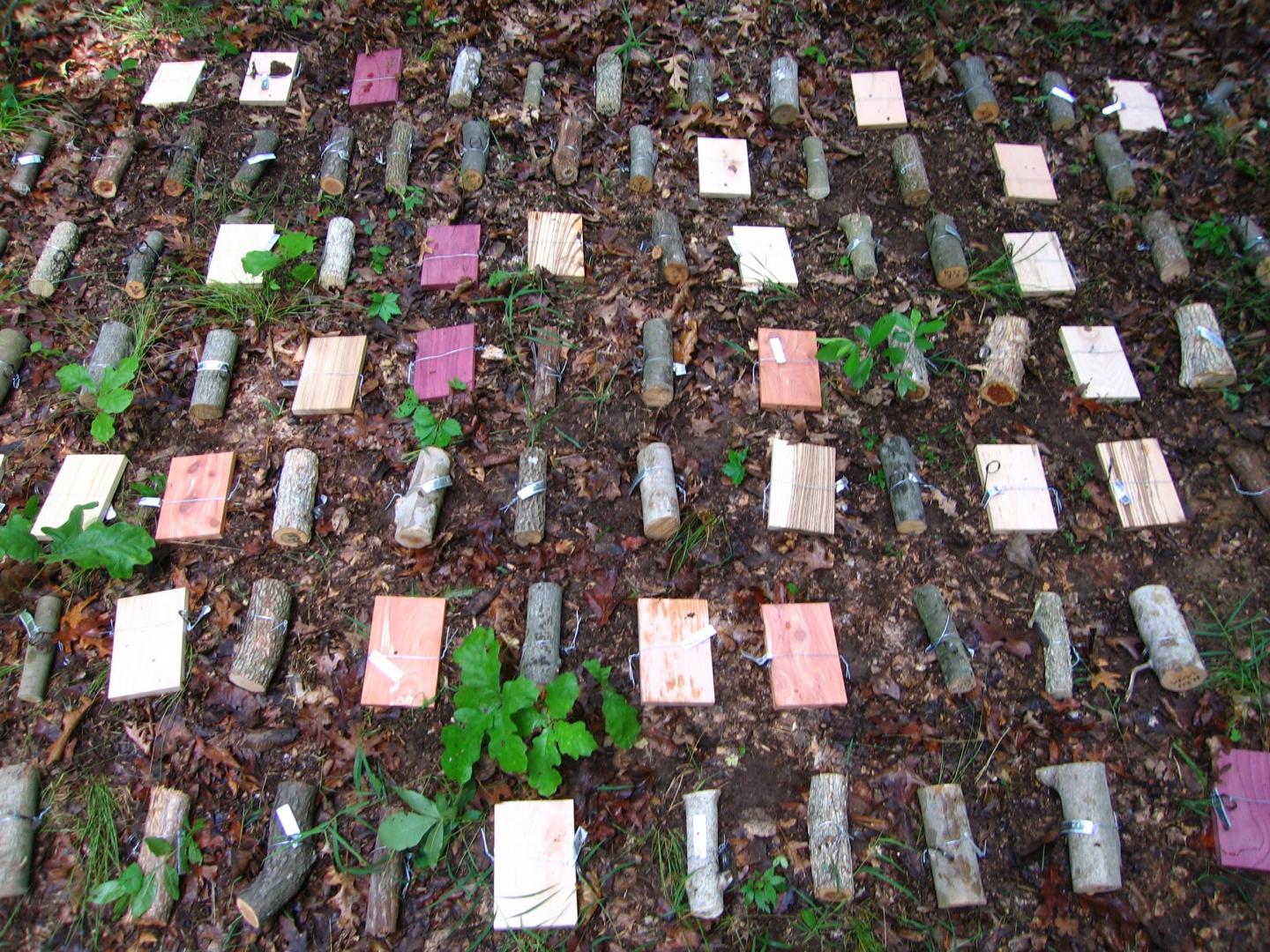
Credit: Amy Zanne
SUMMARY
Through a combination of lab and field experiments, researchers have developed a better understanding of the factors accounting for different wood decomposition rates among fungi. The new findings reveal how an understanding of fungal trait variation can improve the predictive ability of early and mid-stage wood decay, a critical driver of the global carbon cycle.
THE SITUATION
Fungi play a key role in the global carbon cycle as the main decomposers of litter and wood. While current earth system models represent only little of the functional variation in microbial groups, fungi differ greatly in their decomposing ability. The researchers set out to find which traits best explain fungal decomposition ability to help improve the current models.
THE FINDINGS
- The hyphal extension rate-or fungal growth rate-is the strongest single predictor of fungal-mediated wood decomposition.
- Decomposing ability varies along a spectrum from slow-growing, stress-tolerant fungi that are poor decomposers, to fast-growing, highly competitive fungi that have fast decomposition rates.
- Slow growing, stress-tolerant fungi with poor intrinsic wood decaying abilities are more likely to exist in drier forests with high precipitation seasonality. In contrast, fast-growing, highly competitive fungi tend to be found in more favorable environments and decompose wood more quickly, regardless of the local microclimate.
FROM THE RESEARCHERS
“Fungi are largely hidden players. We know they are critical for cycling carbon but it has been difficult to determine the effects of different decomposers in causing fast or slow decomposition. As we identify who fungal decomposers are in rotting logs and what allows a particular species to affect these rates, we can better predict carbon cycling around the globe under current and future climates. Our study takes a first step towards this, pairing complementary field and laboratory experiments to find that how fast different fungi grow and what enzymes they produce matter.”
– Amy Zanne, associate professor of biology at the George Washington University
“Fungi differ massively in how quickly they decompose wood, releasing carbon back into the ecosystem. Our study identifies different fungal traits that explain this variation, which has great potential to improve predictions of the carbon cycle in forests.”
– Nicky Lustenhouwer, lead author and postdoctoral scholar at the University of California, Santa Cruz
“We show that the same processes that determine where a fungus lives–that is, its ability to displace other fungi vs. survive in stressful environments–closely aligns with its decomposition ability. This connection allows us to translate an ecological mechanism into broad-scale patterns in microbial decomposition rates, helping to address a key uncertainty in earth system models.”
– Daniel Maynard, postdoctoral researcher at Crowther Lab, ETH Zurich
PUBLICATION INFORMATION
The paper, “A trait-based understanding of wood decomposition by fungi” will be published in the Proceedings of the National Academy of Sciences during the week of Monday, May 11.
To schedule an interview with Dr. Zanne about the new research, please contact Timothy Pierce at [email protected] or 202-994-5647.
Media Contact
Timothy Pierce
[email protected]
Original Source
https:/
Related Journal Article
http://dx.