Matthew Koski, an assistant professor at Clemson, will advance his research with a 3-year, $455,000 grant from the National Science Foundation
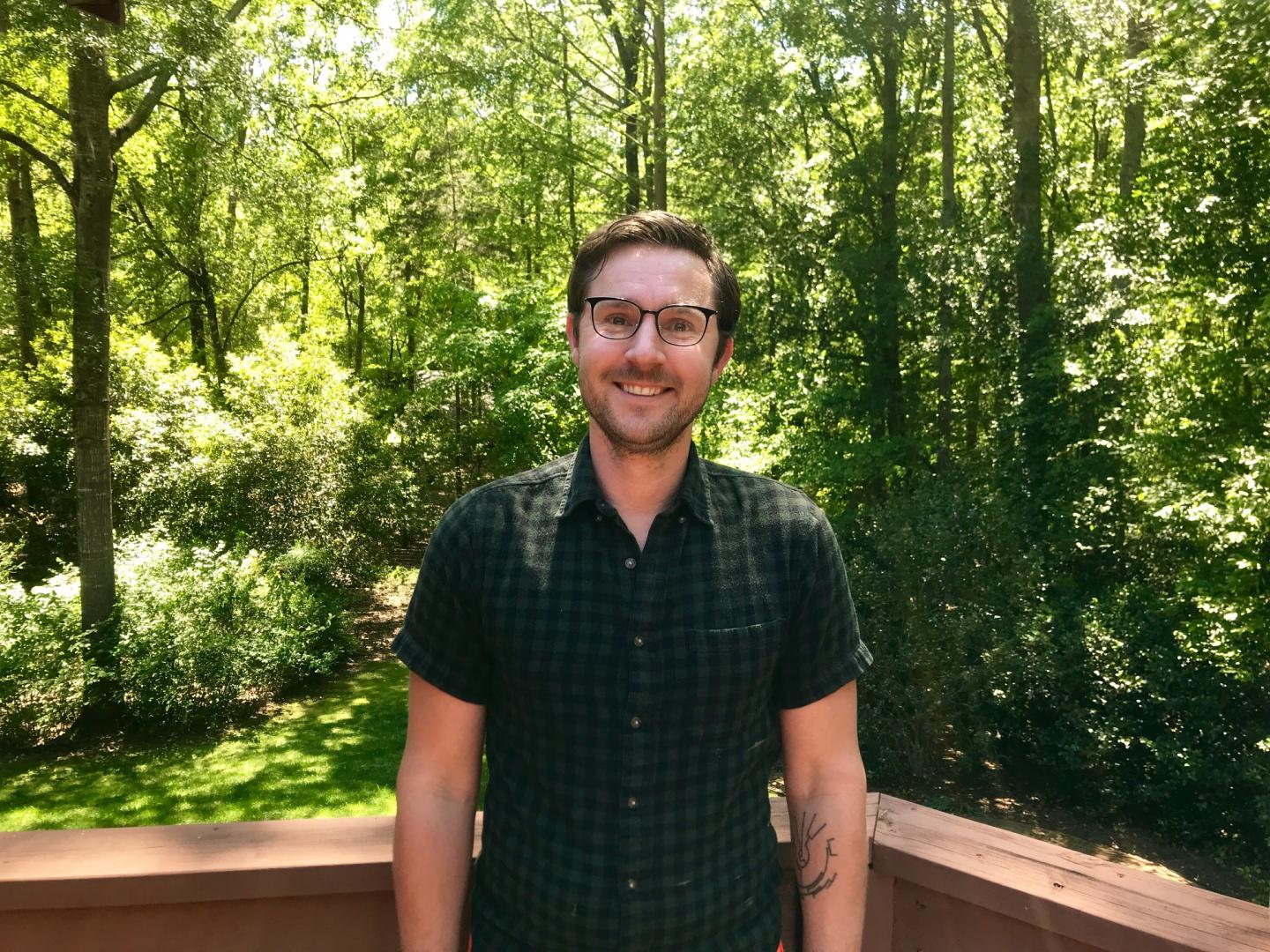
Credit: Courtesy of Dustin Fleetwood
CLEMSON, South Carolina – While the world admires the beauty and fragrance of flowers, most of us are missing out on the extraordinary processes these seemingly delicate life forms are carrying out every moment of the day.
Matthew Koski, an assistant professor in the College of Science’s department of biological sciences, is not only paying attention, he is advancing his research with a three-year, $455,000 grant from the National Science Foundation for a study of flower adaptations titled “Modifying the floral microenvironment: elevational divergence in floral thermoregulatory mechanisms.”
“What we’ll be doing is learning about how the internal organs of flowers thermoregulate, and how plants can modify the thermal environment of the pollen and ovules,” Koski said.
Plants respond to heat and cold in remarkable ways.
“Organisms experience thermal stress all the time,” Koski said. “In animals, they can move to suitable microclimates. If it gets too hot, they go in the shade. Plants can’t do that, so flowering plants have evolved mechanisms to modify their floral temperatures to make them more suitable for the function of their pollen and ovules.”
Though Koski’s research involving pollen color is the cover story of the April issue of The Journal of Evolutionary Biology, there is no pollen color variation in the population he will study under this grant.
“I’m going to be looking at how flowers not only might warm themselves in cool environments, but cool themselves under high heat stress,” he said. “To do this, I’m going to be working on an elevation gradient in Colorado, almost at timberline and down at the sagebrush step. These are really different thermal environments and I’ll look at how flowers are locally adapted to these environments.”
This will mean a month or two in Colorado each summer for at least the next three years. The hope is that travel will begin this summer, but Koski said work will likely begin in September on other aspects of the research, with field work starting in 2021.
“Dr. Koski’s work promises to help us understand how plants will cope with thermal stress under global change,” said Saara J. DeWalt, chair of the department of biological sciences. “Our department is excited to have another junior faculty member obtain competitive external funding to support their research.”
The research is important to Koski, his colleagues and students, but it has far-reaching implications as well.
“You’ve probably seen flowers that close at night and open during the day,” Koski said.
This can occur – in day lilies, for example – for a variety of adaptive reasons.
“One is that it maintains a more constant thermal environment over the 24-hour period,” Koski said. “Flowers can retain heat by closing petals. On the other hand, flowers that are overheated can reduce heat attenuation by opening petals. There are differences in the timing of when this occurs during the day, and there are differences in the angles at which petals are held. If you think of a bowl-shaped circular flower, they can act like little satellite dishes. If you change the angle of your petals, it can influence how much solar radiation the flowers are going to attenuate.”
This is one of several traits Koski will consider as he explores how flowers can adapt to climate change.
“Floral temperature is of huge importance under increasing temperatures globally,” he said. “We’ve known a lot of the ways flowers can warm up in really cold environments, but there is less work done on understanding how flowers can cool themselves.”
###
This material is based upon work supported by the National Science Foundation under Grant No. 2015459. Any opinions, findings and conclusions or recommendations expressed in this material are those of the authors and do not necessarily reflect the views of NSF. The exact amount of the grant is $455,869.
By Chris Worthy
Media Contact
Jim Melvin
[email protected]
Original Source
https:/