• HOME
  • NEWS
  • EXPLORE
    • CAREER
      • Companies
      • Jobs
    • EVENTS
    • iGEM
      • News
      • Team
    • PHOTOS
    • VIDEO
    • WIKI
  • BLOG
  • COMMUNITY
    • FACEBOOK
    • INSTAGRAM
    • TWITTER
Friday, May 15, 2026
BIOENGINEER.ORG
No Result
View All Result
  • Login
  • HOME
  • NEWS
  • EXPLORE
    • CAREER
      • Companies
      • Jobs
        • Lecturer
        • PhD Studentship
        • Postdoc
        • Research Assistant
    • EVENTS
    • iGEM
      • News
      • Team
    • PHOTOS
    • VIDEO
    • WIKI
  • BLOG
  • COMMUNITY
    • FACEBOOK
    • INSTAGRAM
    • TWITTER
  • HOME
  • NEWS
  • EXPLORE
    • CAREER
      • Companies
      • Jobs
        • Lecturer
        • PhD Studentship
        • Postdoc
        • Research Assistant
    • EVENTS
    • iGEM
      • News
      • Team
    • PHOTOS
    • VIDEO
    • WIKI
  • BLOG
  • COMMUNITY
    • FACEBOOK
    • INSTAGRAM
    • TWITTER
No Result
View All Result
Bioengineer.org
No Result
View All Result
Home NEWS Science News Chemistry

Reducing early brain inflammation could slow Alzheimer’s progression

Bioengineer by Bioengineer
April 27, 2020
in Chemistry
Reading Time: 3 mins read
0
IMAGE
Share on FacebookShare on TwitterShare on LinkedinShare on RedditShare on Telegram

Animal study targets Alzheimer’s disease before symptoms are apparent
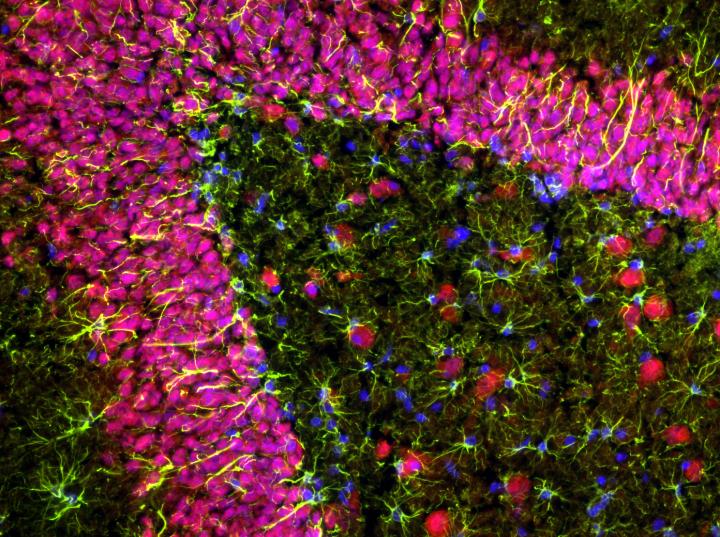
IMAGE

Credit: Giorgia Menegoni, Sapienza, University of Rome

Bethesda, MD – In a new animal study examining Alzheimer’s disease, researchers found that disease progression could be slowed by decreasing neuroinflammation in the brain before memory problems and cognitive impairment were apparent. The new findings point to the importance of developing therapies that target very early stages of the disease.

In 2011, the National Institute on Aging updated the diagnostic criteria for Alzheimer’s disease to reflect its progressive nature. The criteria added a preclinical stage during which brain changes are taking place, but the person is still asymptomatic and, therefore, unaware of his condition. Biomarker profiles could eventually be used to identify people in the disease’s early stages who might benefit from early treatments.

“Starting an intervention at the earliest stage of the disease, when cellular and molecular alterations have already been triggered but major damage to the brain has not yet occurred, could offer a way to reduce the number of people who go on to develop full Alzheimer’s dementia,” said research team leader Caterina Scuderi, PhD, assistant professor of pharmacology and toxicology from Sapienza, University of Rome. “However, there have been few studies in animals examining therapeutic strategies that target timepoints before symptoms can be seen.”

Scuderi was scheduled to present this research at the American Association for Anatomy annual meeting in San Diego this month. Though the meeting, to be held in conjunction with the 2020 Experimental Biology conference, was canceled in response to the COVID-19 outbreak, the research team’s abstract was published in this month’s issue of The FASEB Journal.

The researchers designed an animal study to gain a deeper understanding of neuroinflammation’s role in Alzheimer’s disease during the pre-symptomatic stage of the disease, which might represent the best time for therapeutic intervention. The study results suggest that rebalancing neuroinflammation in animals that show altered neuroinflammatory parameters could be beneficial.

“Our results help demonstrate that neuroinflammation in Alzheimer’s disease is an extremely complex phenomenon that can change over the disease’s progression and varies based on factors such as affected brain area,” said Scuderi. “We hope that these findings will prompt scientists to further investigate neuroinflammation at the earliest stages of the disease, which may represent an important pharmacological target.”

###

Contact the media team for more information.

Image available.

About Experimental Biology 2020

Experimental Biology is an annual meeting that attracts more than 12,000 scientists and exhibitors from five host societies and more than two dozen guest societies. With a mission to share the newest scientific concepts and research findings shaping clinical advances, the meeting offers an unparalleled opportunity for exchange among scientists from across the U.S. and the world who represent dozens of scientific areas, from laboratory to translational to clinical research. http://www.experimentalbiology.org #expbio

About the American Association for Anatomy (AAA)

The American Association for Anatomy is an international membership organization of biomedical researchers and educators specializing in the structural foundation of health and disease. AAA connects gross anatomists, neuroscientists, developmental biologists, physical anthropologists, cell biologists, physical therapists, and others to advance the anatomical sciences through research, education, and professional development. To join, visit anatomy.org.

About The FASEB Journal

Receive monthly highlights from The FASEB Journal by e-mail. Sign up at http://www.faseb.org/fjupdate.aspx. The FASEB Journal is published by the Federation of the American Societies for Experimental Biology (FASEB). It is among the most cited biology journals worldwide according to the Institute for Scientific Information and has been recognized by the Special Libraries Association as one of the top 100 most influential biomedical journals of the past century.

Find more press materials at: https://www.eurekalert.org/meetings/eb/2020/newsroom/

Media Contact
Anne Frances Johnson
[email protected]

Tags: AlzheimerBiochemistryCell BiologyMedicine/HealthMolecular BiologyneurobiologyPharmaceutical Sciences
Share12Tweet8Share2ShareShareShare2

Related Posts

Smart Hydrogels Revolutionize Information Security with Photo-Patterning and Multi-Stimuli Responsive Structural Colors — Chemistry

Smart Hydrogels Revolutionize Information Security with Photo-Patterning and Multi-Stimuli Responsive Structural Colors

May 15, 2026
Scientists Overcome Longstanding Challenge in Measuring Semiconductor Defects — Chemistry

Scientists Overcome Longstanding Challenge in Measuring Semiconductor Defects

May 14, 2026

Wall Design Highlights Deaf and Hard-of-Hearing Experience at #ASA190

May 14, 2026

New Method Finds More Efficient Route Between Earth and Moon Than Ever Before

May 14, 2026
Please login to join discussion

POPULAR NEWS

  • Research Indicates Potential Connection Between Prenatal Medication Exposure and Elevated Autism Risk

    843 shares
    Share 337 Tweet 211
  • New Study Reveals Plants Can Detect the Sound of Rain

    729 shares
    Share 291 Tweet 182
  • Salmonella Haem Blocks Macrophages, Boosts Infection

    62 shares
    Share 25 Tweet 16
  • Breastmilk Balances E. coli and Beneficial Bacteria in Infant Gut Microbiomes

    58 shares
    Share 23 Tweet 15

About

We bring you the latest biotechnology news from best research centers and universities around the world. Check our website.

Follow us

Recent News

Paraprobiotics Mitigate BPA-Induced Damage to Male Fertility Linked to Plastic Exposure

Digital Health Fear Patterns in Older Cancer Patients

A*STAR Scientists Unveil Novel Technique to Decipher RNA Structure’s Impact on Health and Disease

Subscribe to Blog via Email

Enter your email address to subscribe to this blog and receive notifications of new posts by email.

Join 82 other subscribers
  • Contact Us

Bioengineer.org © Copyright 2023 All Rights Reserved.

Welcome Back!

Login to your account below

Forgotten Password?

Retrieve your password

Please enter your username or email address to reset your password.

Log In
No Result
View All Result
  • Homepages
    • Home Page 1
    • Home Page 2
  • News
  • National
  • Business
  • Health
  • Lifestyle
  • Science

Bioengineer.org © Copyright 2023 All Rights Reserved.