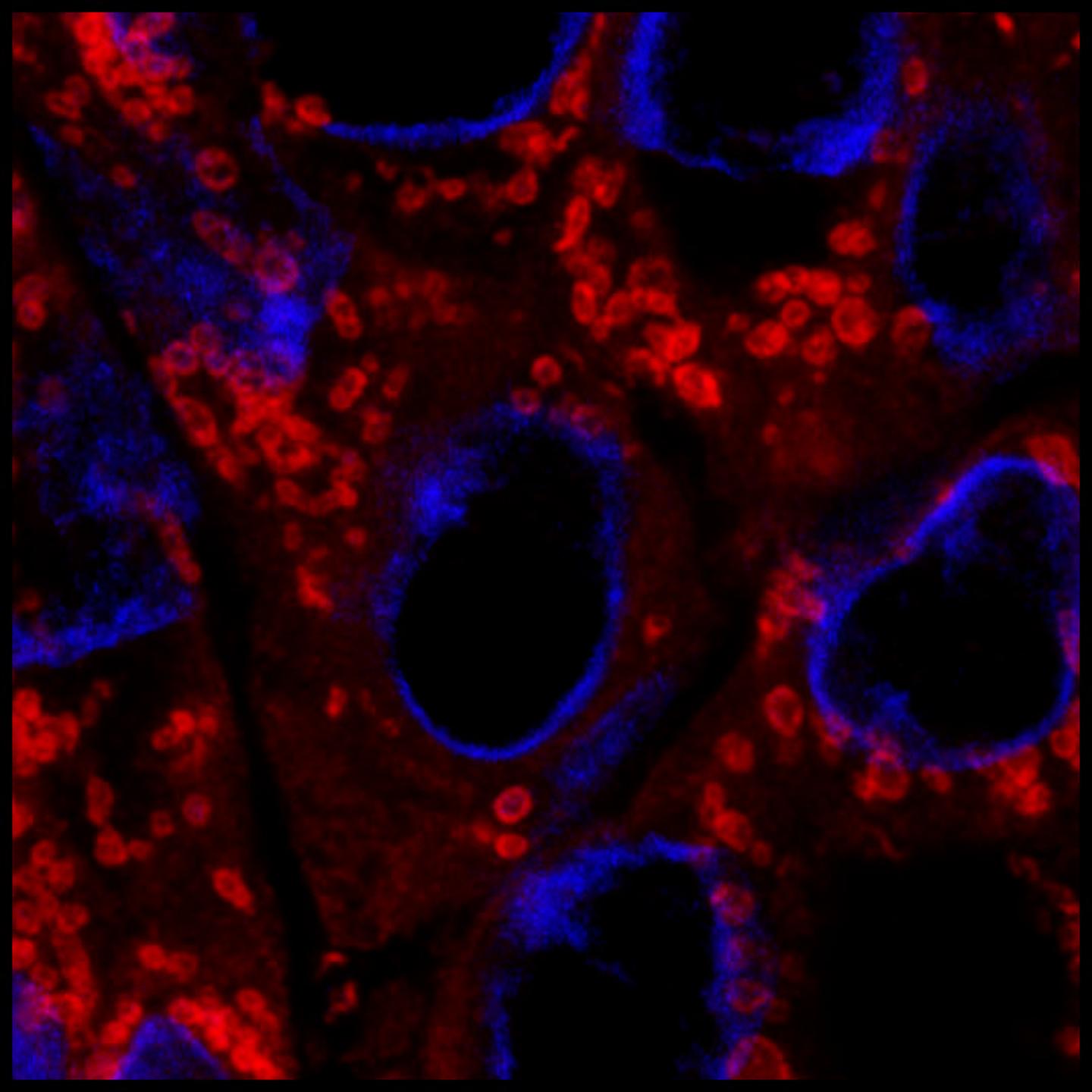
A common anti-diabetes drug being tested in many clinical trials as an anti-cancer agent activated fat metabolism that promoted the survival of dormant breast cancer cells, suggesting that the drug has context-dependent effects on cancer cells.
Credit: Riley A. Hampsch, PhD
LEBANON, NH – Most breast cancers utilize the female hormone estrogen to grow, so drug-induced estrogen deprivation is used as a treatment in many patients. However, cancer will recur in one-third of these patients. A research team at Dartmouth’s and Dartmouth-Hitchcock’s Norris Cotton Cancer Center, led by Todd W. Miller, PhD, is trying to understand why dormant breast cancer cells survive despite being starved of estrogen. The team discovered that an anti-diabetes drug, metformin, which is being tested in many clinical trials as an anti-cancer agent, actually activated fat metabolism that protected dormant breast cancer cells during estrogen deprivation. The findings suggest that the drug has context-dependent effects on cancer cells. The results, entitled “AMPK activation by metformin promotes survival of dormant ER+ breast cancer cells,” are newly published online in Clinical Cancer Research, a journal of the American Association for Cancer Research.
Metformin activates AMPK, which is a metabolic sensor that signals cells to make energy. Miller’s team found that breast cancer cells survived estrogen deprivation through activation of AMPK. “A major output of AMPK is activation of fat breakdown to produce energy, which we observed in dormant cancer cells,” says Miller. “Drugs that block fat breakdown are used to treat patients with angina (chest pain). Treatment of mice with anti-angina drugs decreased dormant cancer cell numbers.”
Knowledge that metformin has context-dependent effects on cancer cells will inform a better understanding of ongoing and prior clinical trials testing metformin, and help shape the design of trials moving forward. “Our study indicates that the development of drugs targeting fat metabolism is warranted for breast cancer. Most excitingly, anti-angina drugs that block fat metabolism may be quickly repurposed as potential treatments for cancer and tested in clinical trials,” says Miller.
Next steps include clinical trials testing drugs that block fat metabolism in breast cancer. “We’re also designing preclinical studies to further dissect the roles of fat metabolism in breast and other cancers, with the goal of identifying more refined therapeutic targets that will selectively kill cancer cells and not harm healthy cells,” notes Miller.
###
Todd W. Miller, PhD, is Co-Director of the Cancer Biology & Therapeutics Research Program and Scientific Director of the Comprehensive Breast Program at Dartmouth’s and Dartmouth-Hitchcock’s Norris Cotton Cancer Center, and Associate Professor of Molecular and Systems Biology at the Geisel School of Medicine at Dartmouth. His research interests include identification of cancer signaling pathways and the development of targeted therapies for breast and other cancers. geiselmed.dartmouth.edu/miller. @DartmouthLab.
About Norris Cotton Cancer Center
Norris Cotton Cancer Center, located on the campus of Dartmouth-Hitchcock Medical Center (DHMC) in Lebanon, NH, combines advanced cancer research at Dartmouth College’s Geisel School of Medicine in Hanover, NH with the highest level of high-quality, innovative, personalized, and compassionate patient-centered cancer care at DHMC, as well as at regional, multi-disciplinary locations and partner hospitals throughout NH and VT,. NCCC is one of only 51 centers nationwide to earn the National Cancer Institute’s prestigious “Comprehensive Cancer Center” designation, the result of an outstanding collaboration between DHMC, New Hampshire’s only academic medical center, and Dartmouth College. Now entering its fifth decade, NCCC remains committed to excellence, outreach and education, and strives to prevent and cure cancer, enhance survivorship and to promote cancer health equity through its pioneering interdisciplinary research. Each year the NCCC schedules 61,000 appointments seeing nearly 4,000 newly diagnosed patients, and currently offers its patients more than 100 active clinical trials.
Media Contact
Jaime Peyton, Director of Communications
[email protected]
Related Journal Article
http://dx.