• HOME
  • NEWS
  • EXPLORE
    • CAREER
      • Companies
      • Jobs
    • EVENTS
    • iGEM
      • News
      • Team
    • PHOTOS
    • VIDEO
    • WIKI
  • BLOG
  • COMMUNITY
    • FACEBOOK
    • INSTAGRAM
    • TWITTER
Saturday, February 7, 2026
BIOENGINEER.ORG
No Result
View All Result
  • Login
  • HOME
  • NEWS
  • EXPLORE
    • CAREER
      • Companies
      • Jobs
        • Lecturer
        • PhD Studentship
        • Postdoc
        • Research Assistant
    • EVENTS
    • iGEM
      • News
      • Team
    • PHOTOS
    • VIDEO
    • WIKI
  • BLOG
  • COMMUNITY
    • FACEBOOK
    • INSTAGRAM
    • TWITTER
  • HOME
  • NEWS
  • EXPLORE
    • CAREER
      • Companies
      • Jobs
        • Lecturer
        • PhD Studentship
        • Postdoc
        • Research Assistant
    • EVENTS
    • iGEM
      • News
      • Team
    • PHOTOS
    • VIDEO
    • WIKI
  • BLOG
  • COMMUNITY
    • FACEBOOK
    • INSTAGRAM
    • TWITTER
No Result
View All Result
Bioengineer.org
No Result
View All Result
Home NEWS Science News Chemistry

University, Army collaborate on face masks for soldiers

Bioengineer by Bioengineer
April 21, 2020
in Chemistry
Reading Time: 2 mins read
0
IMAGE
Share on FacebookShare on TwitterShare on LinkedinShare on RedditShare on Telegram

IMAGE

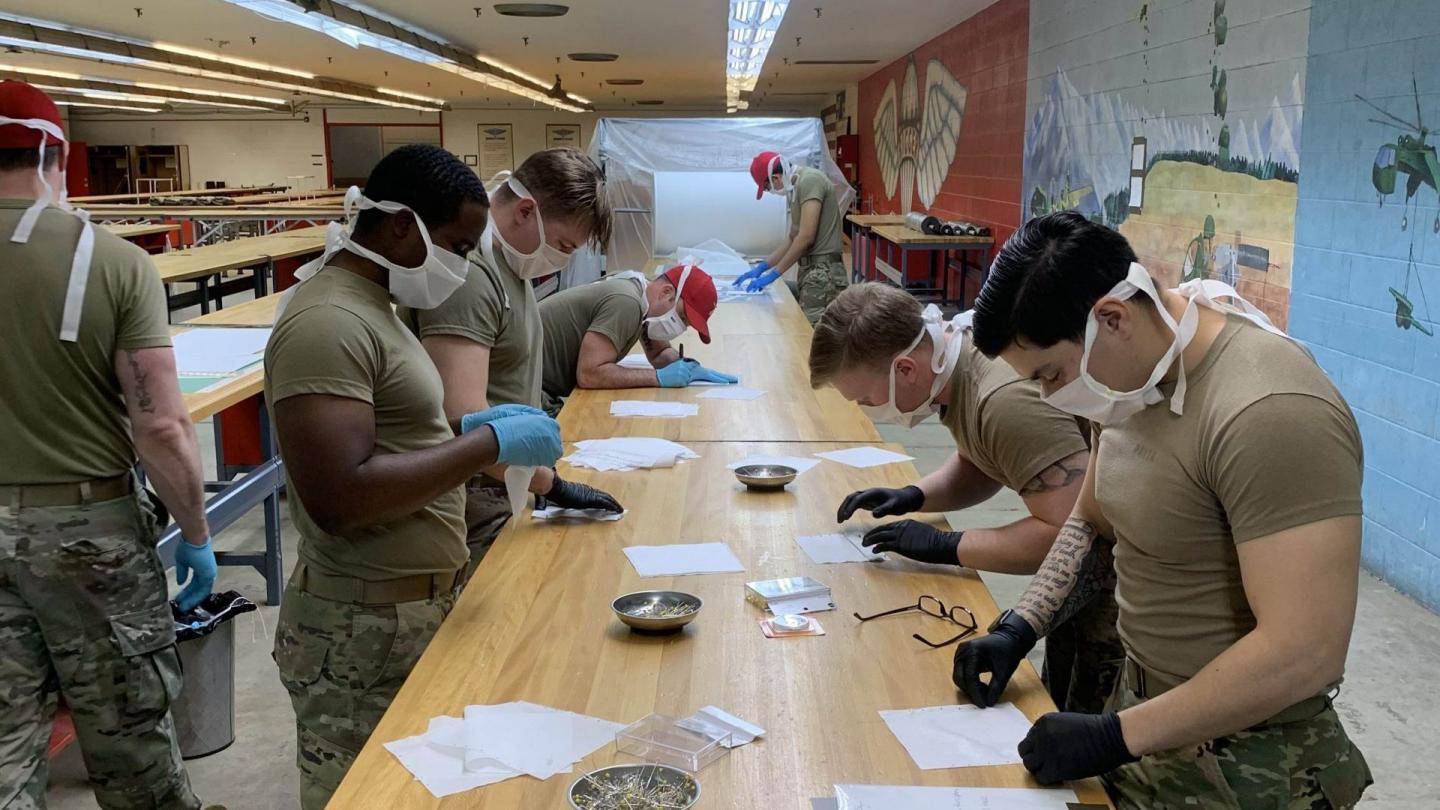
Credit: U.S. Army

RESEARCH TRIANGLE PARK, N.C. –Soldiers from the 82nd Airborne Division will soon have a new defense against the COVID-19 virus thanks to a collaboration between the U.S. Army and North Carolina State University that will result in the production of more than 100,000 face masks for the Army.

The partnership between North Carolina State and the 82nd Airborne Division Innovations Council at Fort Bragg, North Carolina, was initiated by the Army Research Office, an element of the U.S. Army Combat Capabilities Development Command’s Army Research Laboratory at Research Triangle Park.

In response to the pandemic, researchers at NC State’s Nonwoven Institute developed a unique filtration material for face masks that can protect medical workers and Soldiers fighting the effects of COVID-19. The material is effective in filtering out viruses and bacteria and can still be cut and sewn using traditional techniques.

NC State donated 4,725 meters of its newly developed filtration material to the XVIII Airborne Corps and Fort Bragg.

“As a neighbor and member of the North Carolina community, the Army Research Office has endeavored to partner North Carolina State University and the University of North Carolina System with Army operations at Fort Bragg,” said Dr. Stephen Lee, an ARO senior scientist. “This is a special example where those relationships are paying off during the COVID-19 events.”

The XVIII Airborne Corps, the parent organization of the 82nd Airborne Division, specializes in parachute missions. Its parachute riggers already have the skillset, equipment and facilities needed to sew the masks.

The donated materials will make about 100,000 face masks for Soldiers.

“That is what the spirit of this partnership is – to build a deeper understanding and collaboration between academia and military personnel,” said Capt. Colby Miller, 82nd Airborne Division innovation officer, who helped instigate this collaboration.

The NC State Nonwovens Institute can manufacture more than 2,000 meters of the material an hour and intends to donate up to 1,000 meters per week to the Army on an ongoing basis during the pandemic.

###

CCDC Army Research Laboratory is an element of the U.S. Army Combat Capabilities Development Command. As the Army’s corporate research laboratory, ARL discovers, innovates and transitions science and technology to ensure dominant strategic land power. Through collaboration across the command’s core technical competencies, CCDC leads in the discovery, development and delivery of the technology-based capabilities required to make Soldiers more lethal to win the nation’s wars and come home safely. CCDC is a major subordinate command of the U.S. Army Futures Command.

Media Contact
Lisa B. Bistreich-Wolfe
[email protected]

Original Source

https://www.army.mil/article/234774

Tags: Chemistry/Physics/Materials SciencesMaterials
Share12Tweet8Share2ShareShareShare2

Related Posts

blank

Breakthrough in Environmental Cleanup: Scientists Develop Solar-Activated Biochar for Faster Remediation

February 7, 2026
blank

Cutting Costs: Making Hydrogen Fuel Cells More Affordable

February 6, 2026

Scientists Develop Hand-Held “Levitating” Time Crystals

February 6, 2026

Observing a Key Green-Energy Catalyst Dissolve Atom by Atom

February 6, 2026
Please login to join discussion

POPULAR NEWS

  • Robotic Ureteral Reconstruction: A Novel Approach

    Robotic Ureteral Reconstruction: A Novel Approach

    82 shares
    Share 33 Tweet 21
  • Digital Privacy: Health Data Control in Incarceration

    63 shares
    Share 25 Tweet 16
  • Study Reveals Lipid Accumulation in ME/CFS Cells

    57 shares
    Share 23 Tweet 14
  • Breakthrough in RNA Research Accelerates Medical Innovations Timeline

    53 shares
    Share 21 Tweet 13

About

We bring you the latest biotechnology news from best research centers and universities around the world. Check our website.

Follow us

Recent News

Evaluating Pediatric Emergency Care Quality in Ethiopia

TPMT Expression Predictions Linked to Azathioprine Side Effects

Improving Dementia Care with Enhanced Activity Kits

Subscribe to Blog via Email

Enter your email address to subscribe to this blog and receive notifications of new posts by email.

Join 73 other subscribers
  • Contact Us

Bioengineer.org © Copyright 2023 All Rights Reserved.

Welcome Back!

Login to your account below

Forgotten Password?

Retrieve your password

Please enter your username or email address to reset your password.

Log In
No Result
View All Result
  • Homepages
    • Home Page 1
    • Home Page 2
  • News
  • National
  • Business
  • Health
  • Lifestyle
  • Science

Bioengineer.org © Copyright 2023 All Rights Reserved.