• HOME
  • NEWS
  • EXPLORE
    • CAREER
      • Companies
      • Jobs
    • EVENTS
    • iGEM
      • News
      • Team
    • PHOTOS
    • VIDEO
    • WIKI
  • BLOG
  • COMMUNITY
    • FACEBOOK
    • INSTAGRAM
    • TWITTER
Tuesday, July 7, 2026
BIOENGINEER.ORG
No Result
View All Result
  • Login
  • HOME
  • NEWS
  • EXPLORE
    • CAREER
      • Companies
      • Jobs
        • Lecturer
        • PhD Studentship
        • Postdoc
        • Research Assistant
    • EVENTS
    • iGEM
      • News
      • Team
    • PHOTOS
    • VIDEO
    • WIKI
  • BLOG
  • COMMUNITY
    • FACEBOOK
    • INSTAGRAM
    • TWITTER
  • HOME
  • NEWS
  • EXPLORE
    • CAREER
      • Companies
      • Jobs
        • Lecturer
        • PhD Studentship
        • Postdoc
        • Research Assistant
    • EVENTS
    • iGEM
      • News
      • Team
    • PHOTOS
    • VIDEO
    • WIKI
  • BLOG
  • COMMUNITY
    • FACEBOOK
    • INSTAGRAM
    • TWITTER
No Result
View All Result
Bioengineer.org
No Result
View All Result
Home NEWS Science News Biology

A cheap organic steam generator to purify water

Bioengineer by Bioengineer
April 20, 2020
in Biology
Reading Time: 3 mins read
0
IMAGE
Share on FacebookShare on TwitterShare on LinkedinShare on RedditShare on Telegram

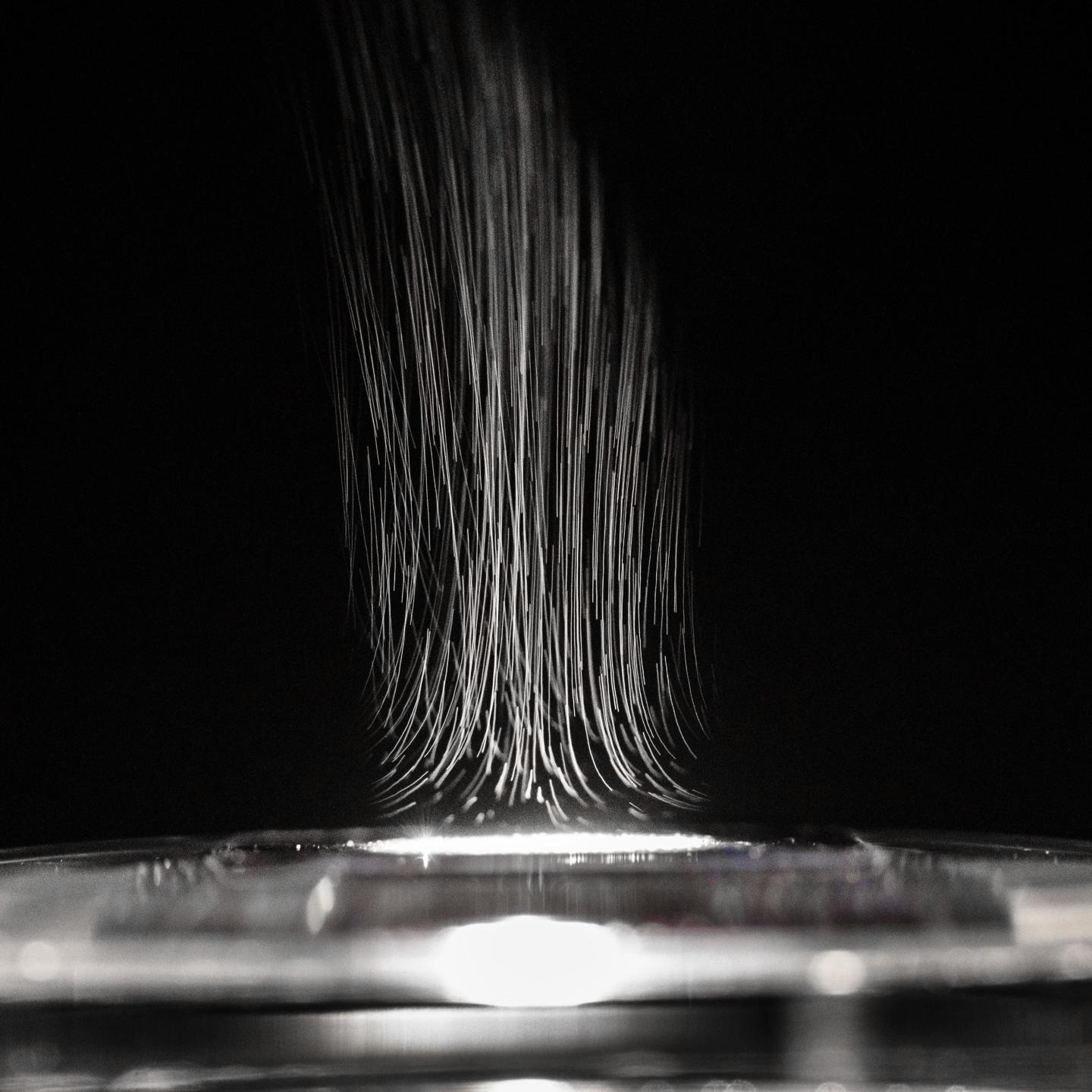
Cellulose-conducting polymer aerogels for efficient solar steam generation
IMAGE

Credit: Thor Balkhed

It has been estimated that in 2040 a quarter of the world’s children will live in regions where clean and drinkable water is lacking. The desalination of seawater and the purification of wastewater are two possible methods to alleviate this, and researchers at Linköping University have developed a cheap and eco-friendly steam generator to desalinate and purify water using sunlight. The results have been published in the journal Advanced Sustainable Systems.

“The rate of steam production is 4-5 times higher than that of direct water evaporation, which means that we can purify more water”, says Associated Professor Simone Fabiano, head of the Organic Nanoelectronics group in the Laboratory of Organic Electronics.

The steam generator consists of an aerogel that contains a cellulose-based structure decorated with the organic conjugated polymer PEDOT:PSS. The polymer has the ability to absorb the energy in sunlight, not least in the infrared part of the spectrum where much of the sun’s heat is transported. The aerogel has a porous nanostructure, which means that large quantities of water can be absorbed into its pores.

“A 2 mm layer of this material can absorb 99% of the energy in the sun’s spectrum”, says Simone Fabiano.

A porous and insulating floating foam is also located between the water and the aerogel, such that the steam generator is kept afloat. The heat from the sun vaporises the water, while salt and other materials remain behind.

“The aerogel is durable and can be cleaned in, for example, salt water such that it can be used again immediately. This can be repeated many times. The water that passes through the system by evaporation becomes very high-quality drinking water”, Tero-Petri Ruoko assures us. He is postdoc in the Laboratory of Organic Electronics and one of the authors of the article.

“What’s particularly nice about this system is that all the materials are eco-friendly – we use nanocellulose and a polymer that has a very low impact on the environmental and people. We also use very small amounts material: the aerogel is made up of 90% air. We hope and believe that our results can help the millions of people who don’t have access to clean water”, says Simone Fabiano.

The aerogel was developed by Shaobo Han within the framework of his doctoral studies in the Laboratory of Organic Electronics, under Professor Xavier Crispin´s supervision. The result was presented in the journal Advanced Science in 2019, and is described at the link below. After taking his doctoral degree, Shaobo Han has returned to China to continue research in the field.

###

The research has received funding principally from the Knut and Alice Wallenberg Foundation, the Tail of the Sun project, the Swedish Research Council, and the strategic research area Advanced Functional Materials at Linköping University.

Cellulose-conducting polymer aerogels for efficient solar steam generation, Shaobo Han, Tero-Petri Ruoko, Johannes Gladisch, Johan Erlandsson, Lars Wa?gberg, Xavier Crispin and Simone Fabiano. Advanced Sustainable Systems 2020, DOI 10.1002/adsu.202000004

Contact Simone Fabiano, [email protected]. +46 11 36 36 33

Link: New cellulose-based material gives three sensors in one
https://liu.se/en/news-item/nytt-cellulosa-baserat-material-ger-tre-sensorer-i-en

Media Contact
Simone Fabiano
[email protected]

Original Source

https://liu.se/en/news-item/rent-vatten-med-billig-organisk-anggenerator

Related Journal Article

http://dx.doi.org/10.1002/adsu.202000004

Tags: Biomedical/Environmental/Chemical EngineeringChemistry/Physics/Materials SciencesHydrology/Water ResourcesMaterialsPolymer Chemistry
Share12Tweet8Share2ShareShareShare2

Related Posts

Here are a few rewritten headlines for a science magazine post, each with a slightly different tone: Intriguing & poetic: How do organs sculpt themselves? Sea stars hold the secret Direct & research-focused: Sea stars reveal the hidden rules of organ formation Metaphorical & inviting: Tiny architects beneath the waves: What sea stars teach us about building organs Short & punchy: Star-shaped clues to how our organs take shape Question-led: Could a sea star show us how organs form? Elegant & feature-style: The body’s blueprint, glimpsed in a sea star’s arm

July 6, 2026
Bacteria evolve faster with unconventional gene copies — Biology

Bacteria evolve faster with unconventional gene copies

July 6, 2026

Neighbours rewire soil feedback via root microbiome shifts

July 6, 2026

Evolution-Inspired Biosensors Revolutionize Lipid Tracking in Real Time

July 2, 2026
Please login to join discussion

POPULAR NEWS

  • Detection of EDCs in Breast Milk and Infant Urine Up to Six Months Highlights Early Exposure Risks

    77 shares
    Share 31 Tweet 19
  • New Drug Candidate Developed at McMaster Shows Potential for Treating Brain Cancer

    58 shares
    Share 23 Tweet 15
  • Saying Goodbye to PGY-6: Pediatric Fellowship Realities

    103 shares
    Share 41 Tweet 26
  • KTU Researchers Explore Ultrasound’s Role in Enhancing Blood Flow Beyond Diagnostics

    53 shares
    Share 21 Tweet 13

About

We bring you the latest biotechnology news from best research centers and universities around the world. Check our website.

Follow us

Recent News

Flame retardant BDE-209 targets molecularly linked to ulcerative colitis

Ultra-high frequency particle impacts mimic rockbursts to shatter hard rock

Kidney transplant outcomes in older adults studied by German researchers

Subscribe to Blog via Email

Enter your email address to subscribe to this blog and receive notifications of new posts by email.

Join 83 other subscribers
  • Contact Us

Bioengineer.org © Copyright 2023 All Rights Reserved.

Welcome Back!

Login to your account below

Forgotten Password?

Retrieve your password

Please enter your username or email address to reset your password.

Log In
No Result
View All Result
  • Homepages
    • Home Page 1
    • Home Page 2
  • News
  • National
  • Business
  • Health
  • Lifestyle
  • Science

Bioengineer.org © Copyright 2023 All Rights Reserved.