• HOME
  • NEWS
  • EXPLORE
    • CAREER
      • Companies
      • Jobs
    • EVENTS
    • iGEM
      • News
      • Team
    • PHOTOS
    • VIDEO
    • WIKI
  • BLOG
  • COMMUNITY
    • FACEBOOK
    • INSTAGRAM
    • TWITTER
Saturday, June 27, 2026
BIOENGINEER.ORG
No Result
View All Result
  • Login
  • HOME
  • NEWS
  • EXPLORE
    • CAREER
      • Companies
      • Jobs
        • Lecturer
        • PhD Studentship
        • Postdoc
        • Research Assistant
    • EVENTS
    • iGEM
      • News
      • Team
    • PHOTOS
    • VIDEO
    • WIKI
  • BLOG
  • COMMUNITY
    • FACEBOOK
    • INSTAGRAM
    • TWITTER
  • HOME
  • NEWS
  • EXPLORE
    • CAREER
      • Companies
      • Jobs
        • Lecturer
        • PhD Studentship
        • Postdoc
        • Research Assistant
    • EVENTS
    • iGEM
      • News
      • Team
    • PHOTOS
    • VIDEO
    • WIKI
  • BLOG
  • COMMUNITY
    • FACEBOOK
    • INSTAGRAM
    • TWITTER
No Result
View All Result
Bioengineer.org
No Result
View All Result
Home NEWS Science News Biology

Soil carbon and nitrogen mineralization after the initial flush of CO2

Bioengineer by Bioengineer
April 16, 2020
in Biology
Reading Time: 2 mins read
0
IMAGE
Share on FacebookShare on TwitterShare on LinkedinShare on RedditShare on Telegram

IMAGE

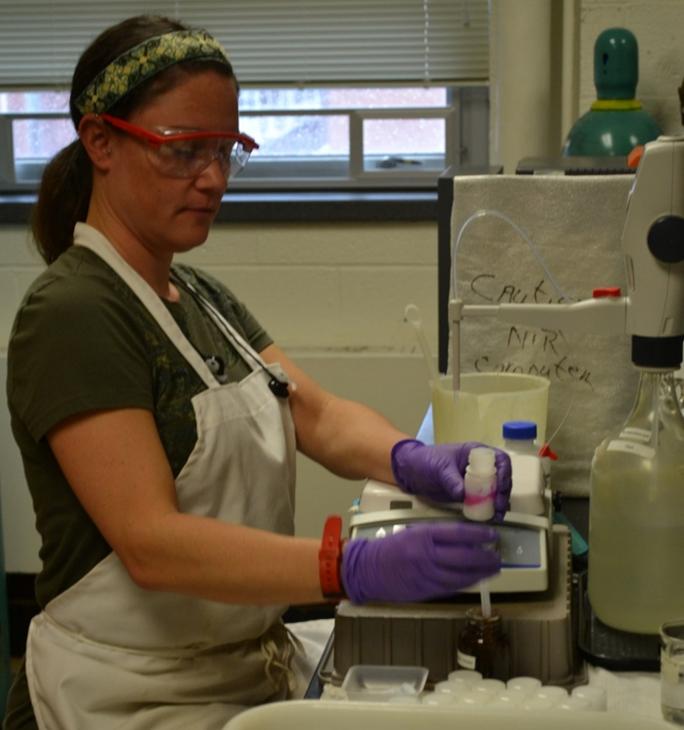
Credit: Alan Franzluebbers

Healthy soil should have abundant nitrogen to supply plant growth needs, but it should not all be in the inorganic fraction. Rather, organic nitrogen is the preferred storage warehouse from which soil microorganisms can decompose and release inorganic nitrogen to soil and then to plants. This system avoids leaching and volatile losses of nitrogen. Historically, scientists have had difficulty predicting how much nitrogen is made available to plants by soil biological activity due to time and resource constraints.

In an article in Agricultural and Environmental Letters, an experiment on five different soils determined the short-and long-term release of carbon and nitrogen via mineralization by soil microorganisms. Inorganic nitrogen accumulated rapidly in all soils during the first month, but at different rates. The total amount of inorganic nitrogen released for plant uptake during five months was different among soils, but the quantity was highly related to the short-term burst of microbial activity during the first three days of incubation, as determined from carbon dioxide production.

Soil-test biological activity (3 days) offers a simple, rapid, and robust indication of forthcoming soil nitrogen mineralization. The test will inform farmers of the important role that biologically active organic matter plays in soil health development, as well as increase their profitability.

###

Adapted from Franzluebbers, AJ. Soil carbon and nitrogen mineralization after the initial flush of CO2. Agric Environ Lett. 2020; 5:e20006. https://doi.org/10.1002/ael2.20006

Media Contact
Rachel Leege
[email protected]

Related Journal Article

http://dx.doi.org/10.1002/ael2.20006

Tags: AgricultureBiochemistryEcology/EnvironmentFertilizers/Pest ManagementGeology/SoilMicrobiologyPlant Sciences
Share12Tweet8Share2ShareShareShare2

Related Posts

Natural Hallucinogens: Evolution’s Ecological Tools, Not Mere Chemical Byproducts

June 25, 2026

This Famous Butterfly Revealed: Three Distinct Species Hidden in One

June 25, 2026

Scientists Attack Soybean Cyst Nematode by Starving Its Food Source

June 25, 2026

Decoding the Secret Code of a Crucial Immune Sensor

June 24, 2026
Please login to join discussion

POPULAR NEWS

  • Saying Goodbye to PGY-6: Pediatric Fellowship Realities

    103 shares
    Share 41 Tweet 26
  • Multi-Hospital Study Reveals Long Covid Burden Is Twice as High as Current Estimates

    92 shares
    Share 36 Tweet 23
  • Detection of EDCs in Breast Milk and Infant Urine Up to Six Months Highlights Early Exposure Risks

    77 shares
    Share 31 Tweet 19
  • New Drug Candidate Developed at McMaster Shows Potential for Treating Brain Cancer

    58 shares
    Share 23 Tweet 15

About

We bring you the latest biotechnology news from best research centers and universities around the world. Check our website.

Follow us

Recent News

Tracking Lanthanide-Labeled Microplastics in Plants

POSTECH Researchers Slash Cost of Reconstituted Cell-Free Systems by 95%

AI and Physics Collaborate to Design Advanced Hydrogen Storage Materials

Subscribe to Blog via Email

Success! An email was just sent to confirm your subscription. Please find the email now and click 'Confirm' to start subscribing.

Join 82 other subscribers
  • Contact Us

Bioengineer.org © Copyright 2023 All Rights Reserved.

Welcome Back!

Login to your account below

Forgotten Password?

Retrieve your password

Please enter your username or email address to reset your password.

Log In
No Result
View All Result
  • Homepages
    • Home Page 1
    • Home Page 2
  • News
  • National
  • Business
  • Health
  • Lifestyle
  • Science

Bioengineer.org © Copyright 2023 All Rights Reserved.