Single cell cloning tells the story of abnormal cells
Credit: University of Houston
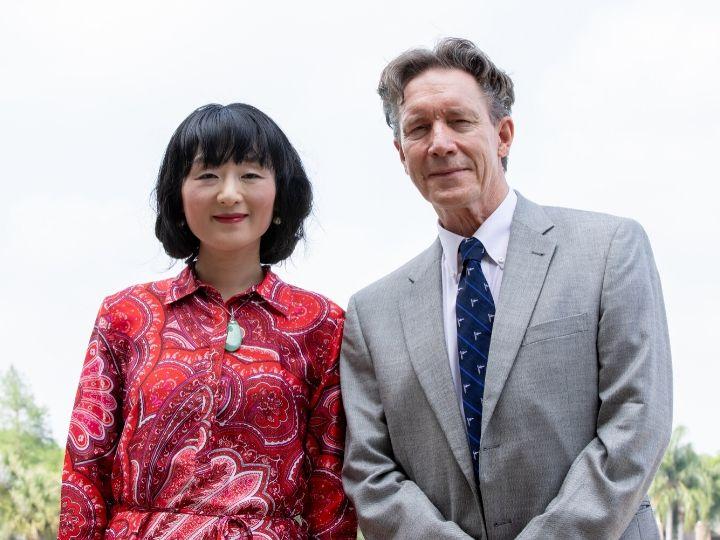
Two internationally renowned stem cell experts have found an abundance of abnormal stem cells in the lungs of patients who suffer from Chronic Obstructive Pulmonary Disease (COPD), a leading cause of death worldwide. Frank McKeon, professor of biology and biochemistry and director of the Stem Cell Center, and Wa Xian, research associate professor at the center, used single cell cloning of lung stem cells to make their discovery. Now they are targeting the cells for new therapeutics.
“We actually found that three variant cells in all COPD patients drive all the key features of the disease. One produces tremendous amounts of mucins which block the small airways, while the other two drive fibrosis and inflammation which together degrade the function of the lung,” Xian reports in the May 14 issue of the journal Cell. “These patients have normal stem cells, though not many of them, but they are dominated by the three variant cells that together make up the disease,” she said.
COPD is a progressive inflammatory disease of the lungs marked by chronic bronchitis, small airway occlusion, inflammation, fibrosis and destruction of alveoli, tiny air sacs in the lungs which exchange oxygen and carbon dioxide molecules in the blood. The Global Burden of Disease Study reports 251 million cases of COPD globally in 2016.
“It’s a frustrating disease to care for. We can try and improve the symptoms, but we don’t have anything that can cure the disease or prevent death,” said UConn Health pulmonologist and critical care doctor Mark Metersky, who gathered the stem cells from lung fluid while performing bronchoscopies.
Despite its accounting for more deaths than any single disease on the planet, relatively little has been written or understood about the root cause of COPD.
Over the past decade, Xian and McKeon developed technology for cloning stem cells of the lungs and airways and have been at it since, noting that different parts of the airways give different stem cells, related but distinguishable.
“It’s quite remarkable,” said McKeon. “In the deep lung, the distal airway stem cells gave rise to both the distal tubes and the alveoli and our research indicates those are the stem cells that make it possible for lungs to regenerate on their own.” Xian and McKeon discovered lung regeneration in 2011 in their studies of subjects recovering from infections by an H1N1 influenza virus that was nearly identical to that which sparked the 1918 pandemic.
Xian and McKeon found that, in contrast to normal lungs, COPD lungs were inundated by three unusual variant lung stem cells that are committed to form metaplastic lesions known to inhabit COPD lungs, but seen by many as a secondary effect without a causal link to the pathology of COPD. After the team’s postdoctoral fellow, Wei Rao, transplanted each of the COPD clones into immunodeficient subjects, the team found they not only gave rise to the distinct metaplastic lesions of COPD, but they separately triggered the triad of pathologies of COPD including mucus hypersecretion, fibrosis and chronic inflammation.
“The long-overlooked metaplastic lesions in COPD were, in fact, driving the disease rather than merely secondary consequences of the condition,” said McKeon.
Now that the team knows the identity of the cells that cause inflammation, fibrosis and small airway obstruction, they are hard at work screening them against libraries of drug-like molecules to discover new therapeutics.
“As we now know the specific cells responsible for COPD pathology, we can target them, much as we would cancer, with specific drugs that selectively kill them off and leave the normal cells to regenerate normal lung tissue,” said Xian.
###
Media Contact
Laurie Fickman
[email protected]
Original Source
https:/
Related Journal Article
http://dx.