Credit: Shinshu University
As instances of antibiotic resistance increase in the medical field, scientists are reexamining natural materials for their potential use in medicine. Honey has been used for thousands of years, from the time of Pharaohs for their effectiveness in treating wounds and burns.
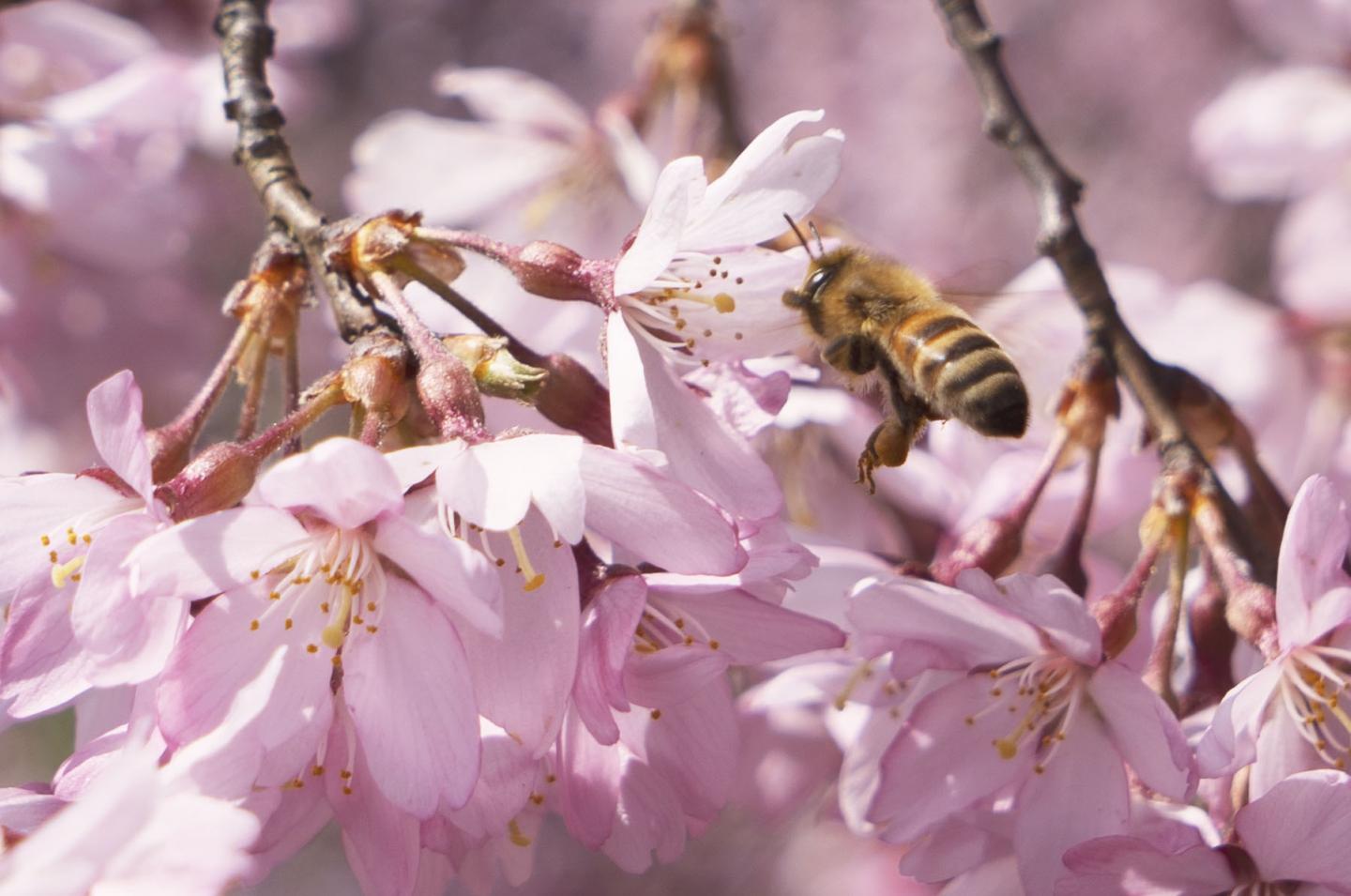
Manuka is honey made by bees out of the pollen of Leptospermum scoparium, a type of tea tree native to southeast Australia and New Zealand. Manuka is the Maori name for the flowering tea tree plant. Manuka honey contains multiple bioactive ingredients including hydrogen peroxide, methylglyoxal (MGO), polyphenols, sucrose and maltose that aid in healing.
All types of honey contain peroxide which kills bacteria on contact, however peroxide is also damaging to human cells. What makes the hydrogen peroxide in honey special is that it is produced slowly, enough to keep the bacterial growth at bay while being gentle on human cells. What makes manuka honey more sought after than other honeys is that it contains MGO which inhibits bacterial growth by limiting the swarming and swimming mobility of bacterial strains. Even the sugars in honey contributes to healing! Sucrose and maltose can be direct sources of energy for cells on the wound surface.
Dressings provide a shield between pathogens in the environment and the open wound. Appendages must be robust enough to protect the body from the outside elements, but also gentle on healing flesh. Researchers at Shinshu University lead by Azeem Ullah decided to produce a novel wound dressing comprised of manuka honey using electrospun cellulose acetate nanofiber.
Cellulose is used to make paper and is 90% of what makes cotton. Cellulose acetate is a hydrophilic biodegradable material with high tensile strength, biocompatible and suitable for protecting susceptible wounds.
Electrospinning is a technique in fiber engineering that uses electrostatic repulsion to counteract surface tension and dispel the “dope” or fiber mixture to spin nano-sized fibers made of desirable ingredients. It is often used when producing fibers made of complex polymers, in this case with the added ingredient of manuka honey.
Corresponding author of this study, Professor Ick Soo Kim of Shinshu University’s Institute for Fiber Engineering stated that it was difficult to “prepare a spinning dope for electrospinning. As we used cellulose acetate as a polymer carrier for our bioactive ingredient, it was very important to determine an amount of manuka honey which should show its bioactivity in the composite nanofiber mats without altering the electrospinning dope properties.” So, the balance of adding the manuka honey with enough anti-bacterial properties without changing the electrospinning mixture properties needed tinkering and proved to be the key to the success of this research.
The research successfully showed that the composite nanofibrous mats demonstrated antimicrobial activity against the Gram-positive S. aureus and Gram-negative E. coli bacterial strains. The cellulose acetate manuka honey nanofibrous mats also are breathable and promote wound healing in vitro.
The scientists were happy to discover that including the honey in the nanofiber mats decreased the water contact angle which helps the proliferation and migration of cells during the healing process. This property of the nanofiber mats can also be used for tissue engineering and regenerative medicine.
The researchers hope to soon bring this to market. In order to do so, extensive in vivo analysis is needed. More information can be found in their paper, Manuka honey incorporated cellulose acetate nanofibrous mats: Fabrication and in vitro evaluation as a potential wound dressing.
###
Acknowledgment: The authors humbly acknowledge Gene Research Center, Shinshu University for its technical support.
Supplementary data to this paper can be found online at https:/
Media Contact
Hitomi Thompson
[email protected]
Related Journal Article
http://dx.