• HOME
  • NEWS
  • EXPLORE
    • CAREER
      • Companies
      • Jobs
    • EVENTS
    • iGEM
      • News
      • Team
    • PHOTOS
    • VIDEO
    • WIKI
  • BLOG
  • COMMUNITY
    • FACEBOOK
    • INSTAGRAM
    • TWITTER
Wednesday, May 13, 2026
BIOENGINEER.ORG
No Result
View All Result
  • Login
  • HOME
  • NEWS
  • EXPLORE
    • CAREER
      • Companies
      • Jobs
        • Lecturer
        • PhD Studentship
        • Postdoc
        • Research Assistant
    • EVENTS
    • iGEM
      • News
      • Team
    • PHOTOS
    • VIDEO
    • WIKI
  • BLOG
  • COMMUNITY
    • FACEBOOK
    • INSTAGRAM
    • TWITTER
  • HOME
  • NEWS
  • EXPLORE
    • CAREER
      • Companies
      • Jobs
        • Lecturer
        • PhD Studentship
        • Postdoc
        • Research Assistant
    • EVENTS
    • iGEM
      • News
      • Team
    • PHOTOS
    • VIDEO
    • WIKI
  • BLOG
  • COMMUNITY
    • FACEBOOK
    • INSTAGRAM
    • TWITTER
No Result
View All Result
Bioengineer.org
No Result
View All Result
Home NEWS Science News

Adapting smartwatches to improve distance learning and health

Bioengineer by Bioengineer
April 13, 2020
in Science News
Reading Time: 2 mins read
0
IMAGE
Share on FacebookShare on TwitterShare on LinkedinShare on RedditShare on Telegram

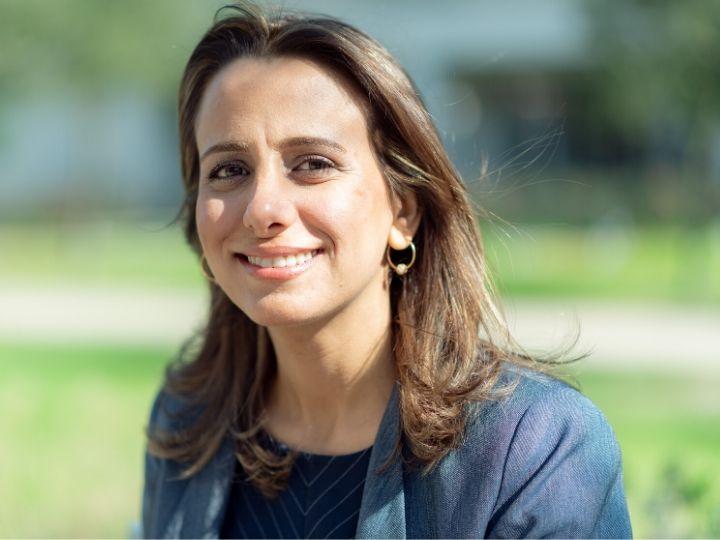
Rose Faghih Wins NSF CAREER Award for MINDWATCH Proposal
IMAGE

Credit: University of Houston

As schools and universities around the globe pivot to online teaching, and millions of students stare at screens during their school day, it is hard to imagine a personalized learning experience. But UH assistant professor of electrical and computer engineering, Rose Faghih, sees it differently, and it all starts with students wearing smartwatches that deliver information about their emotional and cognitive states.

“Say a student has been watching an online video for eight minutes and has become disengaged; if we can track that, we could automatically pause the video for that student and give them a short quiz to make sure they’re keeping engaged,” said Faghih. The ability to react individually to a student in that manner will be made possible through closed loop brain-aware wearable architecture, currently lacking in common smartwatches.

For her proposal to create algorithms that deliver that kind of information about brain states, Faghih earned one of the most prestigious awards given by the National Science Foundation, the Faculty Early Career Development (CAREER) Award, which supports faculty early in their career who the NSF believes will eventually serve as academic role models in research and education and lead advances in their fields. The five-year award, worth $525,000, was given to Faghih for her project called MINDWATCH, an acronym for Multimodal Intelligent Noninvasive brain state Decoder for Wearable AdapTive Closed-loop arcHitectures.

Faghih’s signal processing and control algorithms, or infrastructure, for a wearable device delivers information on three types of brain states – stress, cognitive engagement (or boredom) and cognitive learning, based on multiple signals from the wearer including sweat response, respiration, cardiac function and temperature.

Faghih calls it a navigation system for the brain. “It overcomes the barriers to achieving brain-aware wearables by pioneering a transformative system-theoretic computational toolset for noninvasive closed-loop wearable architectures that monitor and modulate brain function without needing neural recordings,” said Faghih. In other words, judging brain states has never been so easy; not needed is electroencephalogram (EEG) testing and monitoring, in which electrodes are attached to the scalp or a cap to measure brain activity.

The potential applications for the closed loop technology are endless.

“Another application can be for the elderly. If they are home alone, and they are not engaged, or they are depressed, the algorithm can detect it in a smart home setting and then change the frequency or color of light in their home, or start playing music in the background so they become engaged again,” said Faghih, who will be testing the smart light and music system in her lab.

###

Media Contact
Laurie Fickman
[email protected]

Original Source

https://uh.edu/news-events/stories/2020/april-2020/04132020-rose-faghih-smartwatches-nsf-career-award.php

Tags: AgingBiomedical/Environmental/Chemical EngineeringEducationElectrical Engineering/ElectronicsInformation Management/Tracking SystemsMedicine/HealthMental HealthneurobiologyRobotry/Artificial IntelligenceTechnology/Engineering/Computer Science
Share12Tweet8Share2ShareShareShare2

Related Posts

Groundbreaking Heart Study Promises to Save Lives and Cut Unnecessary Implants

May 13, 2026

APOE2 Gene Variant Promotes Neuronal DNA Repair and Enhances Resistance to Aging

May 13, 2026

NAD(P)H Dehydrogenase Diversity Drives Clofazimine Resistance

May 13, 2026

Closed-Loop Stimulation Enhances Children’s Attention Shifting

May 13, 2026
Please login to join discussion

POPULAR NEWS

  • Research Indicates Potential Connection Between Prenatal Medication Exposure and Elevated Autism Risk

    842 shares
    Share 337 Tweet 211
  • New Study Reveals Plants Can Detect the Sound of Rain

    728 shares
    Share 290 Tweet 182
  • Salmonella Haem Blocks Macrophages, Boosts Infection

    62 shares
    Share 25 Tweet 16
  • Breastmilk Balances E. coli and Beneficial Bacteria in Infant Gut Microbiomes

    57 shares
    Share 23 Tweet 14

About

We bring you the latest biotechnology news from best research centers and universities around the world. Check our website.

Follow us

Recent News

Groundbreaking Heart Study Promises to Save Lives and Cut Unnecessary Implants

APOE2 Gene Variant Promotes Neuronal DNA Repair and Enhances Resistance to Aging

NAD(P)H Dehydrogenase Diversity Drives Clofazimine Resistance

Subscribe to Blog via Email

Enter your email address to subscribe to this blog and receive notifications of new posts by email.

Join 82 other subscribers
  • Contact Us

Bioengineer.org © Copyright 2023 All Rights Reserved.

Welcome Back!

Login to your account below

Forgotten Password?

Retrieve your password

Please enter your username or email address to reset your password.

Log In
No Result
View All Result
  • Homepages
    • Home Page 1
    • Home Page 2
  • News
  • National
  • Business
  • Health
  • Lifestyle
  • Science

Bioengineer.org © Copyright 2023 All Rights Reserved.