• HOME
  • NEWS
  • EXPLORE
    • CAREER
      • Companies
      • Jobs
    • EVENTS
    • iGEM
      • News
      • Team
    • PHOTOS
    • VIDEO
    • WIKI
  • BLOG
  • COMMUNITY
    • FACEBOOK
    • INSTAGRAM
    • TWITTER
Saturday, February 7, 2026
BIOENGINEER.ORG
No Result
View All Result
  • Login
  • HOME
  • NEWS
  • EXPLORE
    • CAREER
      • Companies
      • Jobs
        • Lecturer
        • PhD Studentship
        • Postdoc
        • Research Assistant
    • EVENTS
    • iGEM
      • News
      • Team
    • PHOTOS
    • VIDEO
    • WIKI
  • BLOG
  • COMMUNITY
    • FACEBOOK
    • INSTAGRAM
    • TWITTER
  • HOME
  • NEWS
  • EXPLORE
    • CAREER
      • Companies
      • Jobs
        • Lecturer
        • PhD Studentship
        • Postdoc
        • Research Assistant
    • EVENTS
    • iGEM
      • News
      • Team
    • PHOTOS
    • VIDEO
    • WIKI
  • BLOG
  • COMMUNITY
    • FACEBOOK
    • INSTAGRAM
    • TWITTER
No Result
View All Result
Bioengineer.org
No Result
View All Result
Home NEWS Science News Health

Not just for bones! X-rays can now tell us about soft tissues too

Bioengineer by Bioengineer
March 31, 2020
in Health
Reading Time: 2 mins read
0
IMAGE
Share on FacebookShare on TwitterShare on LinkedinShare on RedditShare on Telegram

IMAGE

Credit: Wataru Yashiro, the Institute of Multidisciplinary Research for Advanced Materials (IMRAM), Tohoku University

We all learnt in school that the beams from x-ray machines pass right through soft tissues like skin and internal organs, but not dense materials like bones, right? Not so fast.

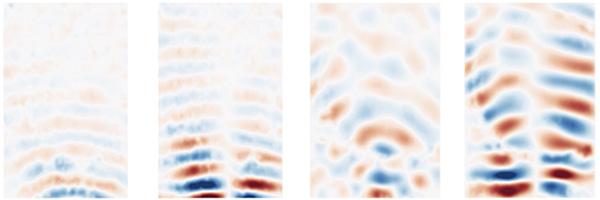
Researchers in Japan have figured out a way to use x-rays to tell doctors about those squishy parts as well, not just bones, in a similar way to how ultrasound or magnetic resonance imaging (MRI) work–but with much greater resolution.

This greater resolution for the field of elastography–a non-invasive method of medical imaging that investigates the stiffness and elasticity of soft tissue–should allow healthcare professionals to identify much smaller and deeper tissue problems, such as lesions, than they can with ultrasound or MRI, the two main types of elastography used currently. The scientists published their results in March in the journal Applied Physics Express.

Although previous studies have suggested such x-ray elastography is possible in principle, this is the first time that any real-world visualization of stiffness using the concept has been demonstrated.

Ultrasound uses sound waves with frequencies higher than what humans can hear, and works by sending “shear waves” through us–the sort of waves that occur when you whip a rope up and down quickly. Shear waves travel faster through stiffer tissue than through softer tissue. Since cancerous tumors, lesions from cirrhosis of the liver and hardened arteries are stiffer than the surrounding healthy tissue, identifying where the waves pass through tissue more slowly, clinicians are able to spot these stiffer tissues.

MRI works in a related fashion, but via the use of very strong magnets to force protons in the body to align with a magnetic field. How long it takes those protons to make this move tells us a similar story about stiff or hard tissues.

Now, researchers have developed a technique to do much the same with x-rays instead. The advantage? X-rays can provide much greater resolution than ultrasound–on the order of tens of micrometers (millionths of a meter) instead of millimeters (mere thousandths of a meter).

“This greater precision doesn’t just mean identification of much smaller or deeper lesions,” said lead researcher Wataru Yashiro, an associate professor from the Institute of Multidisciplinary Research for Advanced Materials (IMRAM) of Tohoku University, “but, importantly for patients, because smaller lesions can be newer ones, potentially also much earlier on in a disease or condition.”

The next step is to further develop the technique to produce 3D visualizations, and ultimately the researchers want to manufacture x-ray elastography medical diagnostic equipment.

###

Media Contact
Wataru Yashiro
[email protected]

Original Source

https://www.tohoku.ac.jp/en/press/not_just_for_bones_x_rays_can_now_tell_us_about_soft_tissues_too.html

Related Journal Article

http://dx.doi.org/10.35848/1882-0786/ab7e06

Tags: Medicine/Health
Share12Tweet8Share2ShareShareShare2

Related Posts

Evaluating Pediatric Emergency Care Quality in Ethiopia

February 7, 2026

TPMT Expression Predictions Linked to Azathioprine Side Effects

February 7, 2026

Improving Dementia Care with Enhanced Activity Kits

February 7, 2026

Decoding Prostate Cancer Origins via snFLARE-seq, mxFRIZNGRND

February 7, 2026
Please login to join discussion

POPULAR NEWS

  • Robotic Ureteral Reconstruction: A Novel Approach

    Robotic Ureteral Reconstruction: A Novel Approach

    82 shares
    Share 33 Tweet 21
  • Digital Privacy: Health Data Control in Incarceration

    63 shares
    Share 25 Tweet 16
  • Study Reveals Lipid Accumulation in ME/CFS Cells

    57 shares
    Share 23 Tweet 14
  • Breakthrough in RNA Research Accelerates Medical Innovations Timeline

    53 shares
    Share 21 Tweet 13

About

We bring you the latest biotechnology news from best research centers and universities around the world. Check our website.

Follow us

Recent News

Evaluating Pediatric Emergency Care Quality in Ethiopia

TPMT Expression Predictions Linked to Azathioprine Side Effects

Improving Dementia Care with Enhanced Activity Kits

Subscribe to Blog via Email

Success! An email was just sent to confirm your subscription. Please find the email now and click 'Confirm' to start subscribing.

Join 73 other subscribers
  • Contact Us

Bioengineer.org © Copyright 2023 All Rights Reserved.

Welcome Back!

Login to your account below

Forgotten Password?

Retrieve your password

Please enter your username or email address to reset your password.

Log In
No Result
View All Result
  • Homepages
    • Home Page 1
    • Home Page 2
  • News
  • National
  • Business
  • Health
  • Lifestyle
  • Science

Bioengineer.org © Copyright 2023 All Rights Reserved.