• HOME
  • NEWS
  • EXPLORE
    • CAREER
      • Companies
      • Jobs
    • EVENTS
    • iGEM
      • News
      • Team
    • PHOTOS
    • VIDEO
    • WIKI
  • BLOG
  • COMMUNITY
    • FACEBOOK
    • INSTAGRAM
    • TWITTER
Monday, July 6, 2026
BIOENGINEER.ORG
No Result
View All Result
  • Login
  • HOME
  • NEWS
  • EXPLORE
    • CAREER
      • Companies
      • Jobs
        • Lecturer
        • PhD Studentship
        • Postdoc
        • Research Assistant
    • EVENTS
    • iGEM
      • News
      • Team
    • PHOTOS
    • VIDEO
    • WIKI
  • BLOG
  • COMMUNITY
    • FACEBOOK
    • INSTAGRAM
    • TWITTER
  • HOME
  • NEWS
  • EXPLORE
    • CAREER
      • Companies
      • Jobs
        • Lecturer
        • PhD Studentship
        • Postdoc
        • Research Assistant
    • EVENTS
    • iGEM
      • News
      • Team
    • PHOTOS
    • VIDEO
    • WIKI
  • BLOG
  • COMMUNITY
    • FACEBOOK
    • INSTAGRAM
    • TWITTER
No Result
View All Result
Bioengineer.org
No Result
View All Result
Home NEWS Science News Biology

Local community involvement crucial to restoring tropical peatlands

Bioengineer by Bioengineer
March 26, 2020
in Biology
Reading Time: 3 mins read
0
IMAGE
Share on FacebookShare on TwitterShare on LinkedinShare on RedditShare on Telegram

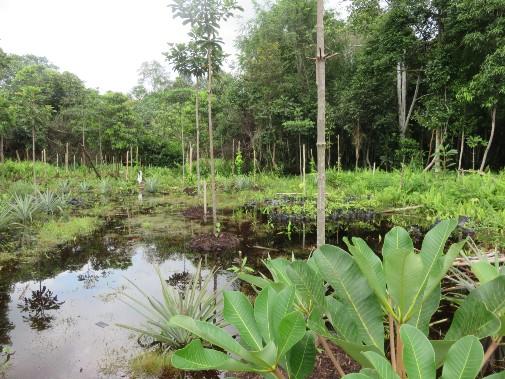
Local community involvement is vital in efforts to raise water levels to help restore Indonesia’s tropical peatlands, a new study has found
IMAGE

Credit: Caroline Ward, University of York.


Local community involvement is vital in efforts to raise water levels to help restore Indonesia’s tropical peatlands, a new study has found.

Unspoilt peatlands act as a carbon sink and play an important role in reducing global carbon emissions. They are also a crucial habitat for many birds and animals, including endangered species such as orang-utans and tigers.

Draining peatland for farming destroys habitats and causes the peat to emit the carbon it once stored. The dry land also becomes prone to fire – leading to increased carbon emissions and a threat to the lives of many species including humans.

The study, led by researchers at the University of York, interviewed people involved in work to conserve and restore Indonesia’s 15 million hectares of peatland – more than half of which has been drained and converted to cropland.

The international team, which included researchers from Jambi University and the Indonesia Soil Research Institute, gained the views of scientists, charities, and government officials. All participants agreed that getting support from local communities and raising water levels were key to successful restoration.

Lead author of the study, Dr Caroline Ward from the Leverhulme Centre for Anthropocene Biodiversity at the University of York, said: “While many peatlands in Indonesia have been drained for large palm oil plantations, many hectares have also been drained for local smallholders and farmers to grow crops on.

“Many of these local people have no other option but to use the land in this way. Efforts need to be made across all stakeholders involved in peatland restoration to provide people with an alternative source of income or a crop which can be farmed in a more sustainable way.”

Restoring drained peatland involves a process of “re-wetting” where canals draining water away are blocked or filled in.

Professor Lindsay Stringer from the University of Leeds commented that “rewetting brings the water table closer to the surface, so this makes it less likely that the peatlands will catch fire. Rewetting is often used together with revegetation and revitalisation to improve the overall peatland condition”.

Professor Jane Hill, project leader at the University of York, commented that “restoration of peatlands to prevent fires has huge benefits for local communities and preventing forest fires is vital for conserving wildlife”.

Dr Ward added that “Tropical peatland restoration is really important to reducing global carbon emissions.

“Our study highlights that while everyone agrees that restoration of peatland is crucial, there is no consensus on how this should be achieved and how much progress has been made to date.

“We need to gather an evidence base urgently, and establish better ways of collaborating and sharing information between different groups.”

Wading through the swamp: what does tropical peatland restoration mean to national level stakeholders in Indonesia? Is published in Restoration Ecology.

###

The research was carried out in collaboration with the Indonesia Center for Agricultural Land Resources Research and Development, Jambi University (Indonesia), the Universities of Liverpool, Oxford and Leeds and the Zoological Society of London. The research was funded by UKRI/NERC and DIPI (Indonesia) through the Newton Fund UK – South-East Asia Research Partnerships Call.

Media Contact
Shelley Hughes
[email protected]
44-019-043-23918

Related Journal Article

http://dx.doi.org/10.1111/rec.13133

Tags: BiologyClimate ChangeEcology/Environment
Share12Tweet8Share2ShareShareShare2

Related Posts

Here are a few rewritten headlines for a science magazine post, each with a slightly different tone: Intriguing & poetic: How do organs sculpt themselves? Sea stars hold the secret Direct & research-focused: Sea stars reveal the hidden rules of organ formation Metaphorical & inviting: Tiny architects beneath the waves: What sea stars teach us about building organs Short & punchy: Star-shaped clues to how our organs take shape Question-led: Could a sea star show us how organs form? Elegant & feature-style: The body’s blueprint, glimpsed in a sea star’s arm

July 6, 2026
Bacteria evolve faster with unconventional gene copies — Biology

Bacteria evolve faster with unconventional gene copies

July 6, 2026

Neighbours rewire soil feedback via root microbiome shifts

July 6, 2026

Evolution-Inspired Biosensors Revolutionize Lipid Tracking in Real Time

July 2, 2026
Please login to join discussion

POPULAR NEWS

  • Detection of EDCs in Breast Milk and Infant Urine Up to Six Months Highlights Early Exposure Risks

    77 shares
    Share 31 Tweet 19
  • New Drug Candidate Developed at McMaster Shows Potential for Treating Brain Cancer

    58 shares
    Share 23 Tweet 15
  • Saying Goodbye to PGY-6: Pediatric Fellowship Realities

    103 shares
    Share 41 Tweet 26
  • KTU Researchers Explore Ultrasound’s Role in Enhancing Blood Flow Beyond Diagnostics

    53 shares
    Share 21 Tweet 13

About

We bring you the latest biotechnology news from best research centers and universities around the world. Check our website.

Follow us

Recent News

Flame retardant BDE-209 targets molecularly linked to ulcerative colitis

Ultra-high frequency particle impacts mimic rockbursts to shatter hard rock

Kidney transplant outcomes in older adults studied by German researchers

Subscribe to Blog via Email

Enter your email address to subscribe to this blog and receive notifications of new posts by email.

Join 83 other subscribers
  • Contact Us

Bioengineer.org © Copyright 2023 All Rights Reserved.

Welcome Back!

Login to your account below

Forgotten Password?

Retrieve your password

Please enter your username or email address to reset your password.

Log In
No Result
View All Result
  • Homepages
    • Home Page 1
    • Home Page 2
  • News
  • National
  • Business
  • Health
  • Lifestyle
  • Science

Bioengineer.org © Copyright 2023 All Rights Reserved.